




Cut Glass Prism Lusters
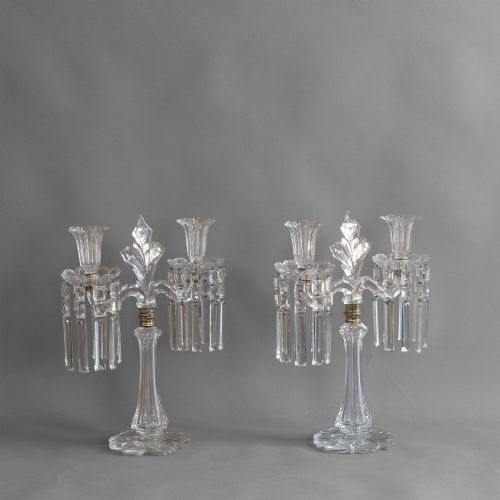
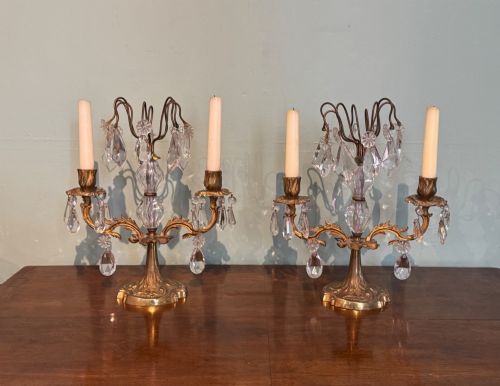
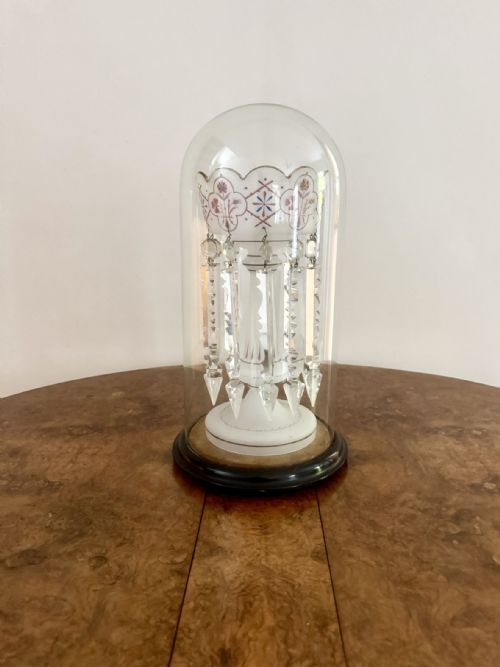
Cut glass prism lustres are decorative candleholders hung with glass droplets that catch and throw the light.
Cut Glass Prism Lusters
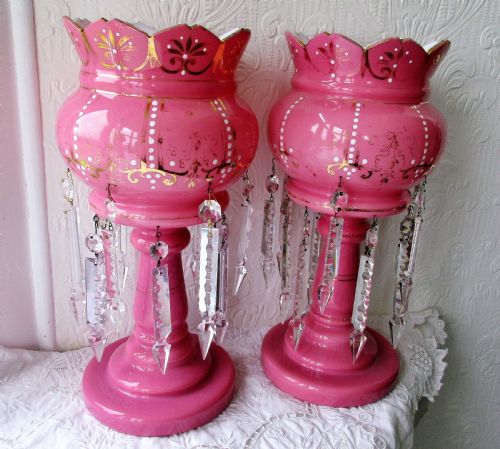
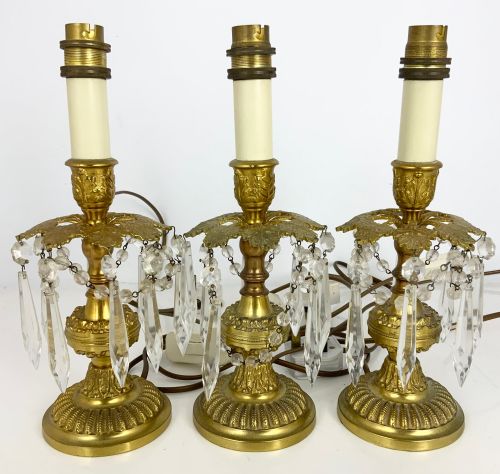
Cut glass prism lustres are decorative table objects designed to hold candles while catching light through suspended glass droplets. When you search for cut glass prism lustres, you encounter Victorian and Regency pieces in forms such as mantel lustres, candlesticks, and table lamps.
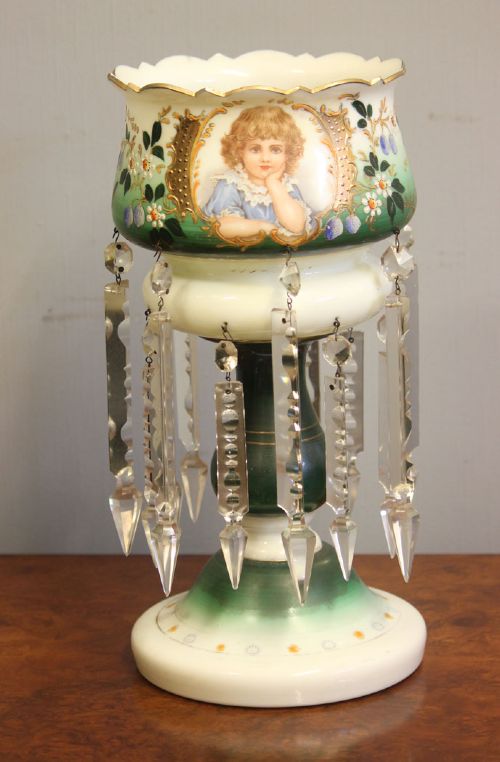
The most common versions on this page are pairs of Victorian mantel lustres made from coloured glass and fitted with long cut glass prisms. These items function as ornamental focal points for a fireplace or sideboard rather than purely practical lighting.
Originating largely from the nineteenth century, these objects appear in styles ranging from French Rococo Revival to classic Regency. They combine the dual role of candleholder and optical ornament through their suspended glass drops.
How they were made
Makers shaped glass through blowing and moulding, often using overlay or flash techniques to layer different colours such as ruby, green, pink, and cranberry over a clear glass body. Skilled hands then cut facets into the glass bowls and stems using a wheel to sharpen the reflection of light.
Prisms and drops were individually cut and polished before being attached to the main body with brass wire or metal pins. Metal components such as brass, gilt, bronze, and ormolu provided structural support for the glass bodies and candle sockets.
Cut Glass Prism Lusters Retail Price Guide 2026
Typical asking prices for cut glass prism lusters among the pieces listed under this phrase on Sellingantiques today, from the lower quarter to the upper quarter. They describe what is for sale here now, not the wider market.
Materials recorded across the inventory include crystal, glass, enamel, brass, gilt, and gold leaf.
What varies in quality
Quality shows in the depth and clarity of the glass cutting, where sharper facets create brighter refractions of light. The weight and stability of the metal mounts and the proportion between the main body and the hanging prisms also separate standard pieces from finer examples.
The richness of the glass colour, particularly in layered flash or overlay pieces where the outer layer is cut away to reveal a contrasting base, dictates the visual impact. Intact sets of matching prisms with minimal chipping along their faceted edges distinguish better-preserved items.
The Cut Glass Prism Lusters Glossary
- Prism
- A cut glass pendant or drop hung from the rim of a lustre to refract candlelight.
- Lustre
- A decorative table candleholder ornamented with hanging glass drops.
- Overlay glass
- Glass formed of two or more distinct layers of different colours, where sections are often cut away to expose the underlying colour.
- Ormolu
- Gilt bronze mounted onto decorative objects for ornamental contrast and structural detail.
- Flash glass
- A thin layer of coloured glass applied over a colourless or contrasting base glass before being cut.
Cut Glass Prism Lusters: Frequently Asked Questions
What are cut glass prism lusters?
Cut glass prism lustres are ornamental candleholders featuring glass bowls or stems hung with cut glass droplets designed to sparkle in candlelight.
They emerged as decorative mantelpiece ornaments during the nineteenth century in various colours and revival styles.
How were they used originally?
They were placed on mantelpieces, side tables, and chests of drawers to add decorative brilliance to a room during evening gatherings.
The suspended glass drops caught and multiplied the flickering light of tallow or wax candles before electric lighting became common.
How do I clean them safely?
Cleaning requires removing the glass drops individually and washing them gently in lukewarm soapy water without harsh abrasives.
The main body should be wiped carefully with a damp cloth to protect any gilt or metal mounts from excess moisture.
How can I tell Victorian from Regency pieces?
Regency pieces often display neoclassical lines with bronze, ormolu, or clear cut glass, reflecting earlier classical tastes.
Victorian examples frequently introduce vibrant coloured glass such as ruby, cranberry, and green, alongside ornate floral enamelling.