








Cut Glass Powder Jar
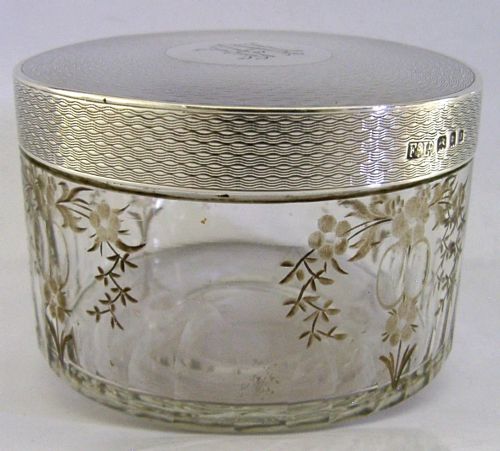
A cut glass powder jar sits heavy on the dressing table, catching the light in its deep wheel-cut facets while keeping fine powders secure beneath a precious metal lid.
Cut Glass Powder Jar
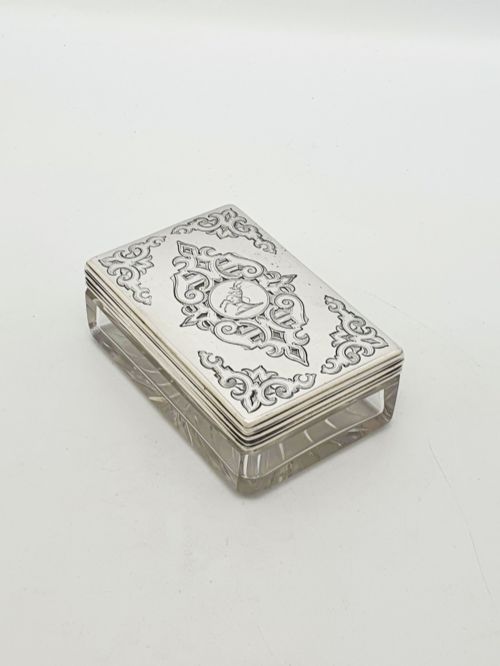
A cut glass powder jar is a dressing table accessory designed to hold dusting powders, rouge, or pins, taking the form of lidded bowls, vanity jars, and trinket boxes. These pieces emerge across several periods, stretching from the nineteenth century through the Edwardian era into the Art Deco and mid-century years.
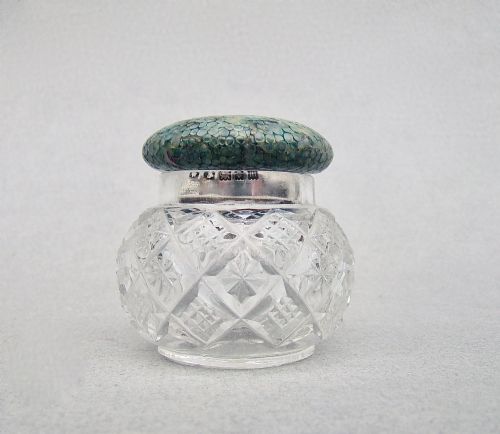
The version most commonly met on this page pairs a heavy cut glass or crystal base with a fitted lid made of sterling silver, often embellished with enamel or tortoiseshell. Such objects reflect the dressing rituals of past decades, turning simple vanity storage into decorative showpieces.
Materials and Technique
The bodies of these jars rely on glass, cut crystal, or amethyst and cranberry glass, shaped with deep wheel-cut facets, geometric etching, and overlaid designs to catch the light. Heavy crystal bases provide stability and weight, contrasting against the lighter metal of the lids.
Lids utilise sterling silver, sometimes gilt-mounted, and frequently incorporate intricate decoration such as guilloché enamel, translucent blue or pink enamel, and polished tortoiseshell. Makers secured these metals directly to the glass rims, often adding hallmarks to indicate the assay office and year of production.
Cut Glass Powder Jar Retail Price Guide 2026
Typical asking prices for cut glass powder jar among the pieces listed under this phrase on Sellingantiques today, from the lower quarter to the upper quarter. They describe what is for sale here now, not the wider market.
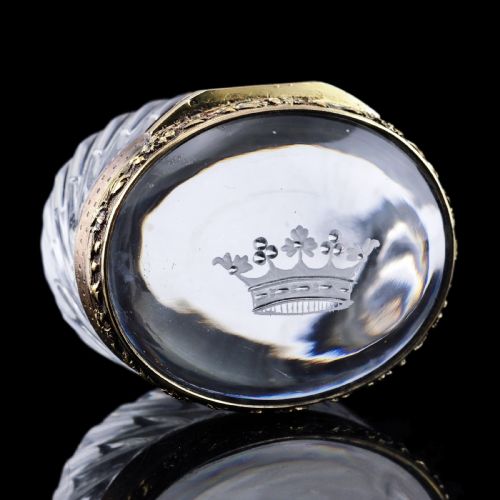
Some jars feature secret heart-shaped crystal boxes that turn dressing table routines into an affectionate gesture.
Distinctions in Quality
The calibre of a cut glass powder jar rests on the crispness of the glass cutting and the weight of the crystal base. Deeper, sharper facets and heavier crystal indicate superior workmanship from skilled glasshouses.
Lid decoration also separates standard examples from the finest pieces, particularly where hand-turned engine work, flawless guilloché enamel, or well-preserved tortoiseshell meet sterling silver mounts.
Henry Clifford Davis·Hasset and Harper·Posen of Frankfurt and Berlin·Adie Bros
The Cut Glass Powder Jar Glossary
- Guilloché enamel
- A decorative technique where a precise geometric pattern is mechanically engraved into metal beneath a translucent layer of coloured enamel.
- Sterling silver
- An alloy of silver containing 92.5 percent pure silver and 7.5 percent other metals, commonly used for the lids and mounts of vanity jars.
- Crystal
- A type of glass containing lead oxide, which increases the weight, brilliance, and clarity of the cut facets.
- Tortoiseshell
- The shell of certain turtle species, historically utilised to create polished, mottled brown lids for dressing table boxes.
- Hallmark
- An official stamp applied to precious metals, indicating the maker, assay office, and year of manufacture.
Cut Glass Powder Jar: Frequently Asked Questions
What were cut glass powder jars used for?
These jars held scented face powders, dusting powders, or cosmetic creams on Victorian and Edwardian dressing tables. They kept vanity items neatly contained while adding a decorative sparkle to the room.
Over time, their uses expanded to house trinkets, hairpins, and small jewellery pieces. The lidded design protected delicate cosmetics from moisture and dust.
How do I date a silver and glass jar?
Dating relies primarily on the hallmarked stamps found on the sterling silver lids. These marks reveal the assay office, such as Birmingham or London, and a specific date letter.
Stylistic clues also help determine the period, from Edwardian floral motifs to the geometric lines of Art Deco pieces. The weight and tint of the glass can provide further context regarding the decade of manufacture.
Are these jars safe for modern use?
Most antique jars function perfectly well for storing modern dry powders, cotton wool balls, or small trinkets. The thick glass bases are robust enough for daily placement on a contemporary dressing table.
Care should be taken with pieces featuring enamel or tortoiseshell lids, as these organic materials require gentle handling and protection from harsh chemicals or excessive moisture.
How should I clean a silver lid and glass base?
The glass base can be washed gently in warm soapy water, taking care to avoid soaking any cemented metal mounts. Soft cloths help restore the clarity of the cut crystal facets.
Silver lids require a specialist silver polishing cloth used sparingly to avoid disturbing any enamel or tortoiseshell inset panels. Professional cleaning is rarely necessary for well-maintained pieces.