

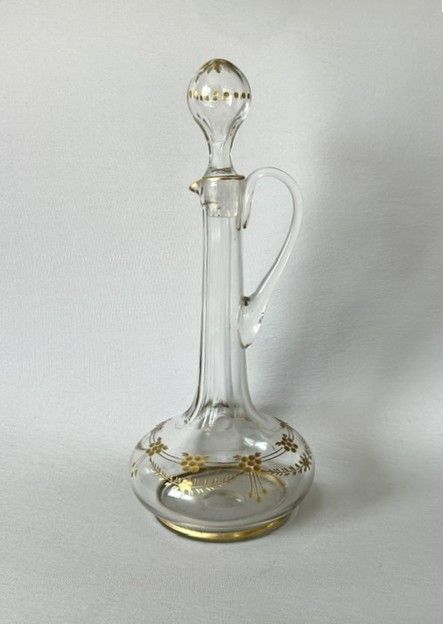
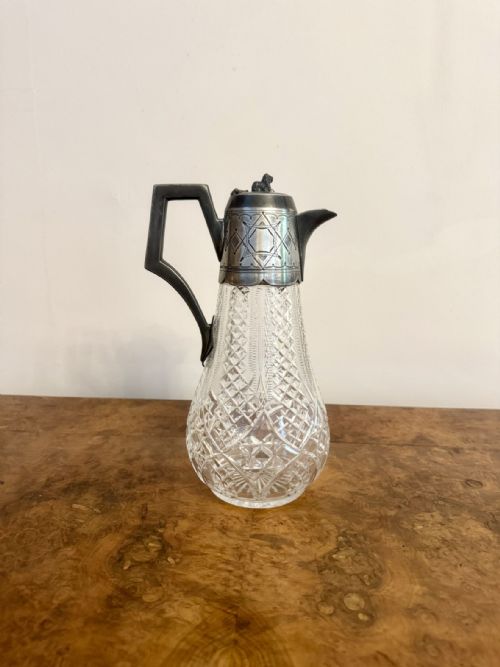
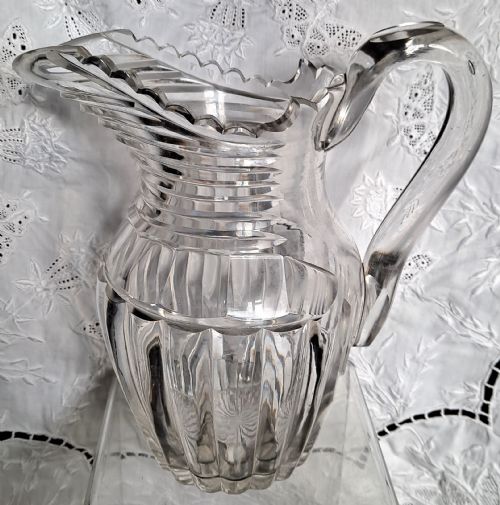

Cut Glass Decanter Jug
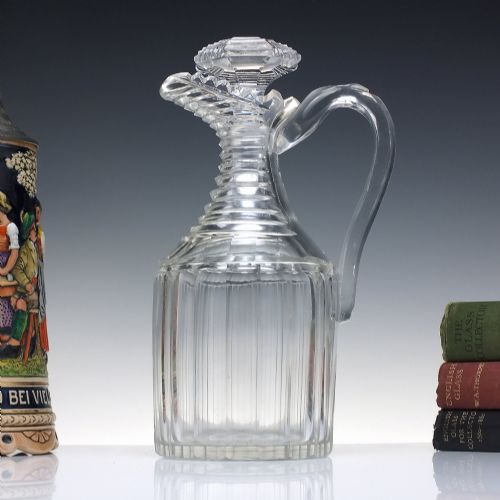
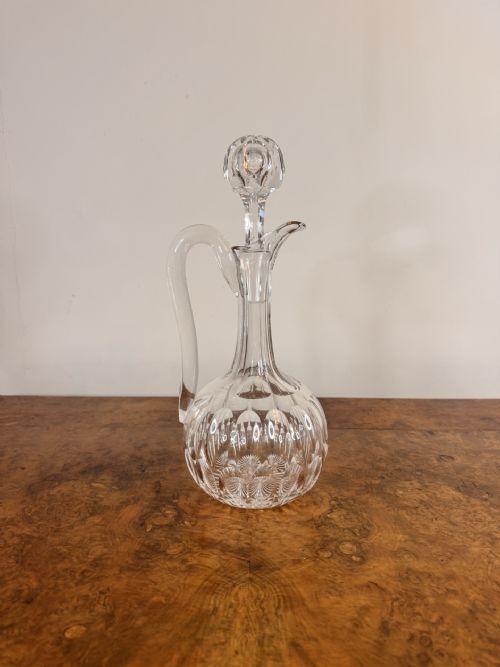
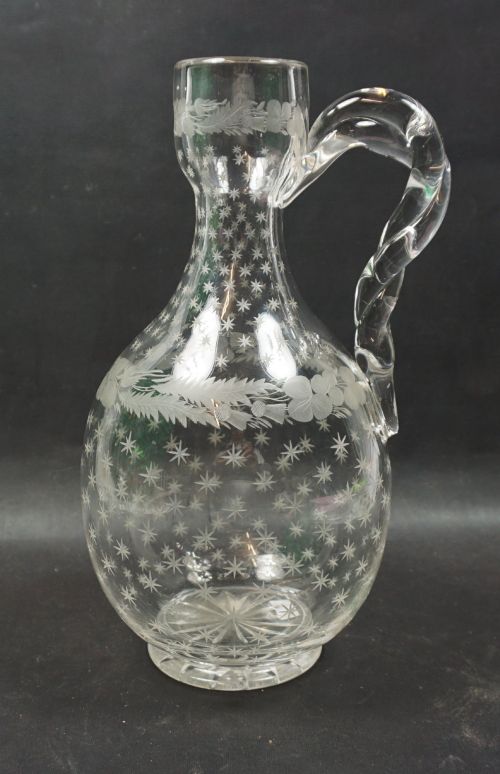
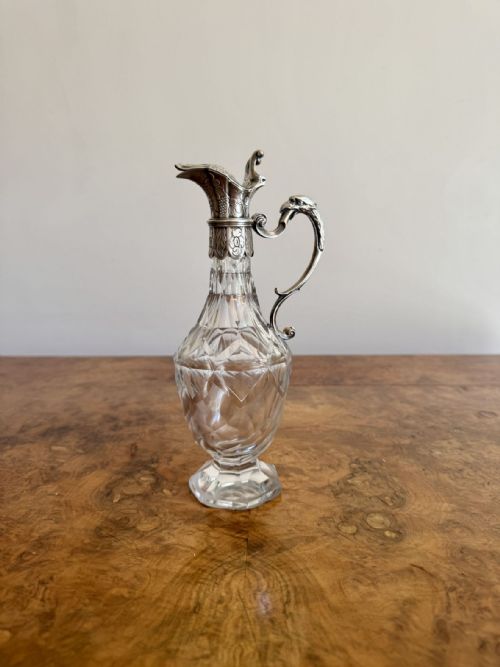
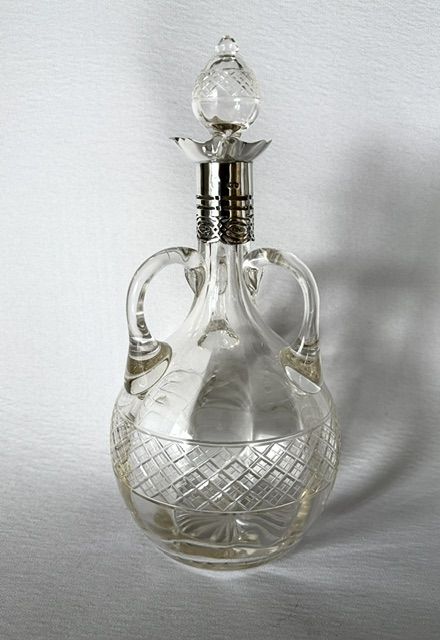
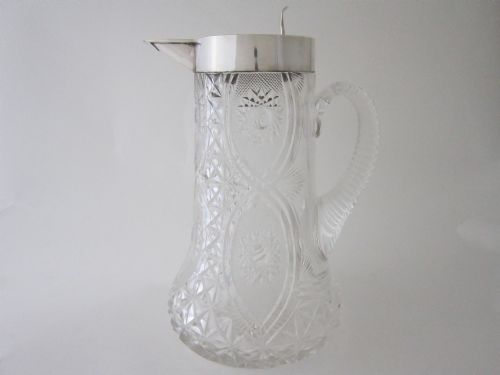
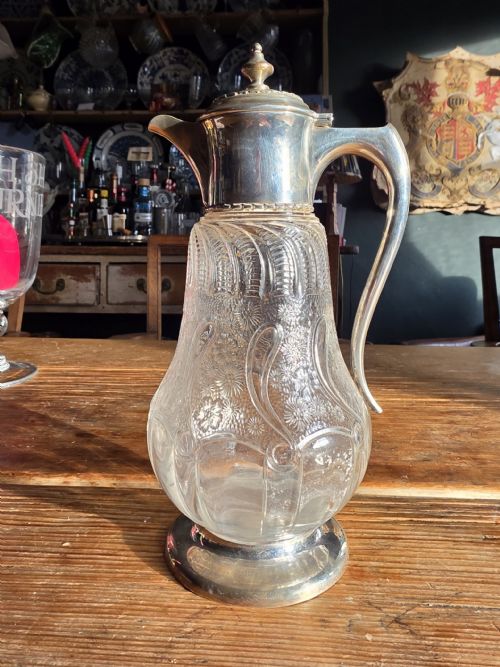
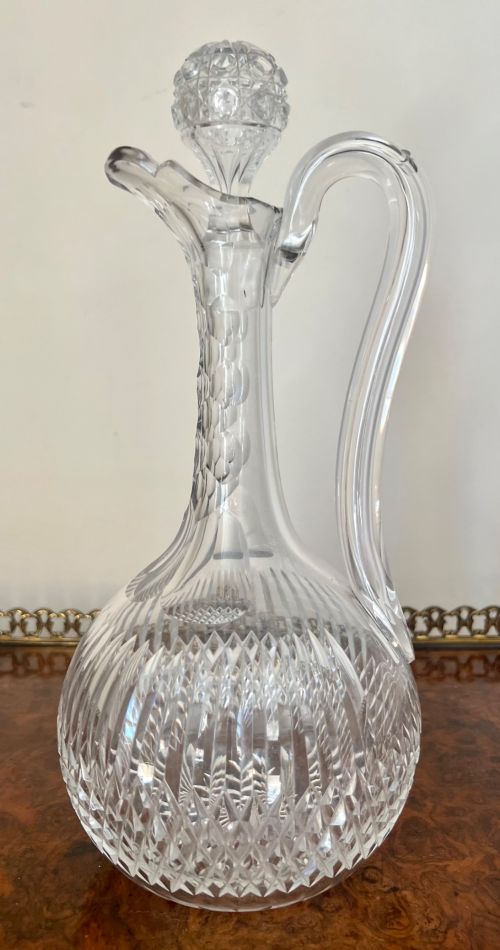
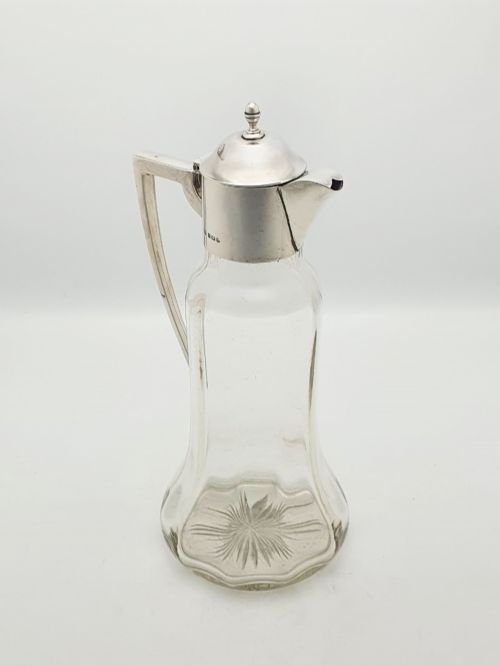
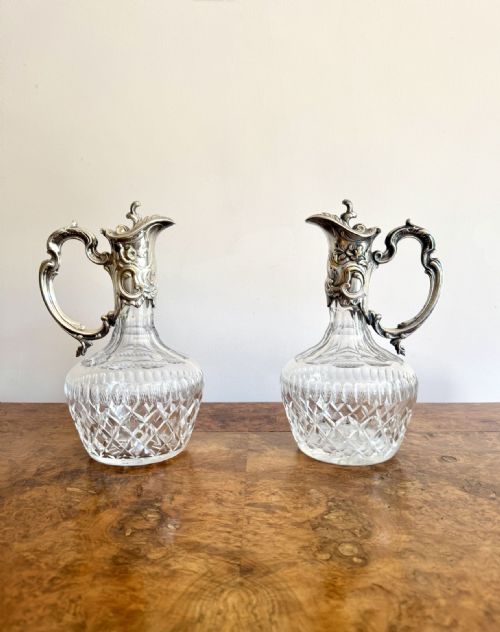
These cut glass decanter jug examples combine heavy crystal vessels with silver and silver plate for serving wine and spirits at the table.
Cut Glass Decanter Jug
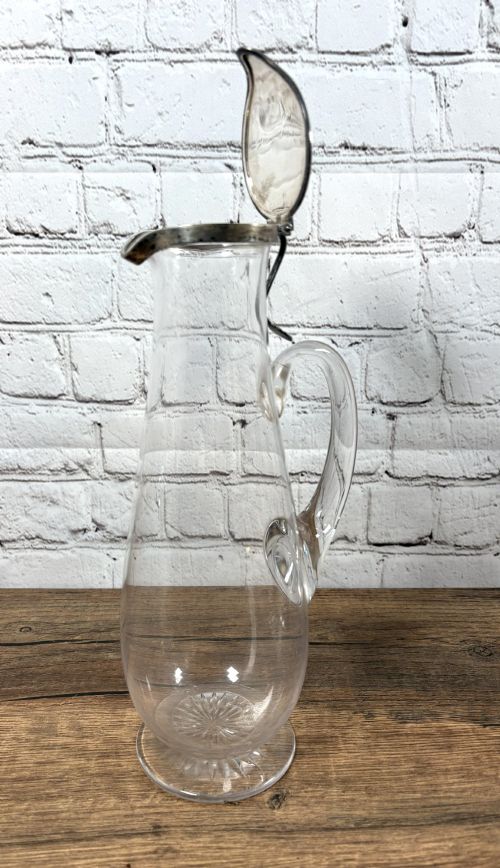
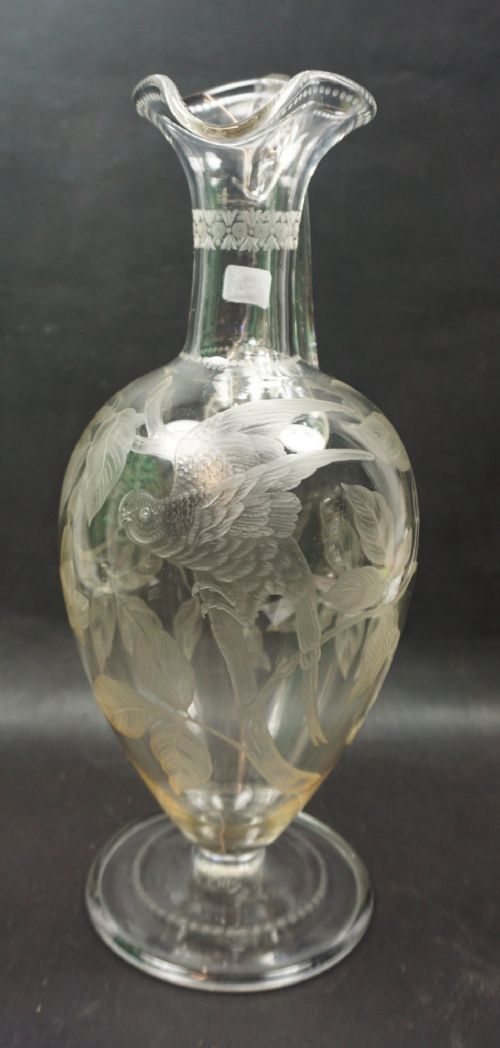
When you search for a cut glass decanter jug, you encounter functional serving vessels spanning the Victorian, Edwardian, and George V periods, alongside Late Regency and Art Deco iterations. The forms on this page include claret jugs, whisky noggins, water jugs, and champagne ewers designed for formal dining and entertaining.
The objects serve distinct alcoholic and non-alcoholic drinks, from claret and whisky to lemonade and water, reflecting the specialised glassware requirements of nineteenth and early twentieth-century households.
Materials and Manufacturing Techniques
The body of each cut glass decanter jug relies on heavy lead crystal or clear glass shaped by blowing or moulding before craftsmen apply deep wheel-cut geometric or floral patterns. This cutting process requires skilled hand labour to achieve the sharp facets that refract light through the vessel.
Metal components such as mounts, rims, hinged lids, and handles utilise sterling silver or silver plate, often bearing hallmarks that record the assay office and year of manufacture. Certain specialised pieces incorporate internal glass ice tubes to chill beverages without dilution.
Cut Glass Decanter Jug Retail Price Guide 2026
Typical asking prices for cut glass decanter jug among the pieces listed under this phrase on Sellingantiques today, from the lower quarter to the upper quarter. They describe what is for sale here now, not the wider market.
Listings span the Victorian, Edwardian, and George V periods, featuring lead crystal bodies paired with sterling silver and silver plate.
Assessing Craftsmanship and Execution
The distinction between standard items and exceptional pieces rests upon the depth, crispness, and complexity of the glass cutting, where finer examples display sharp, precisely defined facets rather than soft or rounded edges. The weight and clarity of the crystal body further determine the quality grade.
The calibre of the metalwork defines the upper tier, seen in heavy sterling silver mounts with secure hinges and balanced handles, occasionally accompanied by maker marks from notable workshops. Superior pieces maintain an integrated harmony between the heavy cut glass vessel and the fitted metal mount.
William Comyns·Stevens and Williams·Mappin and Webb·Richardsons·Hukin and Heath
The Cut Glass Decanter Jug Glossary
- Claret Jug
- A specialised pouring vessel designed specifically for serving red wine at the dining table. These pieces usually feature a handle and a hinged lid operated by a thumbpiece.
- Whisky Noggin
- A small individual decanter or jug used for serving spirits. They frequently include a matched silver label and a single handle.
- Sterling Silver
- An alloy containing a high proportion of pure silver, extensively utilised for the mounts and lids of Edwardian and Victorian drinkware. British examples typically display standard assay office hallmarks.
- Silver Plate
- A base metal substrate coated with a thin layer of pure silver. This technique provided the decorative effect of solid silver at a more accessible cost during the nineteenth century.
- Lead Crystal
- A type of glass containing metallic oxide that increases the refractive index and weight of the material. This composition allows for deeper and sharper facet cutting.
Cut Glass Decanter Jug: Frequently Asked Questions
What is a cut glass decanter jug used for?
These vessels serve wine, whisky, water, and lemonade during formal meals and gatherings. The inclusion of pouring lips and sturdy handles allows liquids to be dispensed smoothly at the table.
Many designs pair with matching labels or internal ice tubes to control beverage temperature and identity. Their dual function combines practical storage with decorative presentation.
How do I date a silver mounted jug?
British sterling silver mounts carry assay office hallmarks that record the exact year of manufacture and the city of testing. These stamped letters and symbols provide a reliable chronological anchor for the piece.
When silver plate or unmarked metal is used, dating relies on the stylistic form, the depth of the glass cutting, and the construction methods of the handle and hinge.
What is the difference between a claret jug and a whisky noggin?
Claret jugs are larger vessels engineered to hold red wine for multiple guests, often featuring tall bodies and expansive handles. They dominate Victorian and Edwardian dining table settings.
Whisky noggins are miniature decanters intended for individual spirit portions, typically holding a single measure. They frequently appear with fitted silver labels and compact pouring spouts.
How should I clean antique cut glass?
Wash the glass by hand in warm water using mild detergent, avoiding sudden temperature changes that can crack the heavy material. A soft brush helps clean deep facet cuts without scratching the surface.
Pronounced silver mounts require separate care with dedicated silver polish applied carefully to prevent staining the surrounding crystal body.