





Cut Glass Decanter Handle
These cut glass decanter handle examples are period pieces of glassware and servingware, offering traditional craftsmanship for your dining table.
Cut Glass Decanter Handle
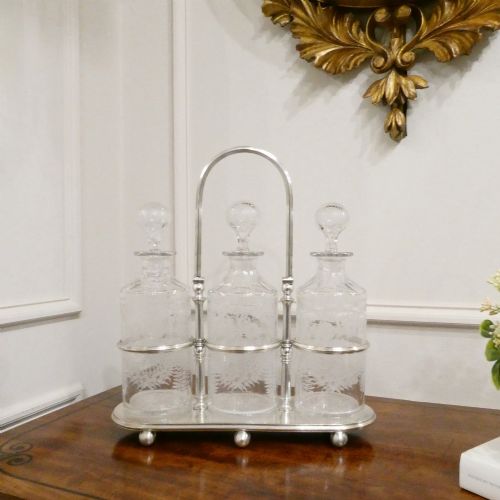
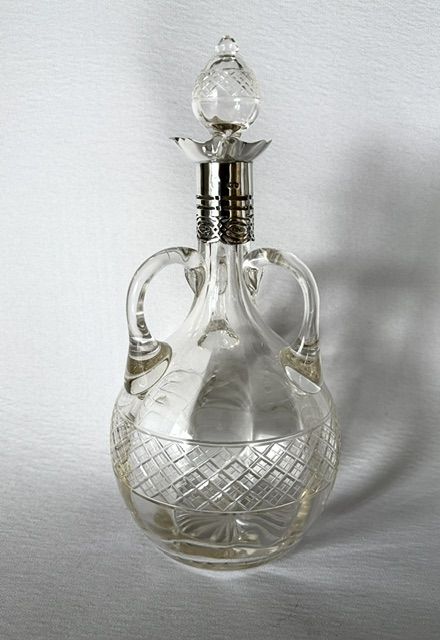
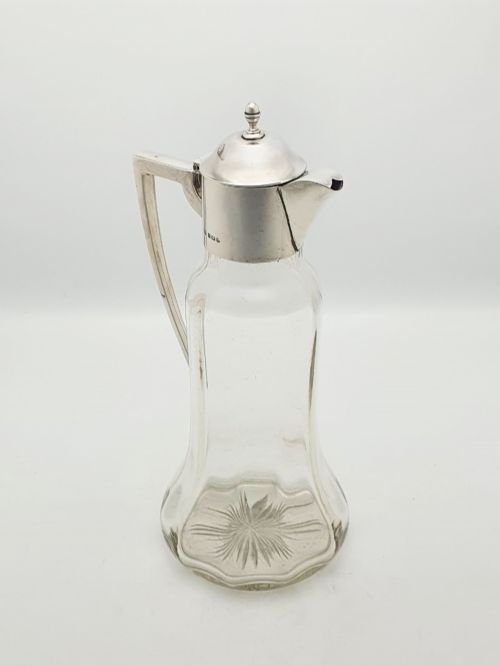
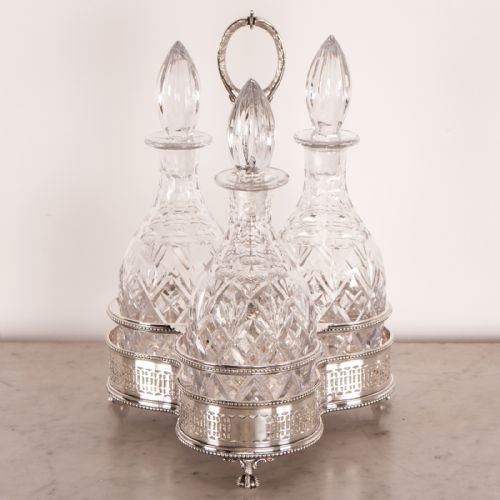
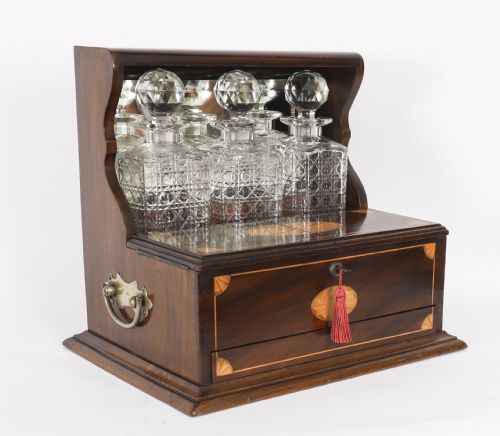
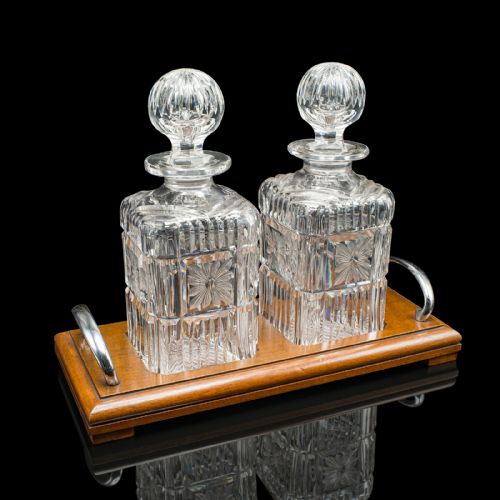
A cut glass decanter handle brings you into contact with authentic serving vessels and barware spanning the Victorian, Edwardian, and Art Deco periods. You will regularly encounter decanters, claret jugs, and tantalus sets that combine glass vessels with fitted stands and mounts.
The pieces available on this page reflect formal entertaining traditions from the nineteenth and early twentieth centuries. These items serve both functional and decorative roles in traditional dining rooms and bar displays.
How they were made
Maker workshops utilised cut glass and cut crystal alongside sterling silver and silver plate to construct these serving pieces. The glass bodies feature deep facets while the metal mounts provide secure structural support.
Cabinet makers also incorporated mahogany and brass into fitted stands and tantalus frames. Mirror glass frequently forms the base of stands to reflect the sparkle of the crystal vessels.
Cut Glass Decanter Handle Retail Price Guide 2026
Typical asking prices for cut glass decanter handle among the pieces listed under this phrase on Sellingantiques today, from the lower quarter to the upper quarter. They describe what is for sale here now, not the wider market.
The listings on this page span the Victorian, Edwardian, and Art Deco periods, utilising materials such as cut crystal, mahogany, and silver plate.
What varies in quality
The crispness of the glass cutting and the weight of the metal mounts distinguish standard production from finer output. Superior examples display precise geometric patterns and substantial silver or silver plated components.
The integration of the hardware with the glass vessel determines the overall harmony of the piece. Makers who applied thoughtful design choices achieved lasting durability and balance in their barware.
Walker and Hall·Hukin and Heath·Mappin and Webb
The Cut Glass Decanter Handle Glossary
- Tantalus
- A locked cabinet or stand holding decanters securely while displaying the contents through a wooden frame. This device prevented unauthorized access to spirits in Victorian and Edwardian homes.
- Claret jug
- A pouring vessel specifically designed for serving red wine at the dining table. These jugs typically feature a hinged metal lid and an integrated handle.
- Silver plate
- A layer of silver fused to a base metal such as copper or Britannia metal. This technique provided the appearance of solid silver at a lower cost for nineteenth-century dining wares.
- Cut crystal
- High-clarity glass containing lead oxide, cut with decorative facets using a wheel. The lead content increases the refractive index and weight of the material.
Cut Glass Decanter Handle: Frequently Asked Questions
What is a tantalus?
A tantalus is a locked wooden frame designed to hold decanters securely. It allowed hosts to display their spirits while preventing servants or guests from pouring drinks unsupervised.
Most examples use mahogany fitted with brass locks and silver plated mounts. They frequently appear alongside games compendiums in nineteenth-century entertaining furniture.
How do I date a claret jug?
Dating relies on stylistic markers from periods like the Victorian, Edwardian, and Art Deco eras. Maker marks and registration numbers stamped on the metal mounts provide further chronological clues.
Victorian pieces often feature ornate silver plate, while Edwardian designs lean toward refined sterling silver mounts. Art Deco items introduce geometric styling from the nineteen-thirties.
Are these pieces made of crystal or glass?
The listings include both standard cut glass and heavy cut crystal vessels. Crystal contains lead oxide which gives the material greater weight and light-refractive properties.
Both materials were worked by hand to create faceted surfaces. Inspection under light reveals the distinct sharpness of the cuts characteristic of these periods.
How were silver mounts attached to glass?
Silver and silver plated collars were secured around the necks of decanters using specialised adhesives or tight mechanical pressure. Hinged lids and handles were then integrated directly into these metal collars.
This construction method allowed makers to combine fragile glass bodies with durable metal pouring mechanisms. The mounts also reinforced the rim against chipping during use.