
Cut Crystal Whisky Glasses
Cut crystal whisky glasses bring weight and brilliance to the dram, uniting practical drinkware with centuries of decorative glass-cutting traditions.
Cut Crystal Whisky Glasses
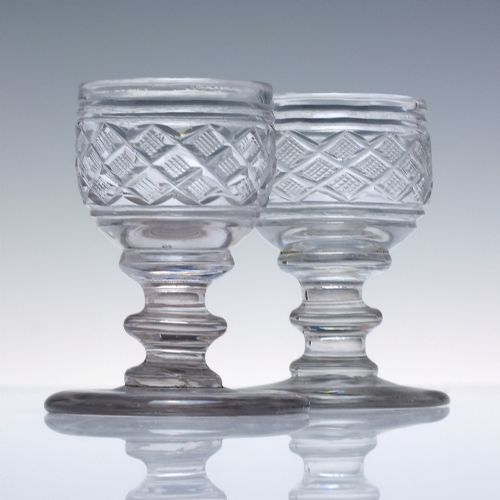
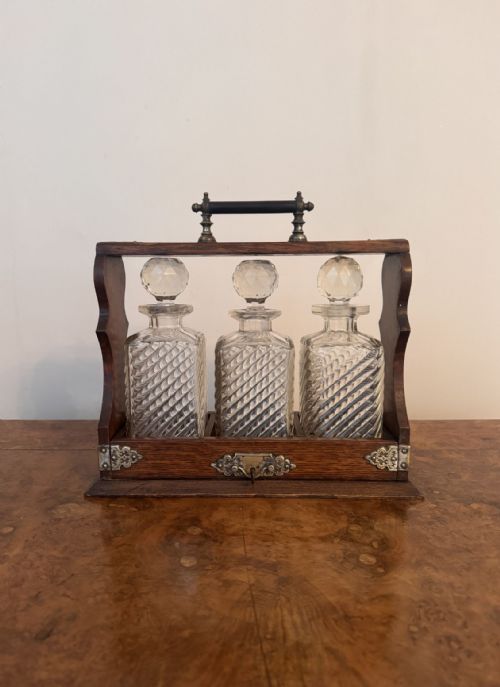
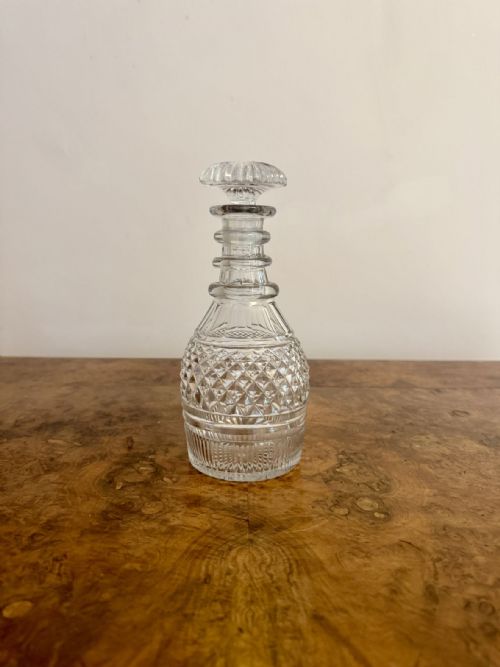
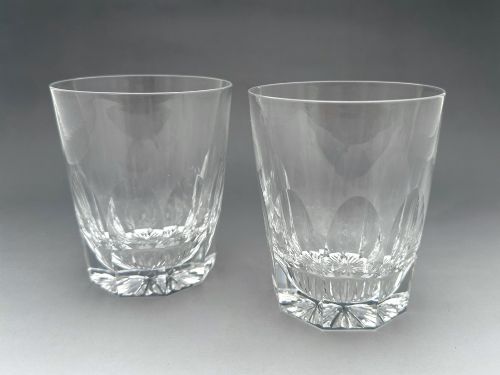
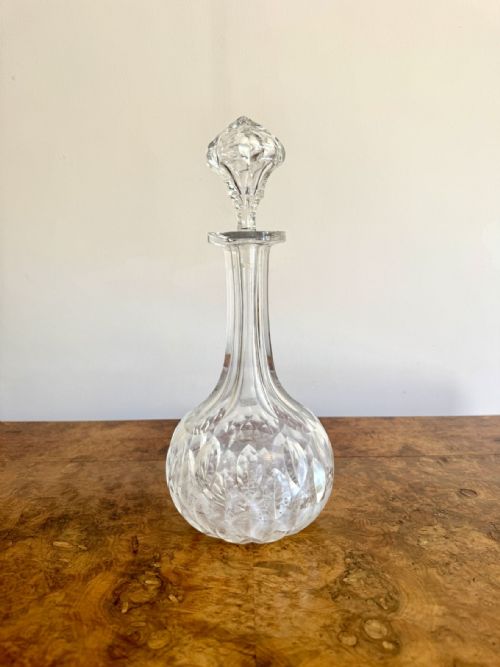
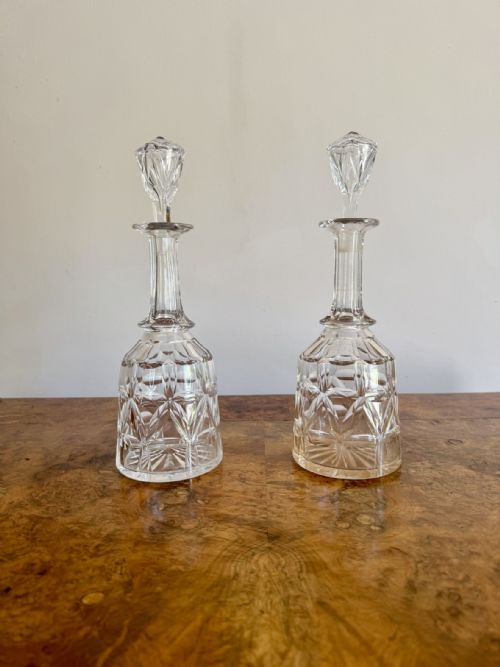
Cut crystal whisky glasses comprise heavy tumblers and dram glasses designed for spirits, alongside matching decanters, tantalus sets, and hip flasks housed in fitted oak, coromandel, or satinwood frames. These objects span from the Georgian period through the Victorian and Edwardian eras into the early twentieth century.
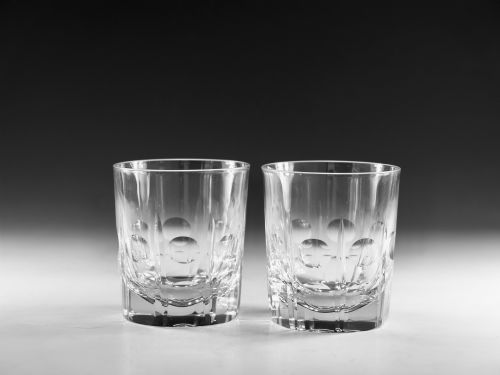
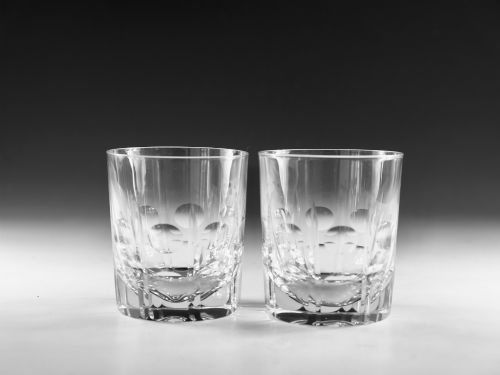
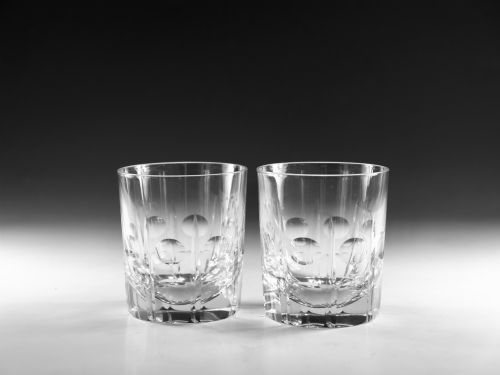
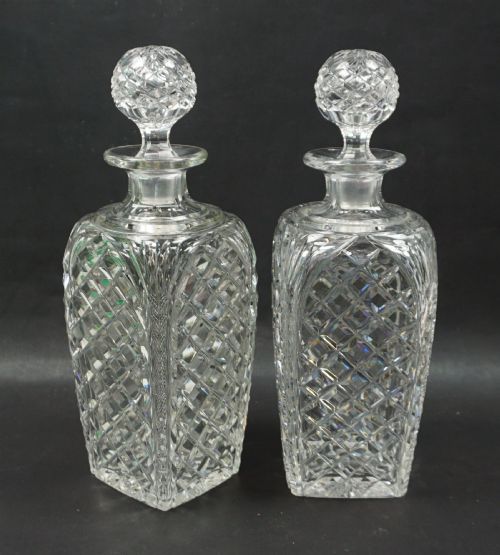
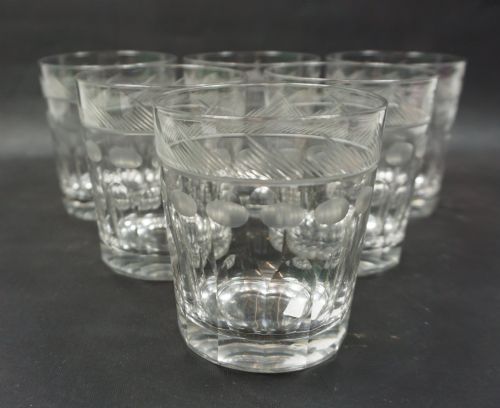
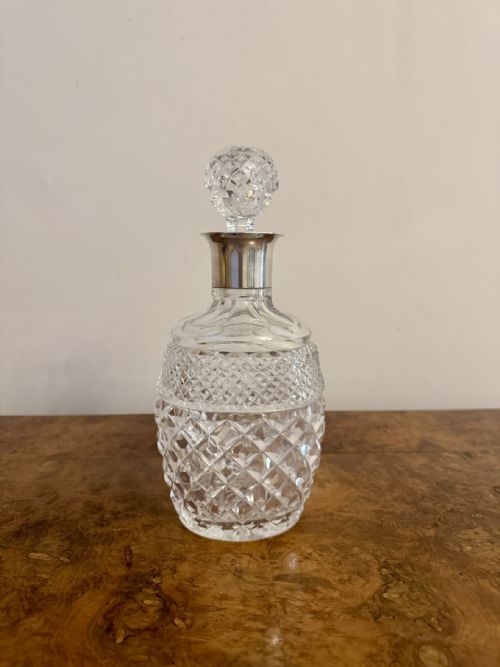
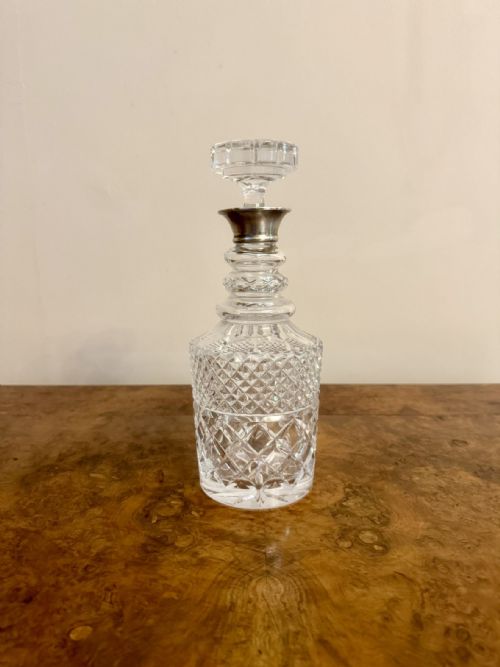
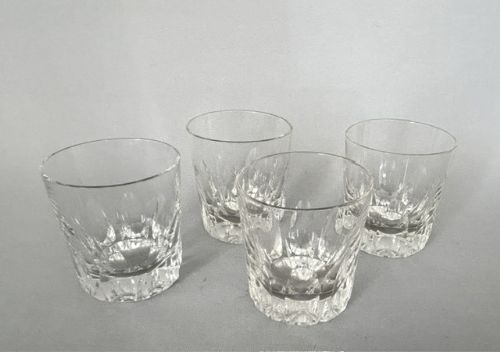
The version most commonly met on this page is the robust Victorian or Edwardian cut glass tumbler, often found in matched pairs or small sets. Alongside these standalone drinking vessels, collectors frequently encounter heavy square-section decanters and complete after-dinner tantalus sets fitted with brass, silver plate, or sterling silver collars.
How they were made
The manufacture of these drinking vessels relies heavily on lead crystal and heavy cut glass, shaped by blowing or moulding before craftsmen applied deep wheel-cut facets, flutes, and blaze patterns by hand. This intensive cutting creates the sharp refraction and tactile grip characteristic of period barware.
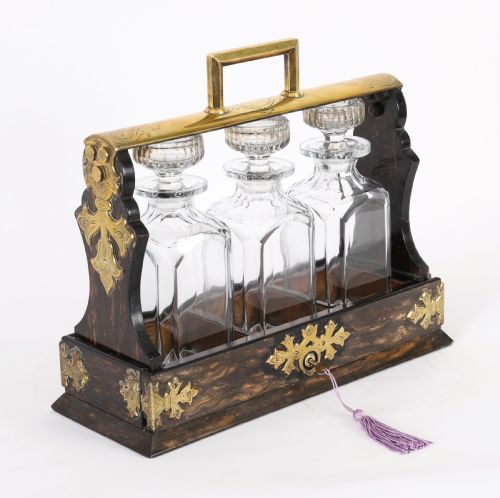
Many of the associated decanters and tantalus frames integrate supplementary materials such as solid oak, satinwood, and coromandel wood, often embellished with cast brass mounts, silver-plated hardware, or sterling silver collars that secure the glass stoppers and locking mechanisms.
Victorian hosts locked their whisky away in tantalus frames not from stinginess, but to keep the domestic staff from helping themselves to the decanters.
What varies in quality
Quality rests primarily on the crispness and depth of the glass cutting, where sharper facets and deeper wheel work produce superior brilliance and weight in the hand. Pieces with thicker blank walls and precise symmetry at the rim represent the finer end of the spectrum.
The integrity and craftsmanship of the accompanying woodwork and metal mounts further distinguish superior examples. Fitted oak or exotic wood tantalus frames with well-cast brass hardware and intact locking mechanisms indicate higher overall original manufacture.
James Powell
The Cut Crystal Whisky Glasses Glossary
- Tantalus
- A locking wooden cabinet holding decanters that displays the bottles while preventing access to the contents without a key. These security frames typically utilise brass mountings and oak or satinwood bodies.
- Lead crystal
- Heavy glass containing metallic oxide that increases refractive index, density, and softness for deep cutting. This material accounts for the substantial heft found in period whisky tumblers.
- Dram glass
- A small historical drinking vessel intended for a single measure of neat spirit. Georgian examples frequently display early hand-cut blaze motifs.
- Blaze cut
- A decorative glass-cutting pattern featuring long, flat vertical or diagonal facets. This geometric technique reflects light sharply across the surface of the tumbler.
- Spirit barrel
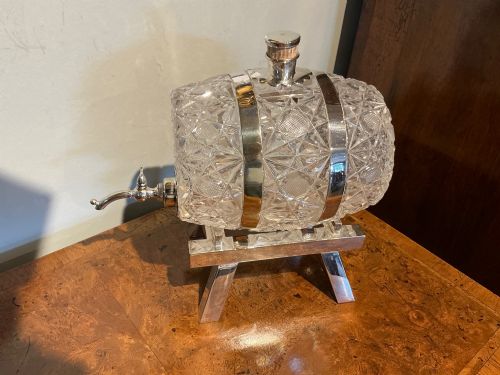
- A cylindrical or barrel-shaped container utilised for storing and dispensing alcohol. These vessels often appear alongside matched tantalus sets and barware trays.
Cut Crystal Whisky Glasses: Frequently Asked Questions
What is a tantalus?
A tantalus is a locking wooden frame that secures decanters behind a metal bar, preventing servants or guests from pouring drinks without authorization. The design derives its name from the mythological figure punished by eternal thirst.
These security cabinets appear in oak, satinwood, and coromandel, frequently housing two or three cut crystal decanters fitted with brass or silver-plated mountings.
How do I date cut crystal?
Dating involves examining the weight, clarity, cutting style, and associated framing materials of the glass and hardware. Georgian and early Victorian pieces often exhibit hand-polished pontil marks and simpler, heavier faceted profiles.
Later Victorian and Edwardian examples tend towards standardised machine-assisted blanks with deep prismatic cutting, while fitted wooden tantalus frames incorporate period-specific brass locks and joinery techniques.
Are these glasses safe to use?
Period lead crystal and cut glass vessels remain entirely suitable for serving spirits during modern dining or after-dinner entertaining. Hand-washing in warm water preserves the clarity and protects the antique glass surface.
Avoid thermal shock by refraining from putting boiling water or ice directly into dry antique tumblers.
What is the difference between crystal and glass?
Lead crystal contains metallic oxide additives that increase the density, weight, and light refraction of the material compared to standard soda-lime glass. This higher density permits deeper and sharper decorative cutting without fracturing the matrix.
Items listed across these periods utilise both heavy lead crystal and traditional cut glass formulations designed specifically for barware and decanters.