


Cut Crystal Sconces
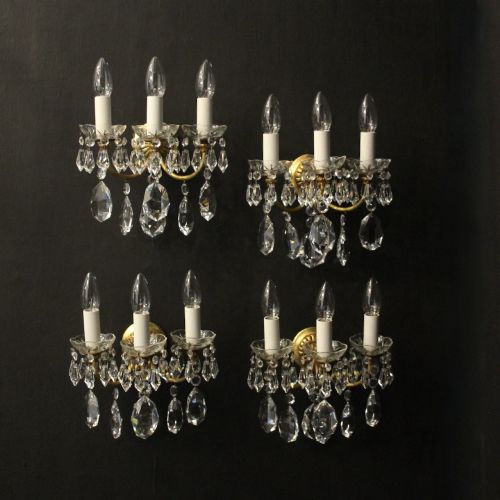
These cut crystal sconces are brilliant wall-mounted light fixtures that bring genuine period sparkle and illumination to an interior space.
Cut Crystal Sconces
When you search for cut crystal sconces, you find wall-mounted light fittings designed to reflect and refract candlelight or electric illumination around a room. These pieces range from compact twin-branch fixtures to substantial sets adorned with hanging glass drops and lustres.
You are most likely to meet pairs and sets originating from the nineteenth and early twentieth centuries, including Edwardian and 1930s examples. French designs with gilt brass, bronze, and elaborate crystal arrangements appear frequently alongside English and Scandinavian pieces.
How they were made
Maker workshops combined heavy cast brass, gilt bronze, and metal frames to support substantial glass and crystal components. Metal arms and backplates were shaped and gilded to hold the weight of the glass securely.
Glass elements were individually blown, moulded, and hand-cut to create sharp facets that maximise light refraction. Workers then suspended crystal drops and lustres from the metal frames using delicate wire loops and pins.
Some sconces sport charming 'Au Bon Sauvage' motifs, proving that even eighteenth-century lighting designers had a penchant for the theatrical.
What varies in quality
The distinction between standard examples and the finest pieces lies in the crispness of the glass cutting and the weight of the metal mountings. Superior items feature deeply bevelled facets that catch the light cleanly and heavy bronze or brass frames with refined chasing.
Completeness and uniformity in the hanging crystal drops also separate ordinary pieces from exceptional ones. Original matching lustres and robust structural integrity indicate higher workshop standards during manufacture.
Baccarat·F. & C. Osler
The Cut Crystal Sconces Glossary
- Wall sconce
- A decorative wall-mounted lighting fixture designed to hold candles or electric lamps. These fixtures project outward from the wall surface.
- Lustre
- A decorative glass ornament or vase hung with crystal pendants designed to reflect light. They often feature cut glass drops surrounding a central stem.
- Gilt bronze
- Bronze metal treated with a thin layer of gold or gold-coloured alloy to produce a rich metallic sheen. This material was frequently used in French frames.
- Bag light
- A wall light featuring a cascading bag-like arrangement of tight crystal drops suspended from a metal frame. This style creates a concentrated cluster of sparkle.
Cut Crystal Sconces: Frequently Asked Questions
How were cut crystal sconces used?
These fixtures were mounted on walls in hallways, drawing rooms, and formal chambers to provide ambient illumination by candlelight. The cut glass and crystal pendants amplified the modest light of early candles to brighten the surrounding space.
Over time, many of these wall lights were adapted for electricity while retaining their original frames and crystal drops. They continue to function as both decorative wall art and practical light sources.
How do I date a sconce?
Dating relies on examining the metal alloys, the style of the casting, and the cutting patterns of the glass. Edwardian and 1930s pieces often show different wiring channels and mounting brackets compared to nineteenth-century examples.
Stylistic cues such as Rococo curves, French Art Deco lines, or Regency revival motifs also point toward specific manufacturing eras. Comparing the construction methods of the backplate helps confirm the period.
Are these wall lights wired for electricity?
Many surviving pieces have been converted from candles to electricity during their long lifespan. The conversion methods vary depending on when the electrical fittings were installed.
Buyers should inspect the internal wiring of each piece to ensure it meets current safety standards. A qualified electrician can easily update older wiring while preserving the antique metal and crystal structure.
How do I clean cut crystal?
Cleaning requires warm water, a mild detergent, and careful hand-washing of each individual glass drop and crystal pendant. Harsh chemicals must be avoided to protect the integrity of the antique glass and any gilt metal surfaces.
Drops are often removed one by one, washed gently, and reattached to the metal frame. Regular dusting with a soft cloth helps maintain the sparkle between deeper cleanings.