



Cut Crystal Perfume
These cut crystal perfume bottles bring heavy wheel-cut glass and silver mounts from the Victorian era up through Art Deco dressing tables.
Cut Crystal Perfume
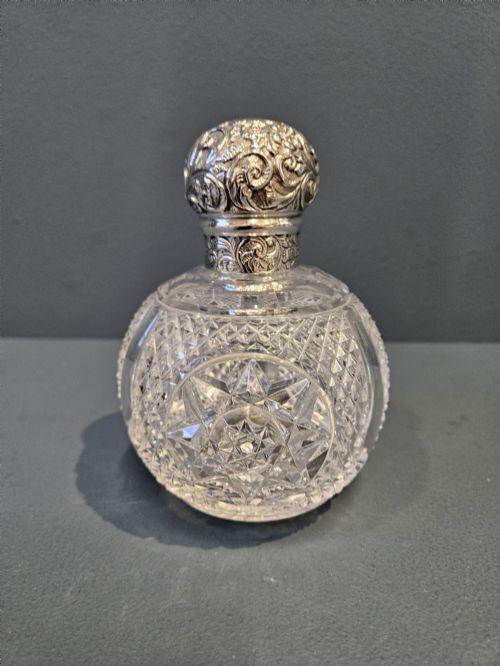
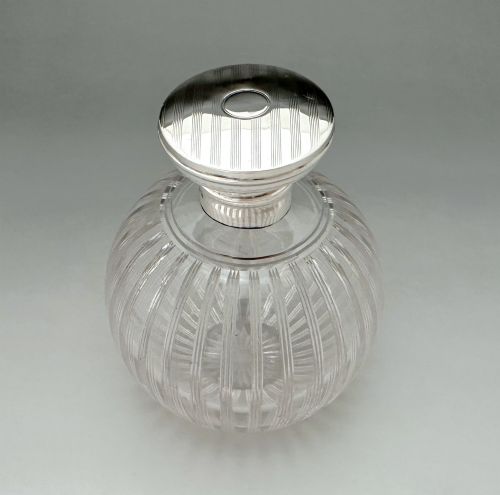
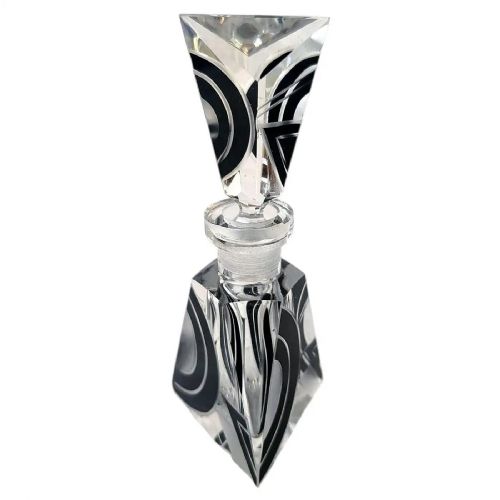
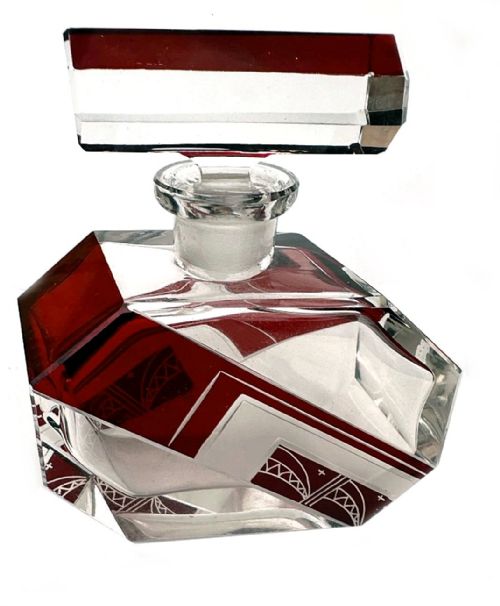
When searching for cut crystal perfume, a buyer encounters dressing table accessories spanning from the nineteenth century into the 1930s. The selection ranges from robust Victorian and Edwardian silver-collared glass bottles to geometric Art Deco pieces originating from places like the Czech Republic.
The most common examples on this page are Edwardian and George V silver-mounted cut glass or crystal bottles alongside bold Art Deco atomisers. These pieces served practical domestic functions on dressing tables, often housing cologne or concentrated scent for daily use.
Origins stretch across English workshops, French makers, and Bohemian glasshouses, utilising materials such as sterling silver, tortoiseshell, and coloured glass. Each period imparts distinct stylistic traits, from the heavy floral engraving of the Victorian period to the sharp lines of 1930s geometric cutting.
Materials and Techniques
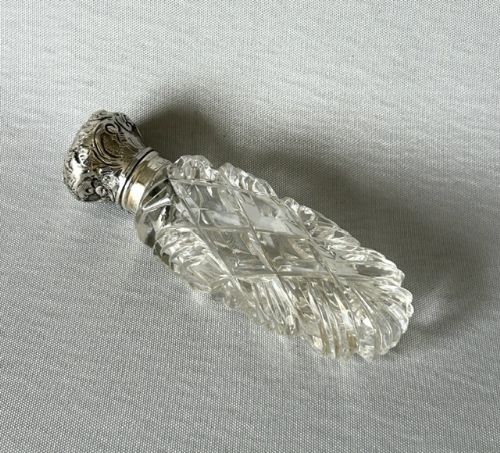
Makers shaped heavy lead crystal and glass bodies through deep wheel-cutting, pressing, and moulding to create intricate facets that catch the light. This heavy glass base provided the stability needed for daily handling on dressing tables.
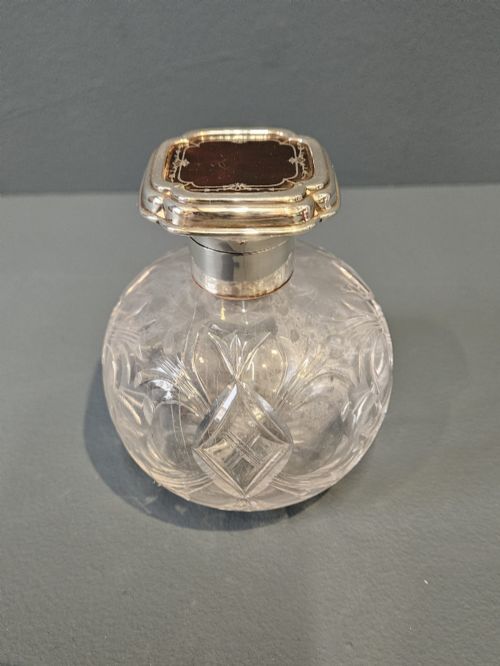
Metalworkers added sterling silver collars, hinged lids, and screw caps, frequently stamping them with assay office hallmarks indicating year and maker. Some pieces incorporate delicate guilloché enamel or polished tortoiseshell inlaid into the silver mount.
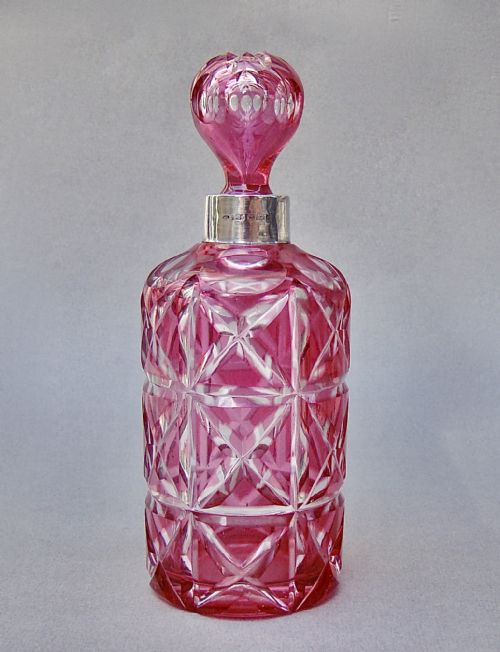
Coloured glass variations, including cranberry, ruby, and blue tones, derived from metallic oxides added during the glass-melting process. Atomiser mechanisms and intricate stoppers completed the construction, sealing the volatile perfumes within.
Cut Crystal Perfume Retail Price Guide 2026
Typical asking prices for cut crystal perfume among the pieces listed under this phrase on Sellingantiques today, from the lower quarter to the upper quarter. They describe what is for sale here now, not the wider market.
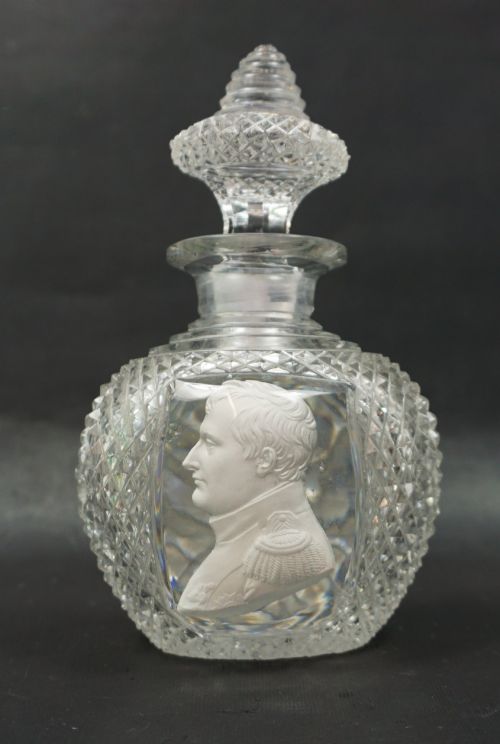
Napoleon watches over one Victorian dressing table from inside a sulphide portrait embedded deep within a clear crystal scent bottle.
Distinctions in Quality
The depth and crispness of the wheel-cutting on the crystal body dictate much of the visual merit, with superior pieces showing sharp, uniform facets rather than soft, rounded edges. The weight and clarity of the glass itself also separate standard production items from finer studio output.
The integration between the glass body and the silver mount reveals the maker's hand, where a tight, secure collar without excess adhesive signifies careful assembly. Hallmarks struck clearly into sterling silver mounts provide evidence of origin and metal purity.
Artistic execution in secondary materials, such as hand-applied guilloché enamel or well-fitted tortoiseshell panels, elevates certain examples above plain glass and metal combinations.
Harold Bushell and Co·Karl Palda·Barnsley and Co·George Unite·Asprey
The Cut Crystal Perfume Glossary
- Guilloché enamel
- A decorative technique where a precise, intricate geometric pattern is mechanographically engraved beneath a translucent enamel layer. This finish appears frequently on early twentieth-century silver lids.
- Sulphide
- A small cameo-like ceramic plaque encased within clear crystal or glass during the manufacturing process. Famous portraits, such as Napoleon, often appear in this medium.
- Assay mark
- A stamp or group of stamps applied to precious metals indicating purity, the maker, and the office of testing. English silver mounts commonly bear these diagnostic marks.
- Atomiser
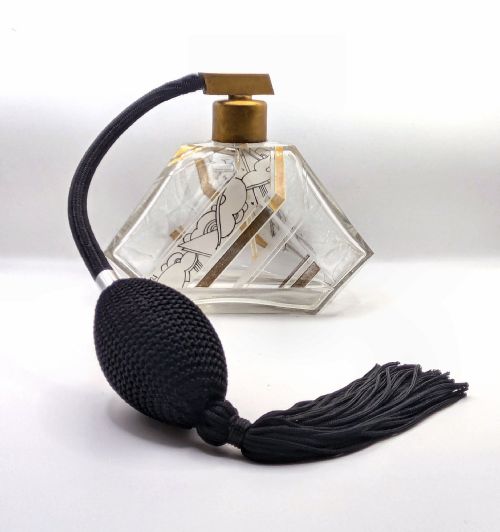
- A spray mechanism fitted to a perfume bottle, popularised during the Art Deco period. It uses a bulb and tube system to convert liquid scent into a fine mist.
Cut Crystal Perfume: Frequently Asked Questions
How do I date a cut crystal perfume bottle?
Dating relies primarily on the style of the glass cutting, the shape of the bottle, and any hallmarks stamped onto the silver mounts. Victorian pieces often display floral engraving and heavy silver collars, while 1930s examples favour geometric shapes and coloured glass.
Assay office marks on the sterling silver lids provide exact years for many English pieces. Comparing the stopper fit and overall silhouette against known period styles helps narrow down manufacturing decades.
Are these perfume bottles still usable today?
Most antique scent bottles remain fully functional, provided the ground glass stopper or screw cap creates a proper seal. Original stoppers belong exclusively to their specific bottles, as they were ground by hand to fit individual necks.
Atomisers require careful handling because rubber bulbs and internal metal tubes degrade over decades. Many buyers prefer to display them empty on dressing tables to preserve their internal condition.
What is the difference between glass and crystal?
Crystal contains lead oxide, which increases the weight, refractive index, and clarity of the material compared to standard soda-lime glass. This high lead content allows for deeper, sharper facet cutting that refracts light brilliantly.
In historical listings, the terms often overlap, but heavy lead crystal forms the basis of the finest nineteenth and early twentieth-century scent bottles.
How should I clean silver mounts on old bottles?
Silver mounts require gentle cleaning with a soft cloth to avoid touching the surrounding glass or enamel. Silver polish should be kept away from glass crevices and tortoiseshell panels where residue can accumulate permanently.
Preventing moisture from entering the bottle during cleaning protects internal residues and fragile paper labels if any remain.