



Cut Crystal Coupes
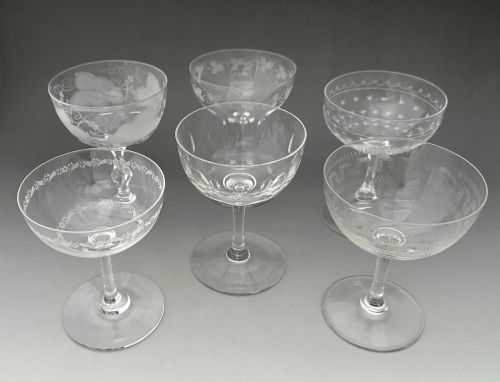
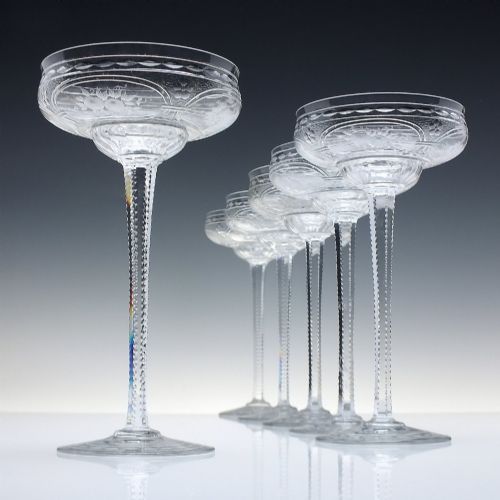
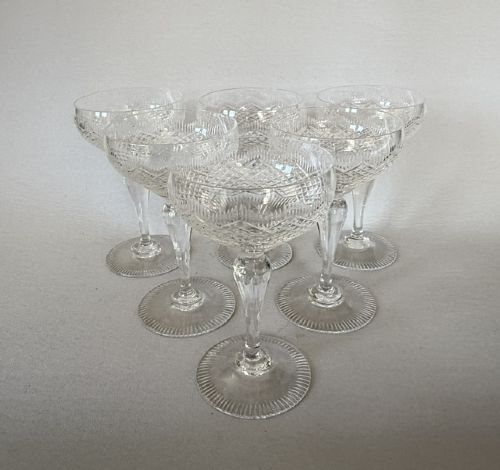
These cut crystal coupes are substantial drinking vessels and centrepiece bowls designed for celebratory tables, offering brilliant refraction and weight.
Cut Crystal Coupes
Cut crystal coupes encompass both shallow champagne vessels and large decorative centrepiece bowls intended for display and dining. The search phrase covers glassware spanning the Regency period through the Victorian, Edwardian, and Art Deco eras, with pieces originating from English and French workshops.
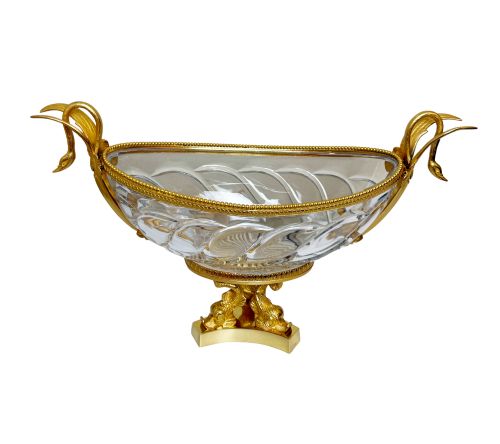
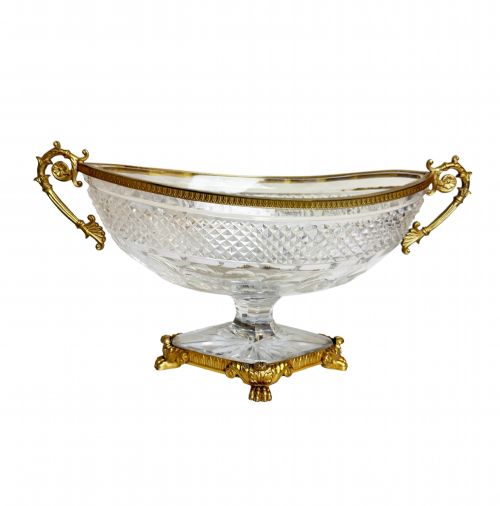
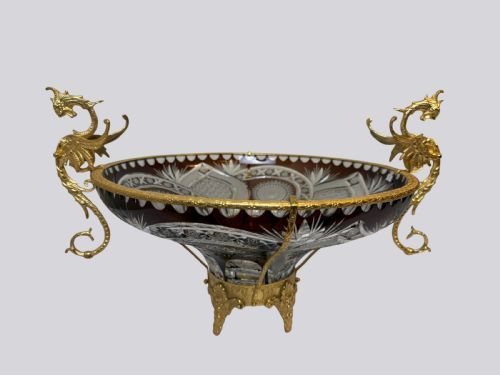
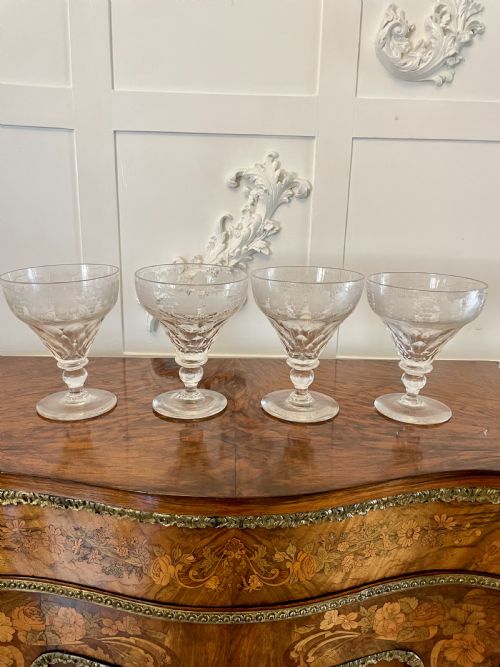
Buyers most frequently encounter sets of champagne bowls or glasses alongside significant centrepieces mounted in gilt bronze or ormolu. These items appear in clear lead crystal as well as coloured variations including cranberry and green over crystal.
The forms range from small drinking sets to large decorative centrepieces featuring facet cut stems and engraved botanical motifs. Such vessels reflect the formal entertaining habits of the nineteenth and early twentieth centuries.
How they were made
The manufacture of these objects relies on heavy lead crystal or glass blanks shaped by blowing or moulding before deep wheel cutting creates geometric or floral facets. Coloured examples utilise cased glass techniques, where a layer of coloured glass is fused over a clear crystal base and selectively cut away to reveal the contrast underneath.
Many of the larger centrepieces combine this heavy cut glass with cast gilt bronze or ormolu mounts, securing the crystal bowls within elaborate metal frames or stands. Surface decoration is often enhanced by hand engraving, etching, or polished facets that catch the light from multiple angles.
Cut Crystal Coupes Retail Price Guide 2026
Typical asking prices for cut crystal coupes among the pieces listed under this phrase on Sellingantiques today, from the lower quarter to the upper quarter. They describe what is for sale here now, not the wider market.
Convolvulus flowers winding around a cranberry bowl ensure your evening toast comes with botanical ambition.
What varies in quality
The distinction between standard production and the finest items rests on the depth and crispness of the cutting, the weight of the metal mountings, and the clarity of the crystal. Superior examples display sharp facets with well-polished planes and substantial walls that give a resonant ring when struck gently.
In cased and coloured pieces, the precision of the wheel work in cutting through the outer layer without breaching the inner crystal determines the refinement of the finished piece. Mounts cast in gilt bronze or ormolu add structural complexity and artistic merit that separate simple glassware from grand decorative centrepieces.
The Cut Crystal Coupes Glossary
- Coupe
- A shallow, broad-bowled glass traditionally used for champagne or sparkling wine. It sits on a short stem above a flat foot.
- Cased glass
- Glassware made by fusing one layer of coloured glass over a contrasting base layer. The outer layer is then cut through to reveal the clear or different coloured glass beneath.
- Ormolu
- Gilt bronze ornamentation applied to furniture, clocks, and glass centrepieces. It provides a rich, gold-coloured metallic mount for crystal bowls.
- Facet cut
- A decorative technique involving the grinding of flat geometric planes into the surface of glass. This creates multiple reflective angles to enhance brilliance.
- Centrepiece
- A large decorative bowl or stand placed in the middle of a dining table or sideboard. These often combine heavy cut crystal with elaborate metal stands.
Cut Crystal Coupes: Frequently Asked Questions
What are cut crystal coupes used for?
These vessels serve primarily as drinking glasses for champagne, sparkling wine, or desserts at formal gatherings. Larger versions function as decorative centrepieces or fruit bowls on dining tables.
The shallow bowl shape was designed historically to allow the bubbles to dissipate more quickly than in a modern flute. Today, they are prized both for functional entertaining and as decorative table ornaments.
How do I identify a Regency piece?
Regency items date from the early nineteenth century and typically display heavy, thick-walled lead crystal with deep, bold cutting patterns. The glass often has a slightly darker tone and considerable weight.
These pieces reflect the neoclassical taste of the period with simple, strong geometric forms. They lack the more ornate floral etching common in later Victorian examples.
What is cased glass?
Cased glass involves fusing a layer of coloured glass over a clear crystal body during manufacture. Artisans then cut through the outer coloured layer to expose the clear crystal beneath.
This technique creates striking contrast in two-tone pieces like cranberry or green over crystal. It requires high skill to ensure even depth across the cut patterns.
How should I care for antique crystal?
Antique crystal requires careful hand washing in warm water with mild detergent rather than machine cleaning. Sudden temperature changes must be avoided to prevent cracking the heavy lead glass.
When storing or displaying centrepieces with gilt bronze mounts, keep them away from direct moisture to protect the metal finish. Soft cloths should be used for drying and polishing the facets.