


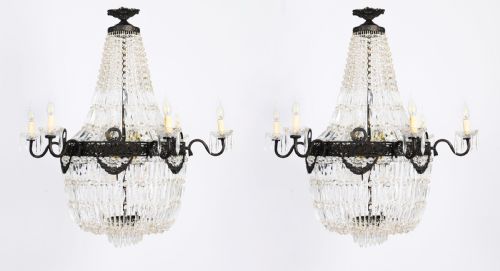


Cut Crystal Basket Light
These cut crystal basket light fixtures bring brilliant illumination and refined historic character to any room.
Cut Crystal Basket Light
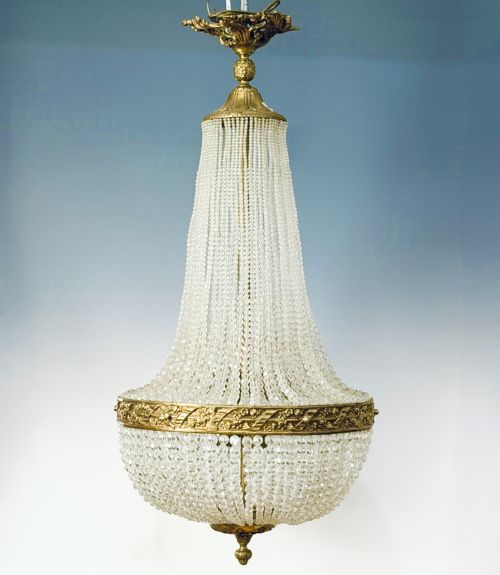
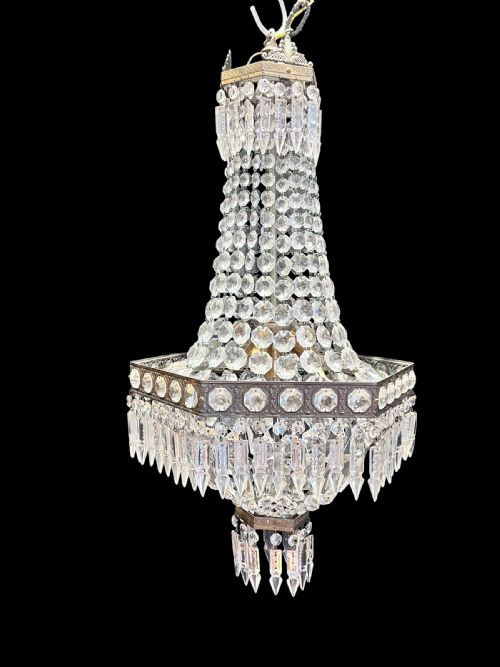
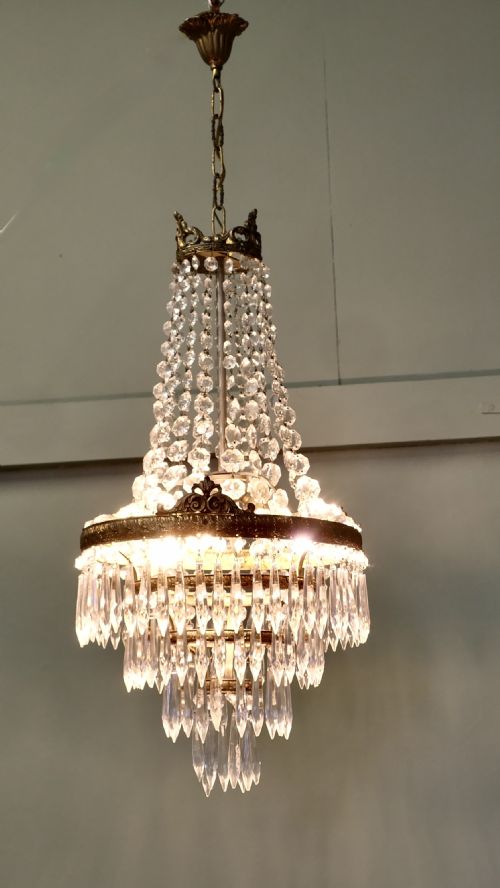
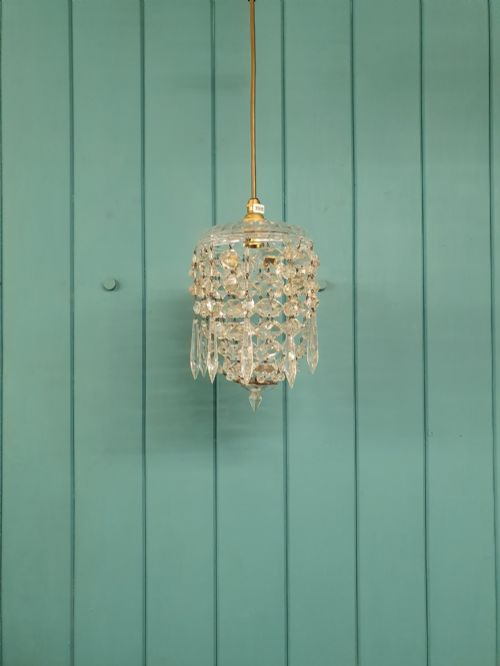
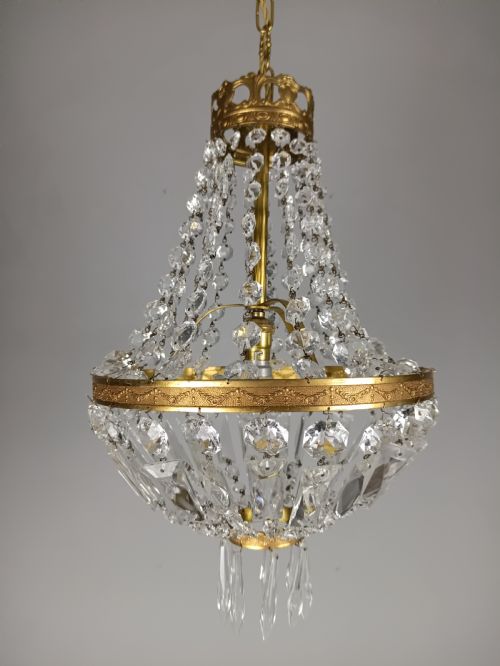
A cut crystal basket light takes the form of a hanging chandelier, often styled as a bag, tent, or dome suspended from the ceiling. These pieces combine structured metal frameworks with dangling glass and crystal elements to create layered illumination.
The most common versions on this page originate from the Edwardian era and the nineteen-thirties, frequently bearing French Empire or Louis Revival influences. Forms range from compact six-inch fixtures to large eighteen-inch ballroom chandeliers.
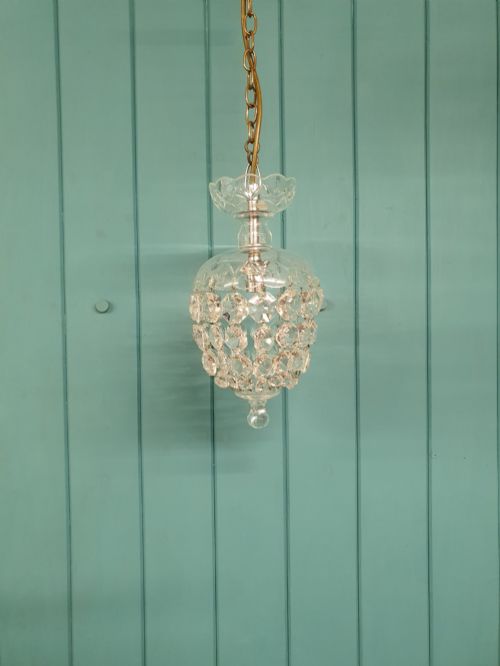
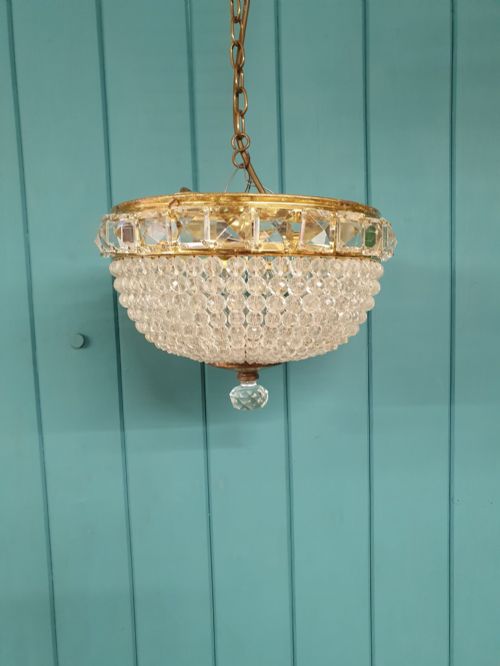
Period examples incorporate distinct configurations such as tapered bags, beaded arrangements, and single-light baskets. Each design reflects the decorative tastes of the early twentieth century alongside earlier nineteenth-century aesthetics.
How they were made
Frames are constructed from brass or bronze, providing a sturdy metallic skeleton to support the weight of the glass components. These metal mounts hold the upper crowns and secure the hanging drops.
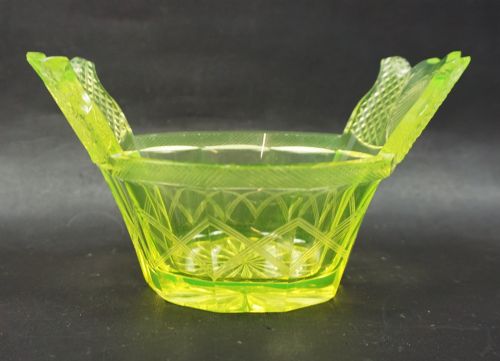
Cut glass and cut crystal prisms, beads, and domes form the body of the basket, diffusing the light through faceted surfaces. Certain examples also integrate uranium glass elements into their composition.
Individual glass pieces link together using small metal wires or pins to form the distinctive tent, bag, and dome shapes. This assembly method allows the components to move slightly and catch the light from multiple angles.
Cut Crystal Basket Light Retail Price Guide 2026
Typical asking prices for cut crystal basket light among the pieces listed under this phrase on Sellingantiques today, from the lower quarter to the upper quarter. They describe what is for sale here now, not the wider market.
Listings feature pieces from the Edwardian era, nineteen-twenty, and nineteen-thirty, utilising brass, bronze, cut crystal, and uranium glass.
What varies in quality
The clarity and depth of the cut crystal separate standard fixtures from finer examples, as sharper facets produce brighter refraction. The intricacy of the glass cutting directly impacts how light disperses across the room.
The weight and finish of the brass or bronze mounts dictate the structural integrity of the basket. Substantial metalwork securely anchors the cascading crystal drops and maintains the symmetry of the chandelier.
The complexity of the design, from simple single-light baskets to multi-tiered tent and bag configurations, determines the visual richness of the piece. Superior craftsmanship is evident in the dense arrangement and secure linking of every prism.
The Cut Crystal Basket Light Glossary
- Bag chandelier
- A lighting fixture featuring a flattened or rounded base where cascading crystals gather in a bag-like silhouette. This form dates predominantly from the early twentieth century.
- Tent and bag chandelier
- A style combining an upper tent of strings radiating from a crown down to a lower bag or basket of crystals. It draws heavily on French Empire and Regency design traditions.
- Uranium glass
- Glass formulated with uranium oxide to produce a distinctive green hue that glows under ultraviolet light. It appears in specific nineteenth-century decorative items.
- Prism
- A cut glass or crystal pendant designed to refract light into spectral colours. These elements hang in profusion from the metal frames of basket lights.
- Dome top chandelier
- A lighting fixture characterised by an upper rounded glass or metal dome from which the basket and drops descend. Edwardian examples frequently employ this configuration.
Cut Crystal Basket Light: Frequently Asked Questions
How do I hang a cut crystal basket light?
Suspended lighting fixtures require secure attachment to ceiling joists using appropriate hooks or electrical mounting boxes capable of supporting the combined weight of metal and glass. Professional installation ensures the wiring and structural load meet safety standards.
Positioning the light depends on ceiling height and room function. Smaller six-inch fixtures suit hallways or compact spaces, while eighteen-inch chandeliers demand greater clearance in larger rooms.
What periods do these chandeliers come from?
The available lighting fixtures span from the early nineteenth century through the Edwardian period and into the nineteen-thirties. Many adopt earlier design vocabularies such as French Empire, Regency, and Louis Revival styles.
Twentieth-century examples dominate the selection, showcasing styles produced around nineteen-twenty and nineteen-thirty. Edwardian pieces also feature prominently among the listed items.
How do I clean a crystal basket chandelier?
Routine maintenance involves dusting the glass components carefully while they remain attached to the frame. For deeper cleaning, individual crystal drops can be washed with warm water and mild soap before being dried thoroughly.
Harsh chemical cleaners should be avoided to protect the brass mounts and the surface of the cut glass. Taking down complex arrangements requires noting how the drops link together to ensure correct reassembly.
What materials are used in these lights?
The primary structural components consist of brass, bronze, and various metals that form the crowns, rings, and frames. These metals provide the necessary strength to support dense assemblies of hanging elements.
The decorative body relies on cut glass, cut crystal, and occasionally uranium glass. These transparent materials catch and refract light through faceted surfaces and beaded strings.