
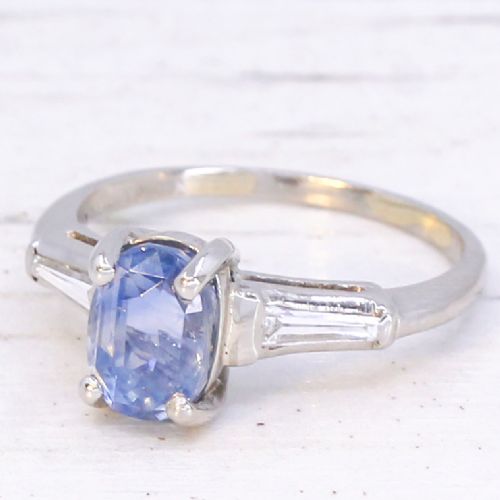
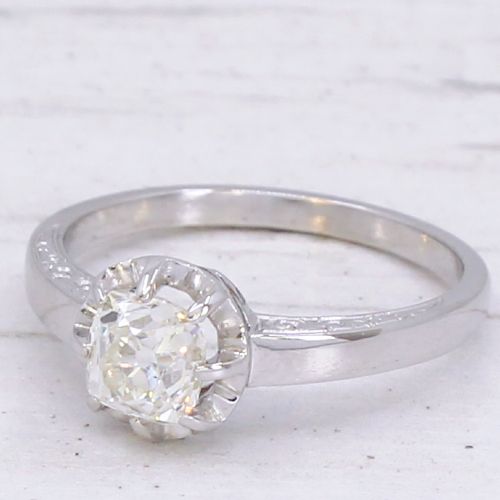
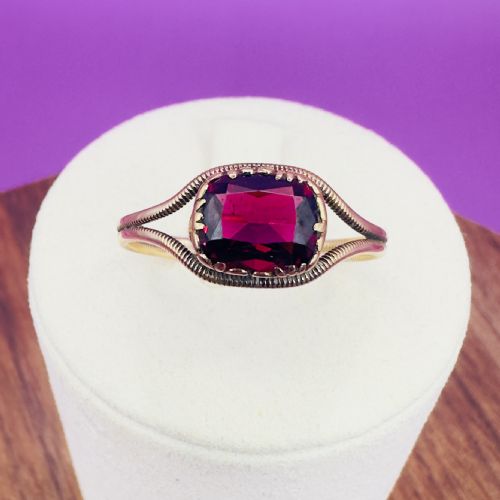


Cushion Cut Solitaire Ring
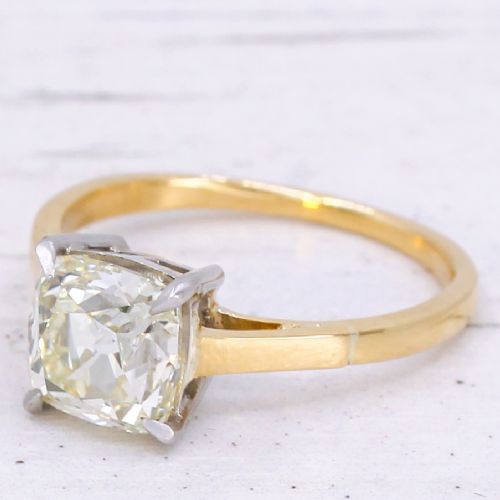
A cushion cut solitaire ring centres a single stone of soft rectangular proportion upon the hand, spanning Georgian origins to mid-century modern design.
Cushion Cut Solitaire Ring
A cushion cut solitaire ring brings together a rounded rectangular central stone and a plain or minimally accented band, focusing entirely upon the singular gemstone. These pieces appear across Georgian, Victorian, Edwardian, Art Deco, and mid-century periods, showing how proportions shift over centuries.
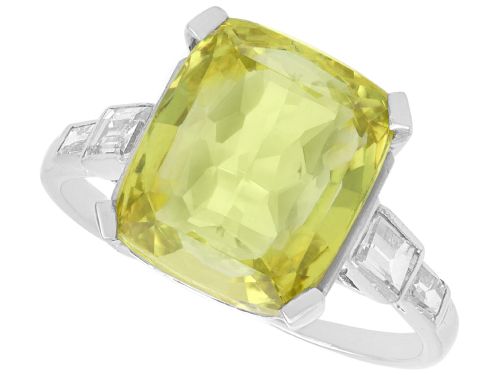
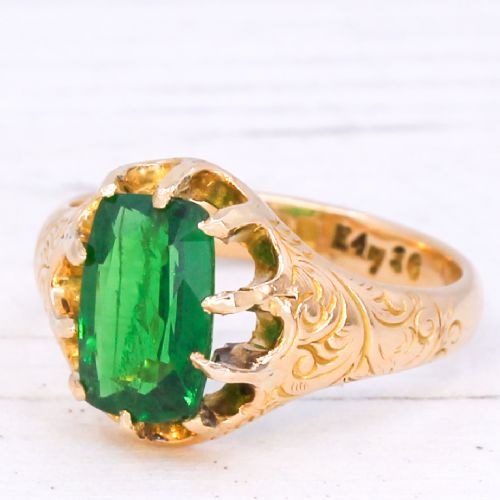
The selections recorded here range from traditional diamond engagement rings to substantial coloured gemstones set singly. Stones such as sapphire, amethyst, chrysoberyl, emerald, tsavorite, and garnet often take the primary position in place of diamond.
Settings adapt to the decades, moving from heavy yellow gold claw mounts in the eighteenth century to geometric platinum work during the Art Deco era and clean lines of mid-century design. The silhouette remains disciplined, designed to showcase the soft corners and broad facets of the cut.
Materials and construction
Construction relies upon precious metals chosen for durability and colour, predominantly platinum, yellow gold in various carat weights, and white gold. Platinum gains favour in the twentieth century for securing stones with fine, rigid claw work.
Gems are shaped by hand or early mechanical cutting to form the distinctive cushion profile, possessing gently curved sides and rounded corners that catch ambient light differently than modern brilliant cuts. Settings are forged, cast, or hand-assembled to match the specific geometry of each individual stone.
Listings span from the eighteenth century through to the nineteen-sixties, incorporating platinum, yellow gold, and multiple gemstone varieties.
Variations in quality
Quality rests upon the optical life of the central stone and the integrity of its historical setting. Superior examples display symmetry in the cushion cut and lively internal light return without excessive dark zones.
Craftsmanship shows in how cleanly the metal holds the stone, the preservation of original claw tips, and whether the mount remains unaltered by later sizing or repair. The harmony between the gemstone silhouette and the proportion of the band determines the overall success of the piece.
The Cushion Cut Solitaire Ring Glossary
- Cushion cut
- A gemstone shape featuring rounded corners and larger facets, resembling a pillow. This historic cut softens the outline of the stone and deepens light reflection.
- Solitaire
- A ring mounting designed to showcase a single main gemstone. This setting eliminates secondary shoulder stones to direct full attention to the centre.
- Old mine cut
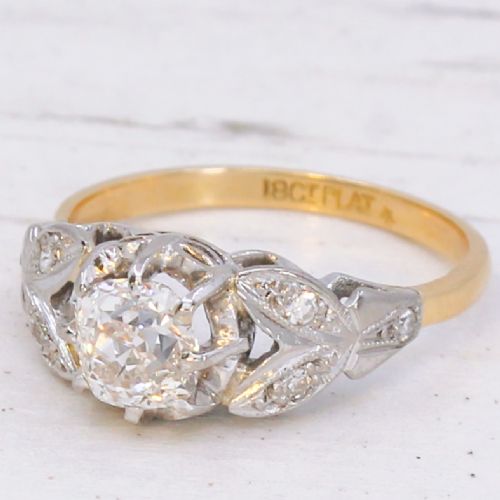
- An early form of diamond cutting with a nearly square girdle, high crown, and large culet. It predates the modern brilliant cut and glows warmly under candle or low light.
- Platinum
- A dense, strong white metal utilised extensively in twentieth-century jewellery. Its strength permits delicate claw settings that secure large gemstones safely.
Cushion Cut Solitaire Ring: Frequently Asked Questions
How do I identify an antique solitaire?
Identification depends upon observing the cut of the stone, the alloy of the metal, and the construction methods used in the mount. Older rings often display hand-cut facets and specific bezel or claw configurations typical of Georgian or Victorian periods.
Examining the interior of the band and the wear patterns helps confirm the age and historical context of the piece.
Are all these rings diamonds?
While many feature diamonds, a significant portion utilise coloured gemstones as the primary solitaire. Sapphires, amethysts, chrysoberyls, emeralds, and garnets frequently occupy the central setting.
These varied minerals reflect the preferences of different design periods, from eighteenth-century garnet work to Art Deco sapphire creations.
How should I care for an antique ring?
Antique rings require gentle handling, regular checks of the setting claws, and cleaning with mild soapy water rather than harsh ultrasonic devices. Removing the ring during heavy manual tasks protects fragile stones and older metalwork from undue wear.
Professional inspection every few years ensures the settings remain secure and the stones stay firmly in place.