

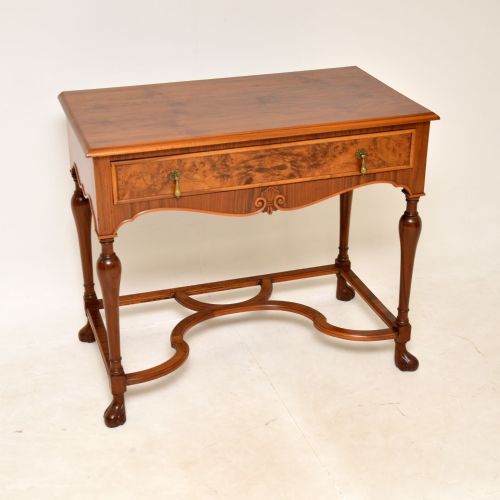


Curved Wood Dressing Table
A curved wood dressing table combines practical surface space with sweeping lines, making it a striking centrepiece for a bedroom.
Curved Wood Dressing Table
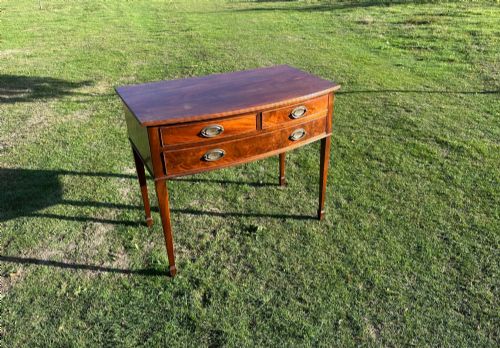
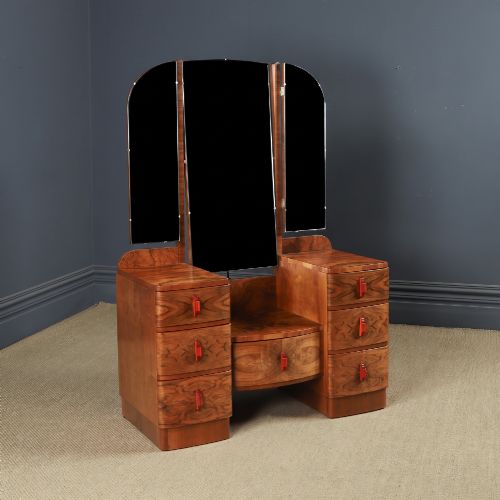
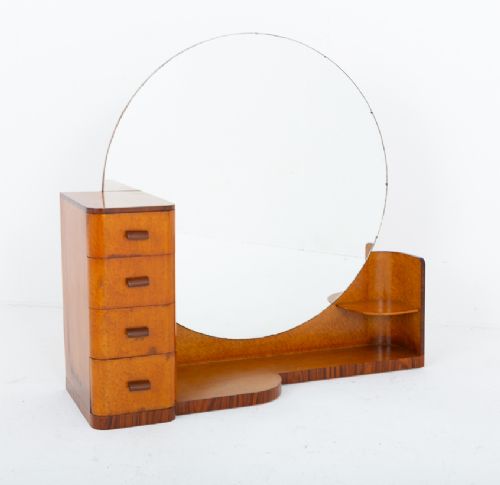
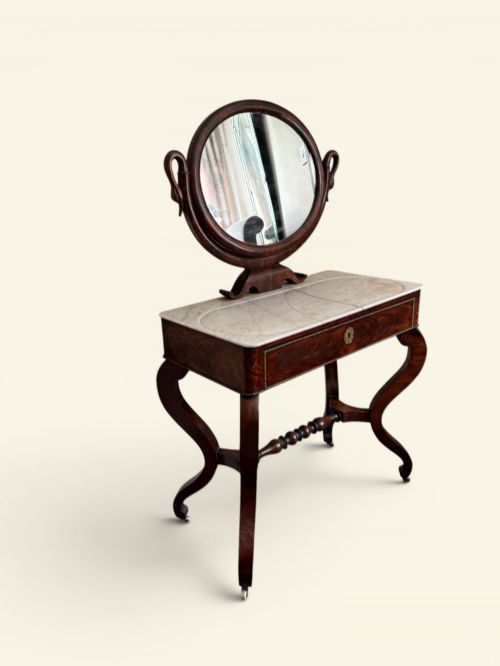
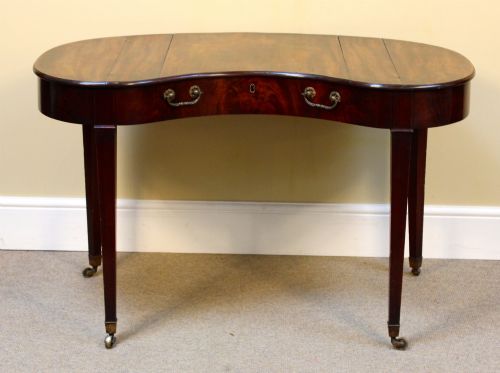
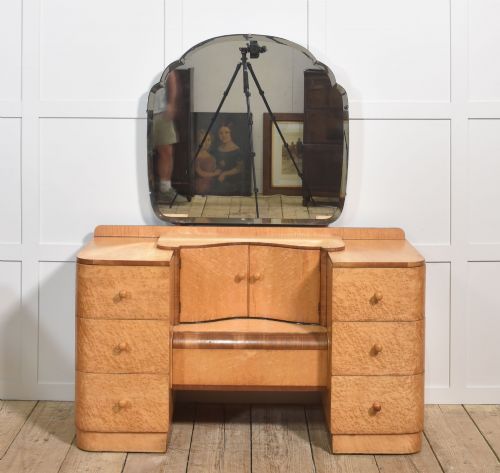
When you search for a curved wood dressing table, you encounter pieces designed to provide a dedicated grooming space while displaying significant stylistic ambition. These vanity units and mirrors often incorporate sweeping pedestals, bow fronts, or kidney shapes.
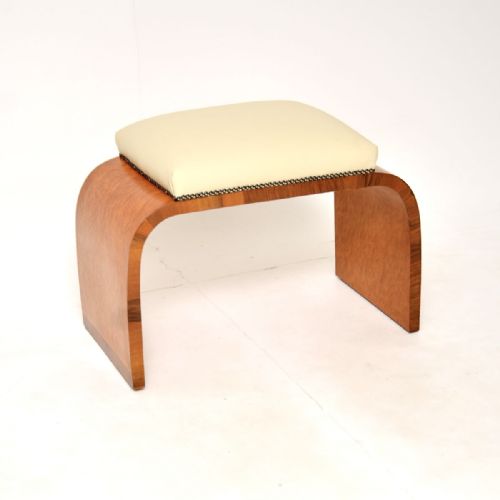
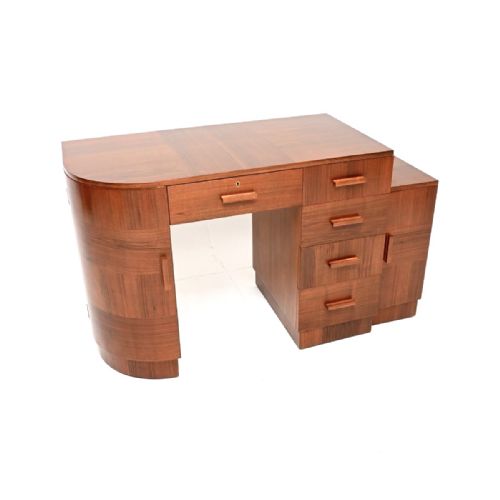
The selections available here lean heavily towards the Art Deco period of the 1930s, alongside earlier Georgian and Victorian examples. Alongside traditional dressing tables, the current listings include related forms such as writing desks, console tables, and matching stools.
Materials and construction methods
Cabinet makers utilised select timbers such as walnut, figured walnut, mahogany, and maple to achieve rich grain patterns across curved surfaces. Veneers were carefully laid over solid carcases to create symmetrical visual flows on drawers and pedestal doors.
Mirrors, glass, and brass fittings complement the woodwork, providing functional reflection points and subtle hardware accents. Frames often incorporate shaped glass plates that match the radius of the vanity below.
Curved Wood Dressing Table Retail Price Guide 2026
Typical asking prices for curved wood dressing table among the pieces listed under this phrase on Sellingantiques today, from the lower quarter to the upper quarter. They describe what is for sale here now, not the wider market.
Distinguishing quality in construction
The standard of a piece rests on the precision of its curved joinery and the selection of timber veneers. Superior examples display seamless grain matching across complex radiused drawer fronts and pedestals.
Makers who invested heavily in design achieved better proportions and integrated hardware that complemented the sweeping lines of the wood. Finer items also retain their original glass plates and harmonising stools.
Harry and Lou Epstein·Maurice Adams·Betty Joel
The Curved Wood Dressing Table Glossary
- Art Deco
- A design style spanning the 1920s and 1930s characterised by sleek geometric shapes, stylised motifs, and modern materials. It produced some of the most dramatic curved furniture forms.
- Figured walnut
- Timber harvested from walnut trees that exhibits intricate, highly decorative grain patterns caused by branch junctions or growth variations. Furniture makers prized this wood for statement surfaces.
- Kidney shaped
- A curved furniture design resembling a kidney bean, commonly found in writing desks and dressing tables. This form allowed the user to sit comfortably within the curve of the piece.
- Sycamore
- A light-coloured hardwood used for cabinet making and decorative veneers. It provides a pale, uniform contrast to darker woods within Art Deco interiors.
Curved Wood Dressing Table: Frequently Asked Questions
How do I date a curved wood dressing table?
Dating relies on identifying stylistic markers, construction techniques, and timber choices recorded across the pieces. Art Deco items typically feature geometric symmetry and exotic veneers from the 1920s and 1930s.
Earlier examples from the Georgian or Victorian eras display traditional joinery methods, solid mahogany or walnut carcases, and distinct hardware styles that differ from mid-century modernist designs.
Are matching stools common with these tables?
Matching stools occasionally accompany dressing tables, though many are found as standalone pieces. When present, they share the curved lines and timber finishes of the main vanity.
Upholstery on these stools is often replaced or updated, while the wooden frames retain their original period characteristics.
What is the difference between a dressing table and a writing desk?
A dressing table is primarily built to hold a mirror and cosmetic items, often featuring integrated pedestal drawers and shaped top surfaces. Writing tables and desks focus on surface area for writing and paperwork.
Despite their different original functions, both forms utilise curved woodwork, such as bow fronts and kidney shapes, for aesthetic impact.
How do I care for figured walnut surfaces?
Walnut surfaces require protection from direct sunlight and excessive moisture to prevent fading and veneer lifting. Regular dusting with a soft, dry cloth preserves the polished finish.
Avoid placing items that trap heat or moisture directly onto the polished wood to maintain the integrity of the antique polish.