




Curved Outdoor Seat
A curved outdoor seat brings an architectural sweep to a lawn or terrace, offering a sociable place to sit that follows the natural contours of a garden.
Curved Outdoor Seat
A curved outdoor seat is designed to sweep around a tree trunk, follow a garden wall, or anchor a formal lawn. These pieces serve as functional garden architecture, shaping how people move through and pause in an outdoor space.
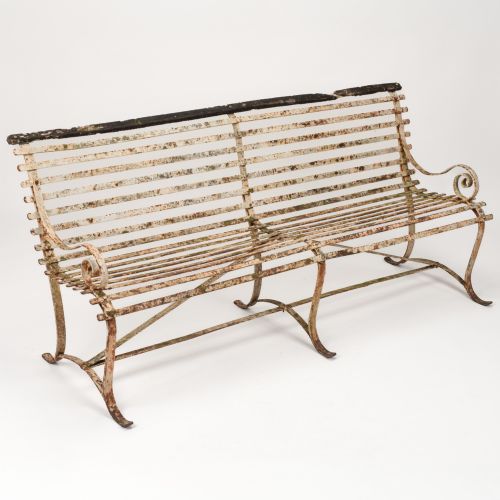
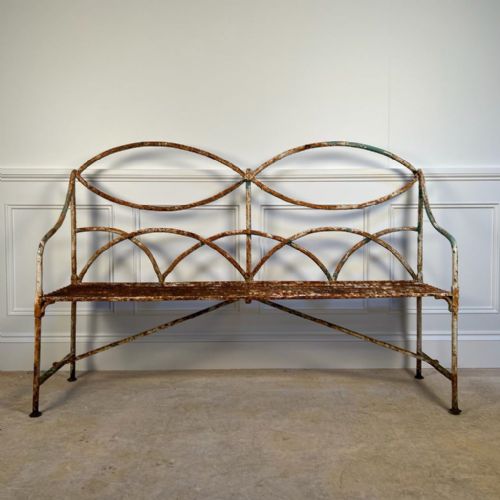
The versions most commonly met here span the Regency period through the early twentieth century, taking the form of garden benches, garden seats, and garden arbours. Forms range from rigid metal strapwork to slatted timber and solid stone.
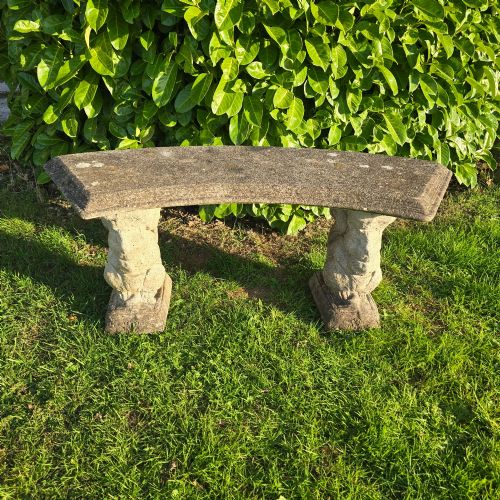
Makers and designers across the nineteenth and early twentieth centuries produced these items in wrought iron, wirework, teak, and reconstituted stone. Each material dictates a different silhouette, from the linear geometry of iron strapwork to the enclosing frame of an arbour.
How they were made
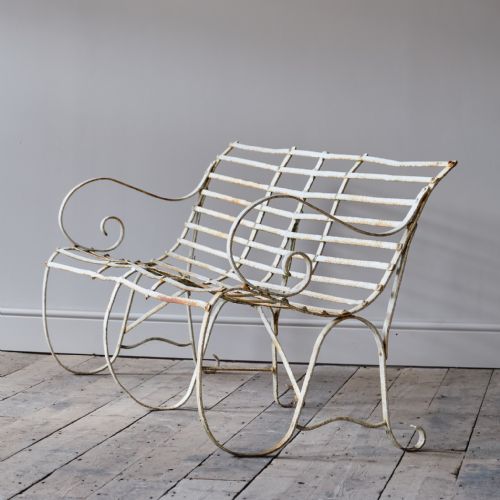
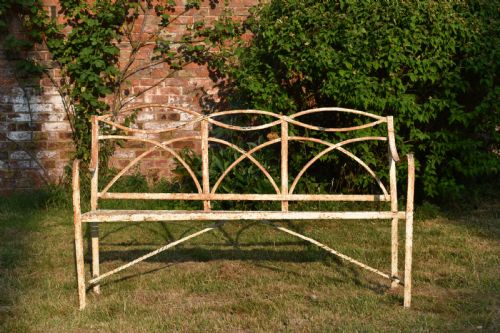
Metal examples rely on blacksmithing techniques, utilising wrought iron and steel wire shaped into strapwork and open scroll patterns. These components are joined to form rigid, curved frames capable of withstanding the elements.
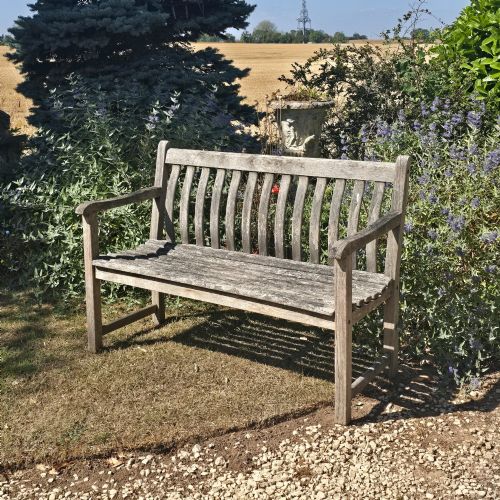
Wooden variants employ traditional carpentry methods, working with timber such as teak and general wood to create slatted seats and supporting structures. Pieces of stone are carved or cast as reconstituted masonry to form heavy, permanent garden furniture.
Curved Outdoor Seat Retail Price Guide 2026
Typical asking prices for curved outdoor seat among the pieces listed under this phrase on Sellingantiques today, from the lower quarter to the upper quarter. They describe what is for sale here now, not the wider market.
Some wirework arbours were built with the quiet expectation that climbing roses would eventually take over the structural engineering.
What varies in quality
The distinction between tiers rests upon the execution of the curve and the integrity of the materials. Pieces exhibiting fine blacksmithing in wrought iron or precise carpentry in teak represent the higher end of the range.
Surface finish and weathering also define quality, where honest patination on stone, paint, and timber distinguishes a piece shaped by decades outdoors from a later interpretation.
The Curved Outdoor Seat Glossary
- Strapwork
- Flat strips of metal riveted or joined in geometric patterns. This technique provides structural strength while maintaining an open, airy appearance on iron garden benches.
- Wirework
- Thin metal rods woven or welded into intricate mesh and framework. It appears frequently in early twentieth-century garden arbours and seating.
- Reconstituted stone
- Aggregate stone mixed with a binder and cast in a mould. This material allowed makers to produce heavy architectural garden seats without carving solid blocks.
- Tree bench
- A circular or semicircular seat built to enclose a trunk. These pieces allow sitters to face outward while utilising the shade of mature trees.
Curved Outdoor Seat: Frequently Asked Questions
How do I maintain a wooden garden bench?
Teak and timber benches require minimal intervention if the wood is left to weather naturally to a silvery grey. Regular brushing removes debris that retains moisture in the slats.
Applying oils is optional and alters the surface colour rather than improving the structural longevity of seasoned outdoor timber.
What is the difference between strapwork and wirework?
Strapwork consists of flat, rigid iron bars arranged in geometric or Regency-style patterns to form a supportive back and seat. It provides a heavy, architectural presence on a lawn.
Wirework uses thinner gauge metal formed into lighter, often more skeletal structures, characteristic of early twentieth-century arbours and seating.
Are stone garden benches comfortable?
Stone and reconstituted stone benches offer a solid, permanent seat that absorbs the ambient temperature of the garden. While firm, they are often softened with loose cushions for longer periods of sitting.
Their primary function in historic gardens was architectural permanence rather than upholstered comfort.