




Curved Hearth Fender
These curved hearth fender pieces frame an open fire with practical guard work and shaped metal.
Curved Hearth Fender
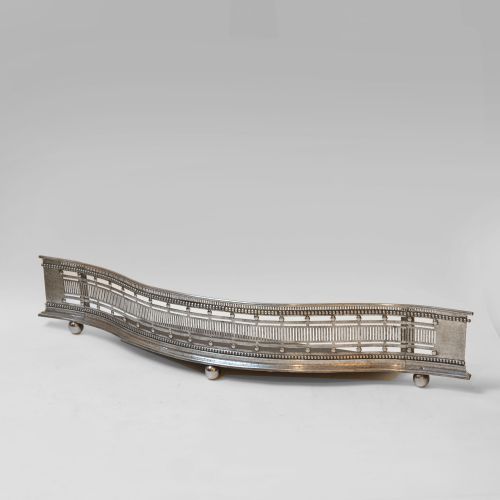
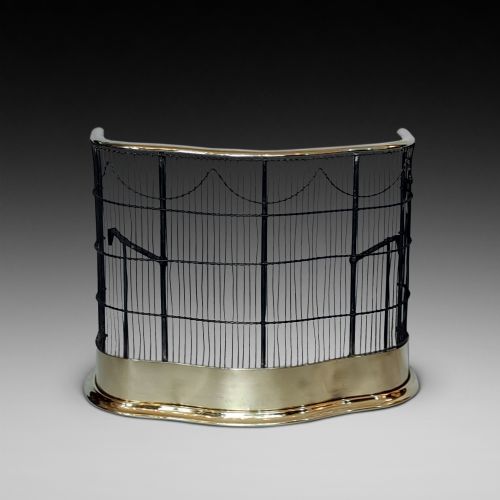
A curved hearth fender guards the floor space around a fireplace whilst keeping stray embers contained within the hearth. These pieces are designed to follow the sweep of a hearth, taking shapes such as bowfront, serpentine, and bowed profiles.
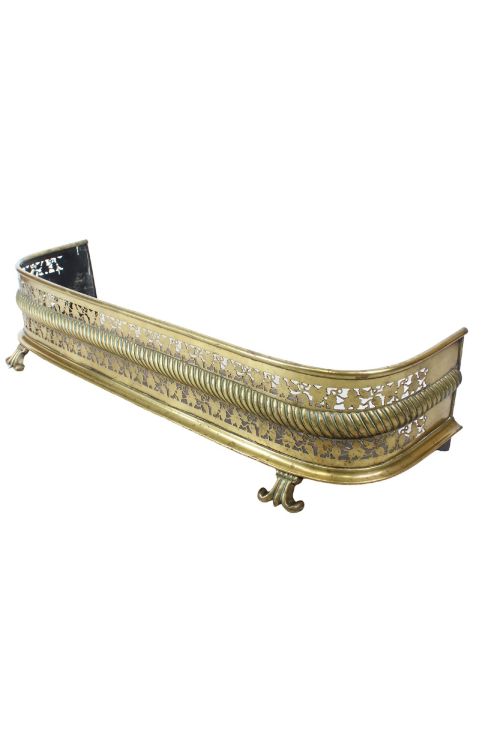
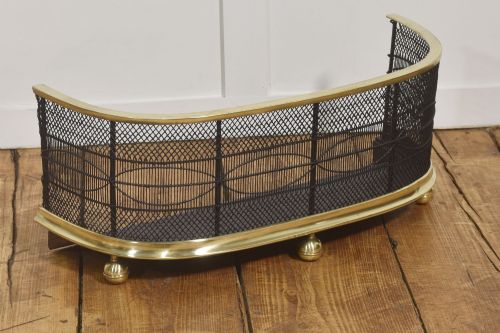
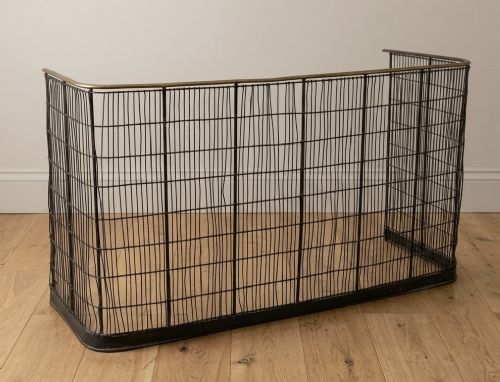
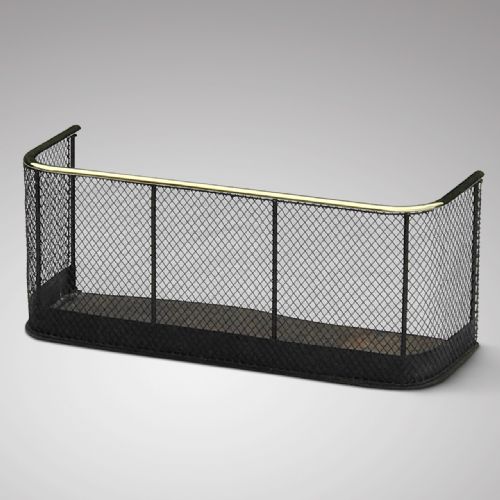
Formats range from low decorative kerb fenders to tall nursery fire guards with protective wire mesh panels. Each piece reflects the fireplace accessories and fireguards of its respective period.
How they were made
Metalworkers shaped iron, steel, and brass using forging, piercing, and wire-weaving techniques to create durable hearth surrounds. Pierced brass plates and woven iron wire provide both visibility of the fire and safety from sparks.
Makers combined heavy cast or wrought frames with lighter mesh panels or polished brass top rails. Bronze and steel components were joined to build sturdy structures capable of withstanding daily hearth use.
Early nursery fenders stood ready to catch flying sparks and tumbling toast alike.
What varies in quality
The standard of a fender rests on the crispness of its pierced decoration and the weight of its metal framework. Finer pieces display cleanly pierced patterns and substantial brass rims rather than flimsy wire construction.
Proportion and execution define the distinction between standard room fenders and grander reception pieces. Original details such as fitted brass top rails and well-formed serpentine curves elevate the construction.
The Curved Hearth Fender Glossary
- Serpentine
- A curved shape curving inward and then outward in a gentle wave. This contour fits specific hearth designs.
- Bowfront
- A rounded front profile that projects outward in an arc. It provides extra clearance around the grate.
- Kerb fender
- A low metal barrier placed directly on the floor around a hearth. These items prevent coal rolls without obstructing the view.
- Nursery fender
- A tall protective guard fitted with wire mesh. This type kept young children safely away from open flames.
Curved Hearth Fender: Frequently Asked Questions
What is a curved hearth fender?
A curved hearth fender is a metal barrier placed on the floor around a fireplace opening. It prevents embers from rolling onto the room floor.
These pieces use shapes like bowfronts and serpentine curves to match traditional hearth designs. They include low kerb types and tall mesh guards.
How do I choose the right size?
Measure the width and depth of your hearth space carefully before selecting a fender. The curve must align with the projection of your fireplace surround.
Consider whether you need a low decorative kerb or a taller nursery guard depending on your room usage. Proportions should match the scale of the fireplace grate.
What materials were used?
Maker workshops utilised brass, iron, steel, bronze, and woven wire mesh. These metals offered durability against heat and daily wear.
Many examples combine heavy iron frames with polished brass top rails or pierced metal plates. The finish depends on the period of manufacture.
How do I date these pieces?
Dating relies on the metalworking techniques, period styles, and structural forms visible in the design. Georgian and Regency pieces often feature precise steel piercing and bowfront shapes.
Victorian and Edwardian examples frequently incorporate wire mesh panels and heavy brass top rails. Comparing the construction methods helps determine the era.