

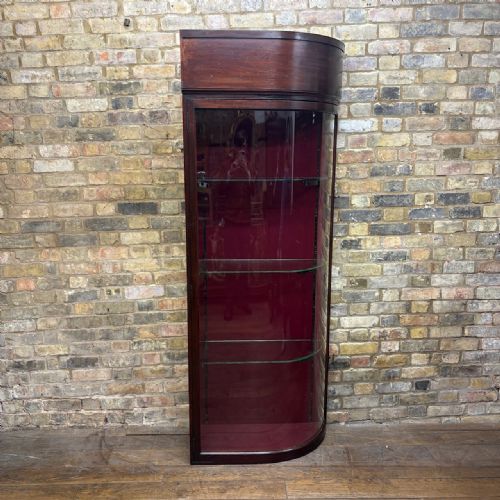
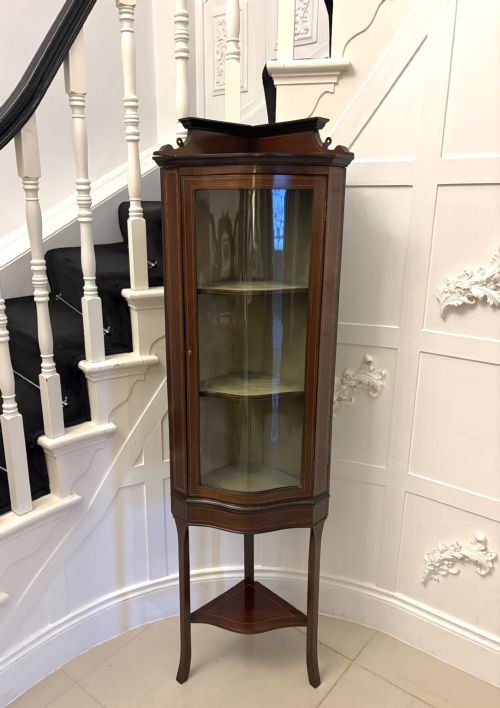
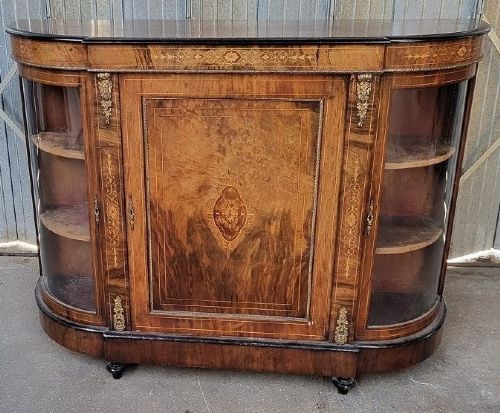
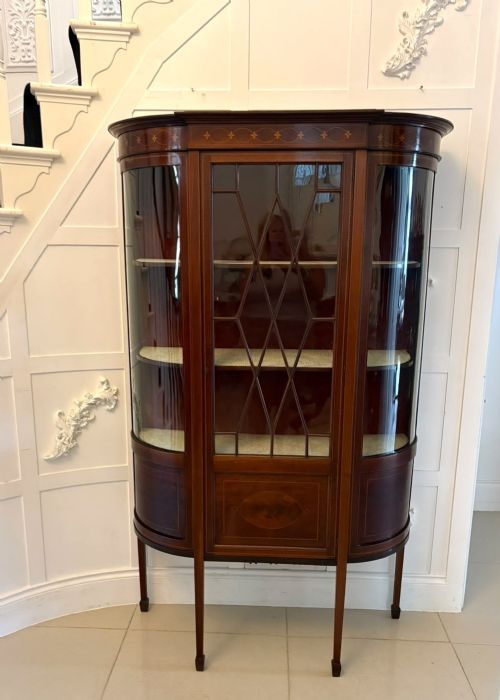
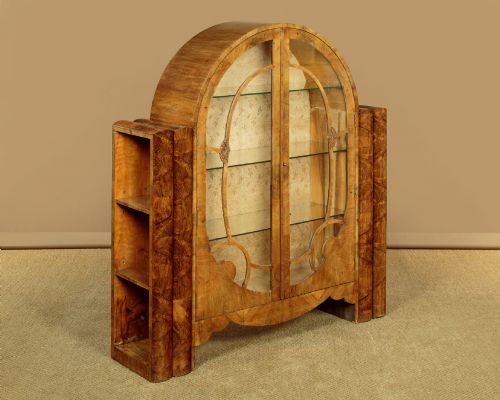


Curved Glass Cupboard
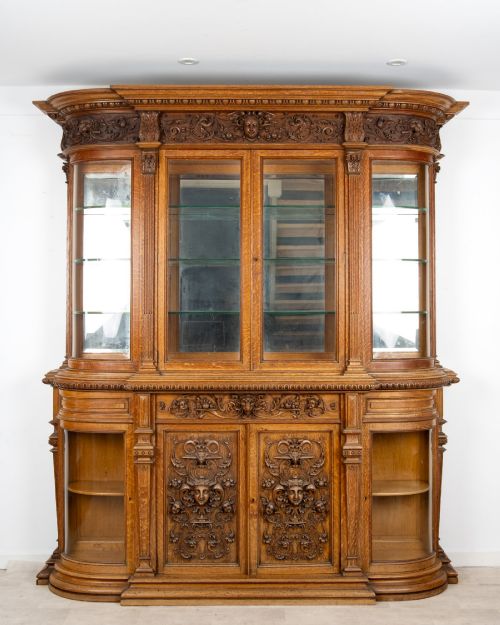
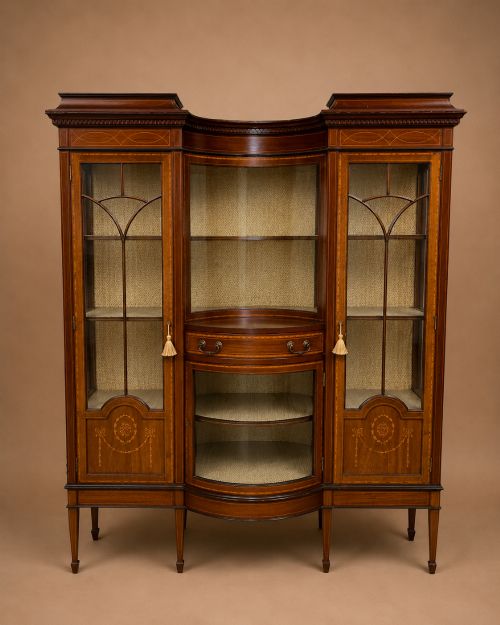
These curved glass cupboard pieces combine bent glazing and polished timbers to exhibit ceramics and collectibles with elegance.
Curved Glass Cupboard
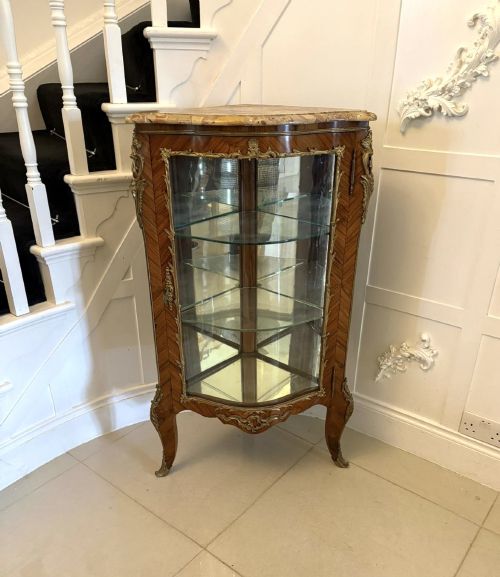
A curved glass cupboard functions primarily to showcase porcelain, glassware, and decorative objects while protecting them from dust. The form appears across multiple eras, taking the shape of freestanding vitrines, wall-hanging or floor-standing corner cabinets, and low credenzas.
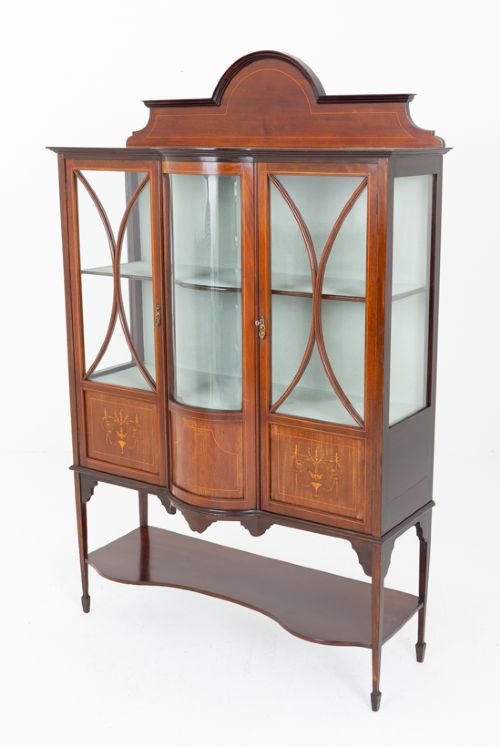
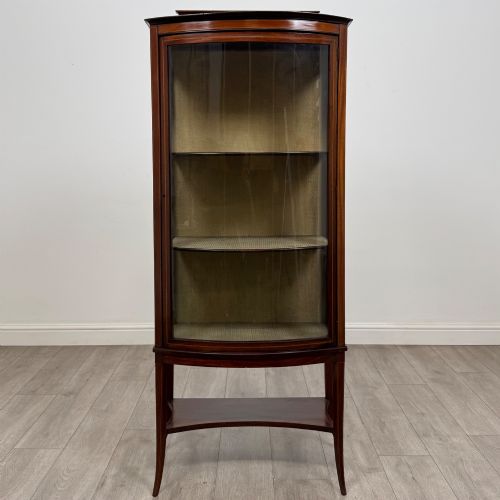
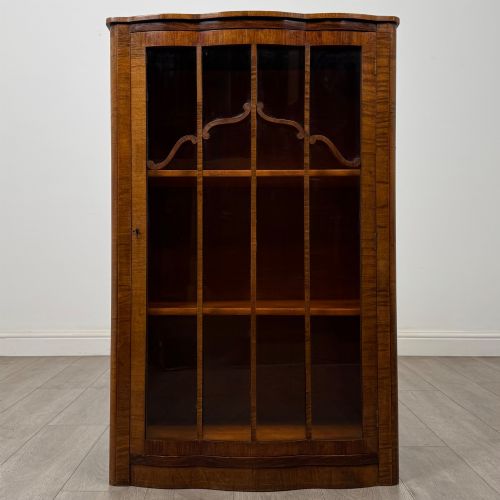
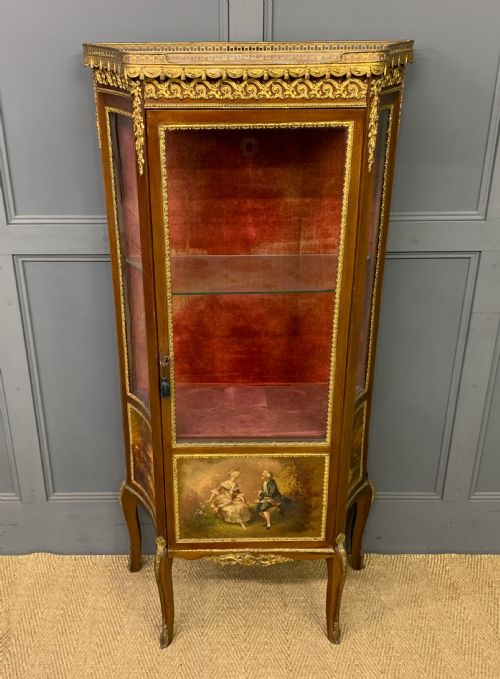
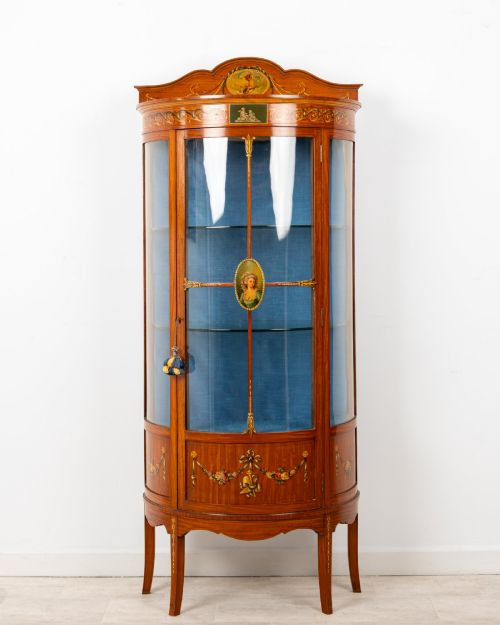
Edwardian and Art Deco examples dominate the available selection, ranging from inlaid mahogany bow-front cabinets to circular walnut pieces with distinct geometric veneers. Buyers frequently encounter nineteenth-century French vernis martin vitrines and Victorian walnut side cabinets alongside these twentieth-century designs.
The defining characteristic across the inventory is the curved or bent glazing, which softens the silhouette of the cabinet. Makers utilised bow-front, serpentine, and circular geometries to catch light from various angles within a room.
Materials and construction methods
Cabinet makers constructed the foundational carcass using hardwoods such as mahogany, walnut, satinwood, and kingwood, often applying burr veneers to create figured surfaces. Marquetry inlays, painted satinwood details, and contrasting stringing decorate the primary facades of Edwardian and Victorian pieces.
Glass panels required specialised heating and bending techniques to achieve continuous convex, bow, or circular profiles without distortion. Mounts in ormolu, brass fixtures, and specialised hardware like Hobbs and Co locks secure the doors and structural joints.
Curved Glass Cupboard Retail Price Guide 2026
Typical asking prices for curved glass cupboard among the pieces listed under this phrase on Sellingantiques today, from the lower quarter to the upper quarter. They describe what is for sale here now, not the wider market.
Several cabinets feature remarkably stubborn locks by Hobbs and Co, proving that Victorian security took its porcelain protection very seriously.
Assessing quality and craftsmanship
Quality rests upon the precision of the bent glass and the complexity of the timber veneers. Superior pieces display seamless curves in the glazing paired with symmetrical, book-matched burr walnut or intricate marquetry across the serpentine body.
The integration of decorative metal mounts, such as fire-gilt ormolu, and the finesse of hand-painted panels distinguish standard production from exceptional cabinet work. Structural integrity in the door frames ensures the curved glass remains properly seated over decades of use.
Edwards And Roberts·Hobbs And Co
The Curved Glass Cupboard Glossary
- Vitrine
- A glass-fronted display cabinet or showcase designed specifically for holding fine porcelain and curiosities. The term frequently applies to French-styled nineteenth-century furniture.
- Bow front
- A convex, outwardly curving cabinet facade that swells outward in the centre. This shape softens the rectangular geometry typical of standard furniture.
- Serpentine
- A furniture front characterised by a wavy outline featuring a convex centre flanked by concave curves, or vice versa. It demands high skill in woodworking and veneer matching.
- Ormolu
- Gilded bronze mounts applied to furniture for decorative effect. Popular in French revival pieces from the nineteenth century.
- Marquetry
- Decorative veneer work arranged in intricate patterns or pictures using various coloured woods and shell. Craftsmen apply these designs to the primary display surfaces of high-end cabinets.
Curved Glass Cupboard: Frequently Asked Questions
Where should I place a curved glass cupboard?
These cabinets suit drawing rooms, dining spaces, or hallways where natural light can strike the curved glass panels. Corner variants make efficient use of unutilised room junctions while displaying collections effectively.
Position the cabinet away from direct sunlight to protect interior fabrics and polished timber surfaces from fading.
How do I clean the curved glass?
Use a soft microfiber cloth and a mild glass cleaner sprayed onto the cloth rather than directly onto the glass. This prevents moisture from seeping into the wooden rebate or damaging old adhesives around the frame.
Take care near painted decorations or delicate astragals to avoid accidental scratching or loosening of the timber.
Can these cabinets support heavy items?
Most display cabinets feature original glass or thin wooden shelves intended for lighter ceramics, glassware, and decorative objects. Overloading the shelves risks bowing the timber or straining the internal supports.
Distribute weight evenly across the centre of each shelf and verify the stability of the shelf rests before arranging heavy collections.
How do I distinguish Art Deco from Edwardian cabinets?
Edwardian cabinets lean heavily toward classicism, featuring mahogany or satinwood timbers, delicate marquetry, and painted floral motifs. Their silhouettes often incorporate bow fronts and satinwood stringing.
Art Deco pieces embrace modernity through circular or clove shapes, figured walnut veneers, and minimalist lines devoid of historical revival ornament.