






Curved Glass Case
A curved glass case combines bent glazing with timber frames to exhibit precious objects, bringing domestic vitrines and shop counters together.
Curved Glass Case
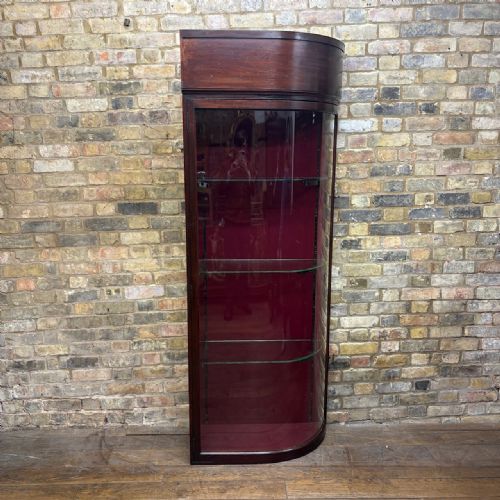
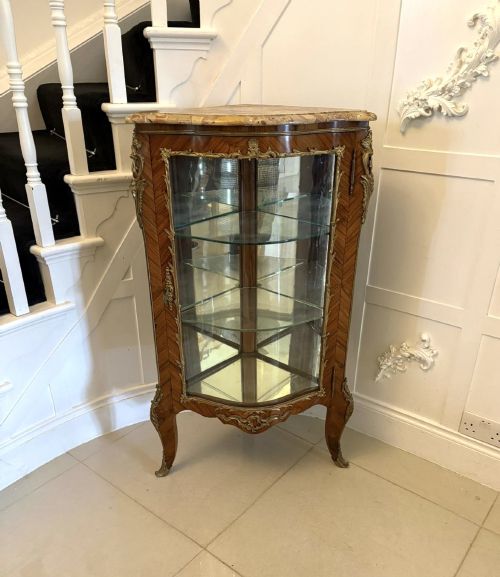
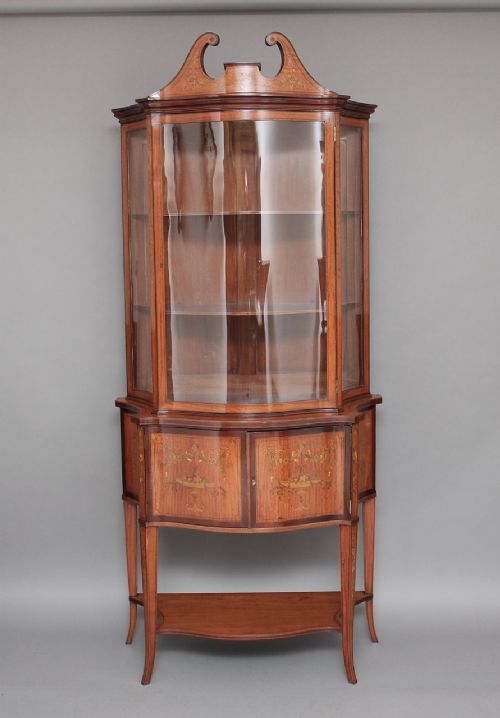
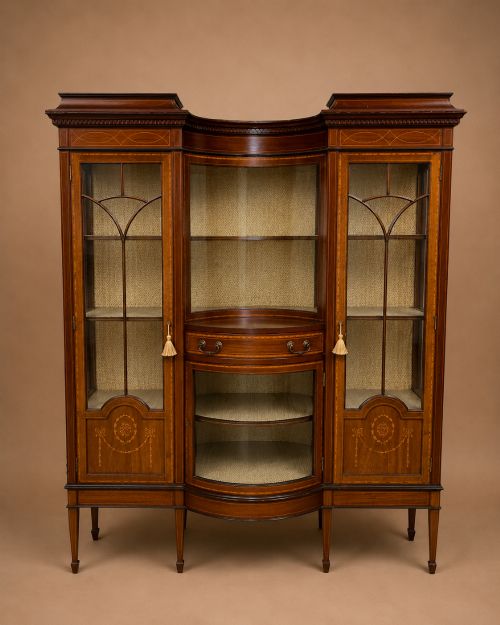
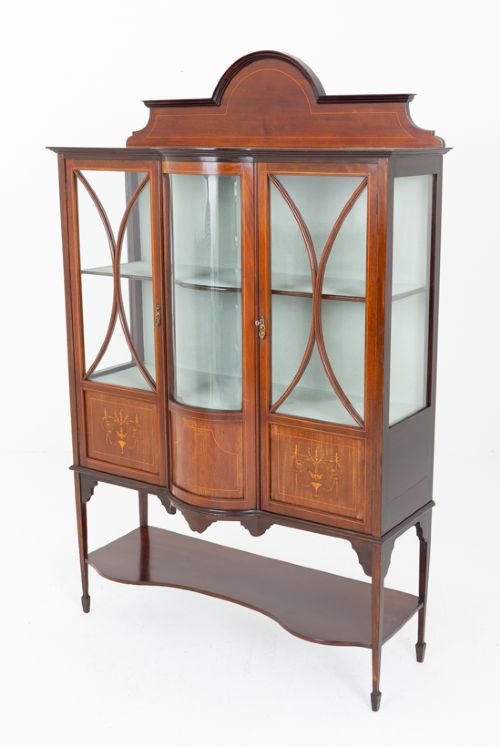
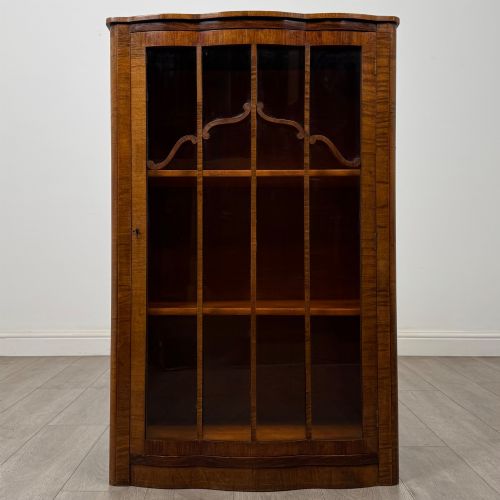
A curved glass case typically manifests as a display cabinet, vitrine, or shop counter designed to showcase items from every angle. These pieces emerge across the nineteenth and twentieth centuries, spanning Victorian, Edwardian, and Art Deco eras.
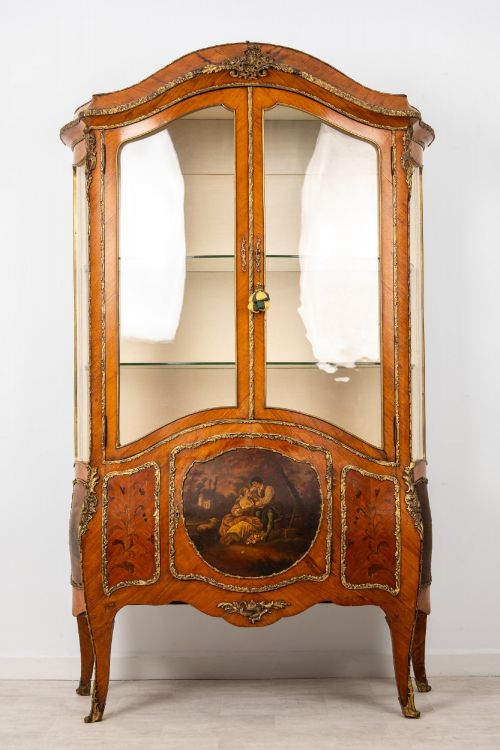
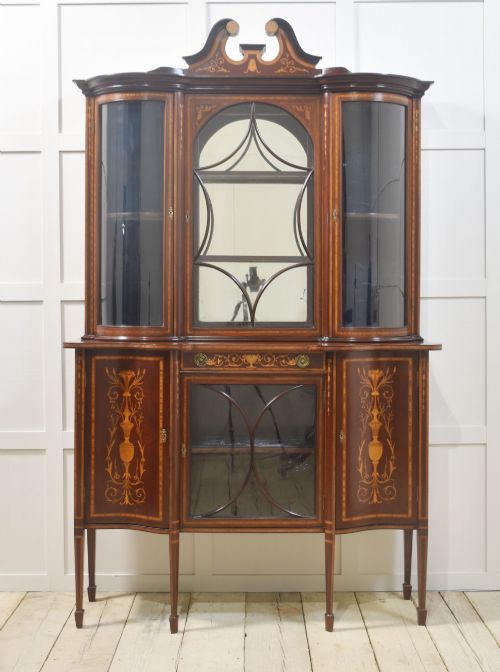
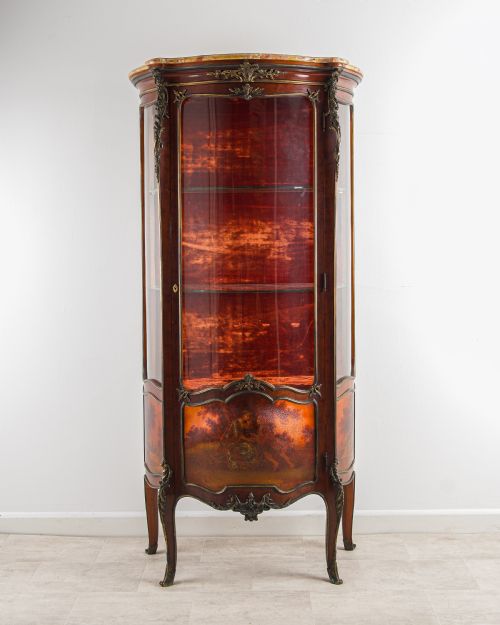
Domestic examples include serpentine corner cabinets, bow fronted satinwood pieces, and French kingwood vitrines mounted in ormolu. Commercial versions comprise oak and mahogany shop display cases alongside aluminium frame counters.
Makers construct these items in varied forms such as circular, clove shaped, and cathedral silhouettes, alongside traditional credenzas and bookcases with concave glazing.
Materials and construction
Makers build the primary frames from timbers such as mahogany, walnut, satinwood, oak, and kingwood, frequently incorporating figured veneers and marquetry inlay. Glass forms the dominant viewing panels, bent to create bow fronts or wrapped in aluminium frames for commercial counters.
Metal ornamentation appears through brass and ormolu mounts, gilt bronze details, and marble tops placed upon cabinet surfaces. Interior elements sometimes include fabric linings such as velvet to cushion displayed objects.
Curved Glass Case Retail Price Guide 2026
Typical asking prices for curved glass case among the pieces listed under this phrase on Sellingantiques today, from the lower quarter to the upper quarter. They describe what is for sale here now, not the wider market.
Some display cases take unexpected botanical forms, including clove shaped and cathedral silhouettes.
Distinctions in craftsmanship
The sophistication of the timber work and the clarity of the bent glazing separate standard examples from superior items. Elaborate marquetry inlay, hand-painted panels, and chased ormolu mounts indicate higher workshop investment.
Structural integrity relies upon the seamless integration of curved glass panes into wooden rebates without distortion. Pieces originating from documented cabinet-makers or specialised shopfitters demonstrate greater fidelity to period proportions.
F. Sage And Co·James Hicks·Edwards And Roberts·François Linke
The Curved Glass Case Glossary
- Vitrine
- A glass-fronted display cabinet used for holding fine china, books, or curiosities. These pieces often stand on slender legs or feature ornate mounts.
- Ormolu
- Gilded bronze ornamentation applied to furniture frames and corners. This technique originates from French decorative traditions.
- Serpentine
- A furniture front curving inward centrally and outward at the ends in a continuous wave. This shape demands precise woodworking.
- Marquetry
- Inlaid patterns of different coloured wood veneers assembled into pictorial or geometric designs. Craftsmen apply these veneers to cabinet doors and friezes.
- Vernis Martin
- A type of simulated Japanese lacquer developed in France during the eighteenth century. Artisans utilise this finish on decorative panels of cabinets.
Curved Glass Case: Frequently Asked Questions
What is a curved glass case?
A curved glass case is a specialised piece of furniture designed with bent glazing to present items clearly from multiple angles.
These units serve both domestic settings as vitrines and commercial environments as shop counters.
Where were these cabinets used?
Owners placed domestic vitrines in drawing rooms and parlours to exhibit porcelain, silver, and treasured objects.
Commercial variants stood in retail shops to merchandise high-value goods safely behind glass.
How do I style a glass case?
Group objects of varying heights and textures inside the cabinet to create balanced visual depth.
Keep surrounding interior colours neutral so the timber grain and mounted metal details remain the focal point.
How do I date these cabinets?
Examine the timber species, joinery methods, and decorative motifs such as Edwardian inlay or Art Deco geometry.
Manufacturer plaques on commercial counters and specific revival styles provide further chronological markers.