

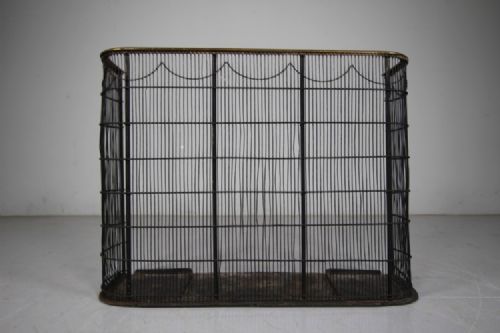


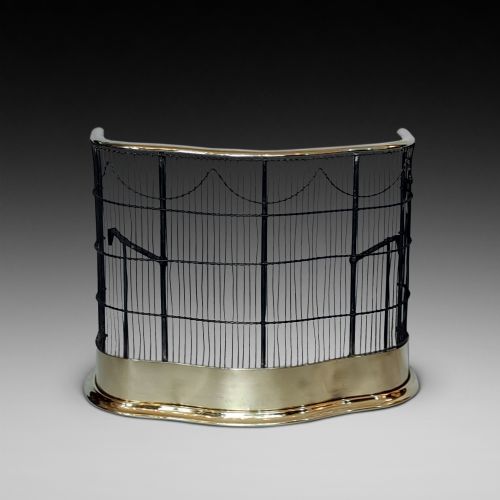


Curved Fireplace Guard
A curved fireplace guard keeps roaming sparks from your hearth while offering a gentle architectural sweep to the room.
Curved Fireplace Guard
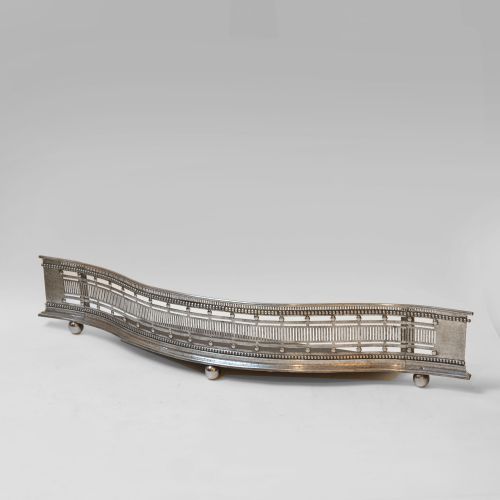
A curved fireplace guard stands before an open hearth to protect the floor and furnishings from escaping embers. These pieces encompass bowfront steel fenders, serpentine hearth guards, and wire mesh nursery screens.
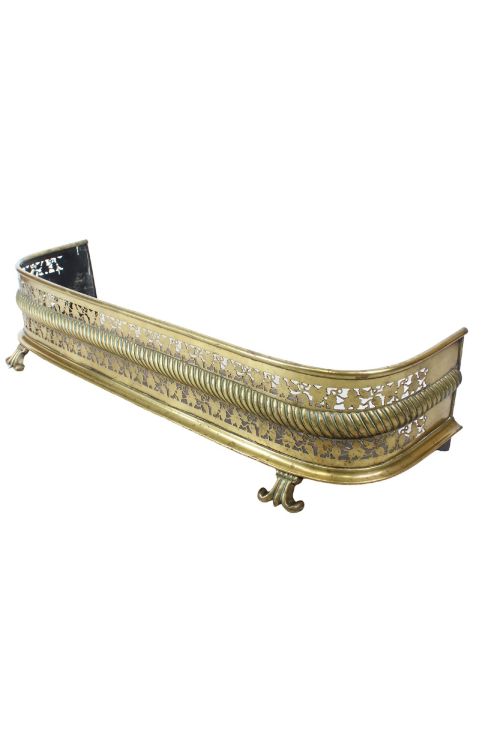
You will most frequently meet Victorian brass and wire mesh variations on this page alongside Georgian steel examples. The selection spans periods from the Georgian and Regency eras through to the Edwardian period.
Makers shaped these forms from iron, bronze, and woven wire to create curved barriers that match the hearth's projection. The designs range from low kerb fenders to taller nursery guards topped with polished brass rails.
How they were made
Smiths shaped steel and iron into serpentine or bowfront shapes using forge and anvil techniques. Pierced decoration was hand-cut or punched directly into the metal plates.
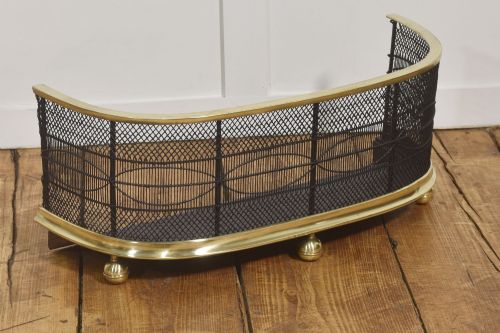
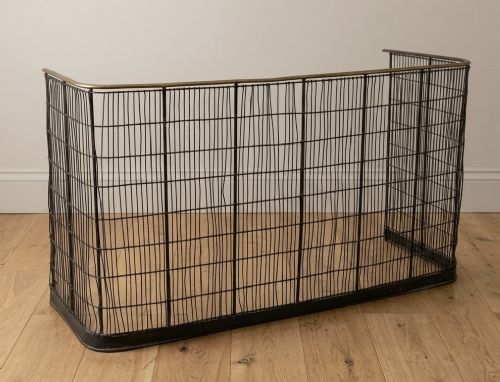
Makers fashioned the protective body from woven iron wire and wire mesh, securing the mesh within solid brass or iron frames. Top rails of polished brass were then fitted along the upper edge of the guard.
The listings on this site span the Georgian, Regency, Victorian, and Edwardian periods, utilising brass, iron, bronze, and wire mesh.
What varies in quality
The distinction between standard and finer examples rests on the crispness of the pierced metalwork and the weight of the frame. Heavier gauge steel and solid cast brass fittings show superior craftsmanship compared to lighter commercial alternatives.
Tension in the woven wire mesh and the neatness of its attachment to the metal framework signal the maker's care. Pierced decorative motifs with clean, sharp apertures set the better pieces apart from plain or roughly finished guards.
The Curved Fireplace Guard Glossary
- Bowfront
- A convex curved shape that projects outward into the room. This profile allows the guard to sit neatly around a projecting hearth.
- Serpentine
- A curved line that bends inward and outward in a smooth undulating wave. Georgian steel fenders frequently employ this contour.
- Nursery fender
- A taller protective guard designed to keep children at a safe distance from the fire. These typically combine a sturdy wire mesh body with a brass top rail.
- Kerb fender
- A low metal barrier that frames the perimeter of the hearth. These pieces sit directly on the floor to contain falling logs and ash.
Curved Fireplace Guard: Frequently Asked Questions
What is a curved fireplace guard?
A curved fireplace guard is a protective hearth accessory shaped to follow the outward sweep of an open fire. It acts as a physical barrier against stray sparks and embers.
These pieces appear in various forms, from low metal kerbs to tall wire mesh nursery screens framed in brass or iron.
How do I measure for a curved guard?
Measure the width, depth, and projection of your hearth to ensure the curved sweep matches your fireplace opening. Take the measurements at floor level where the guard will actually sit.
Account for any protruding hearthstones so the bowfront or serpentine shape rests evenly against the masonry.
Can I use these with a modern fire?
These guards suit any open hearth, whether burning wood or coal, provided the dimensions match your fireplace surround. They provide the same functional spark protection today as they did in past centuries.
Check the height of the guard to ensure it matches the scale of your fire opening and mantelpiece.
How do I clean brass and wire mesh?
Dust the wire mesh gently with a soft brush and clean the metal frame with a dry cloth. Avoid harsh chemical cleaners that might strip the aged patina from the brass and iron.
Gentle maintenance preserves the historic surface finish of antique wirework and polished frames.