






Curved Fire Guard
These curved fire guard pieces offer essential hearth safety while bringing period character to a room through traditional metalwork.
Curved Fire Guard
A curved fire guard stands before an open hearth to contain sparks and protect the room from wandering embers. These pieces combine practical mesh barriers with decorative metal frames designed to fit neatly around the hearth space.
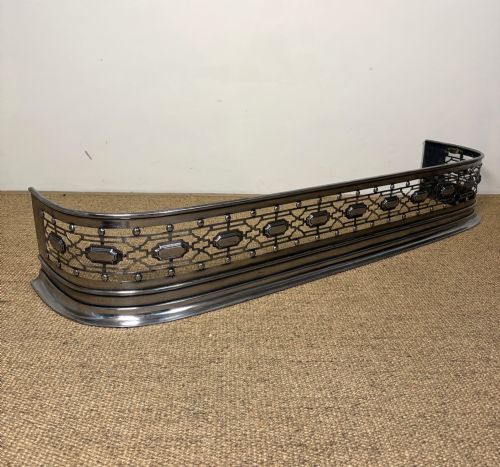
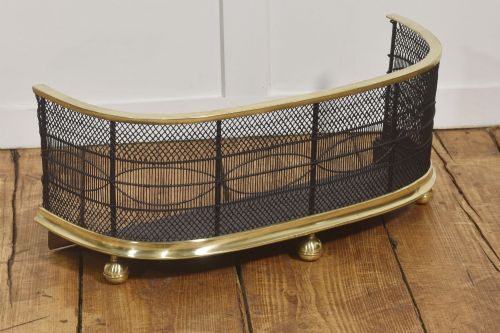
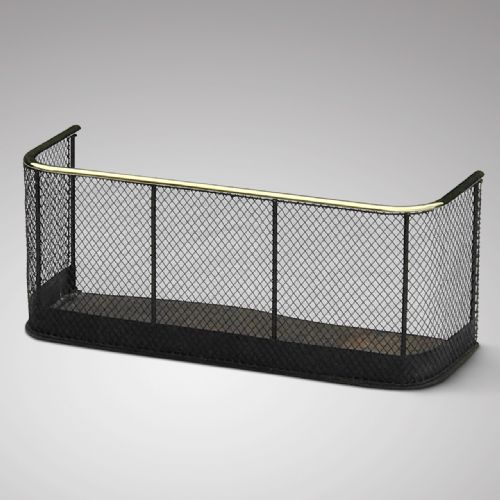
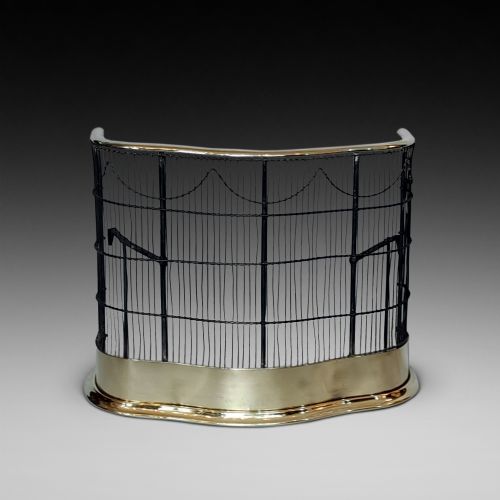
The versions most commonly met on this page date from the nineteenth century, including Victorian, Regency, and Georgian periods. They frequently appear as nursery fenders or spark screens constructed with curved brass frames and woven iron wire.
How they were made
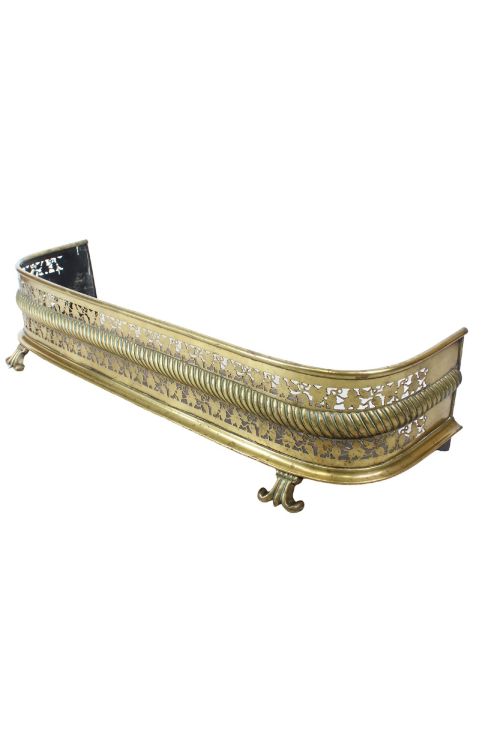
Makers shaped iron, steel, and wrought iron to form the structural framework and curved bases of these guards. Brass featured heavily for top rails, rims, and decorative mounts, adding a polished finish to the heavier metal body.
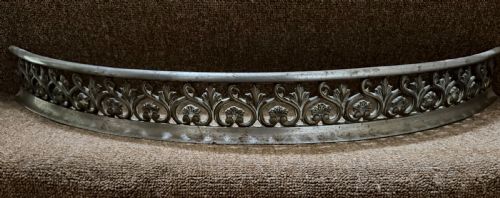
Woven iron wire and wire mesh were stretched across the frames to create protective screens that maintained visibility of the fire while blocking stray sparks. Pierced decoration and beaten copper details appeared on specific Victorian and Georgian examples.
Curved Fire Guard Retail Price Guide 2026
Typical asking prices for curved fire guard among the pieces listed under this phrase on Sellingantiques today, from the lower quarter to the upper quarter. They describe what is for sale here now, not the wider market.
Some nursery fenders feature sturdy brass top rails that doubled as modest places to warm small garments near the hearth.
What varies in quality
The standard of a curved fire guard rests on the weight of the metal and the precision of the curve. Heavier gauge brass and tightly woven wire mesh indicate sturdier construction that withstood daily hearth use.
Fine craftsmanship shows in the neatness of the piercing on steel and brass fenders, as well as the secure integration of the top rail. Simpler utilitarian wirework sits at the practical end, while decorative serpentine fronts and arts and crafts beaten copper represent higher decorative ambition.
The Curved Fire Guard Glossary
- Nursery fender
- A tall protective guard designed to keep children and pets at a safe distance from an open fire. These usually incorporate a fine wire mesh screen within a sturdy metal frame.
- Spark screen
- A barrier placed directly in front of the hearth to catch spitting embers. They often feature curved brass tops and fine mesh panels.
- Kerb fender
- A low metal barrier that defines the hearth perimeter. These items sit directly on the floor around the fireplace opening.
- Serpentine front
- A curved shape that undulates outward in the centre and sweeps back at the ends. This profile appears frequently on Georgian and Victorian steel and brass fenders.
Curved Fire Guard: Frequently Asked Questions
How do I measure for a curved fire guard?
Measure the width and depth of your hearth stone to ensure the curved base sits securely within the space. Check the height against your fireplace opening to guarantee adequate coverage.
Account for any protruding hearth curbs so the guard rests flat against the floor without rocking.
Were these guards used in nurseries?
Many taller wire mesh examples were specifically designed as nursery fenders to protect young children from open flames. Their enclosed curved design prevented stray embers from reaching the room.
These pieces combined high wire guards with solid metal top rails for added stability.
What is the difference between a fender and a guard?
A fender is typically a low metal frame that borders the hearth to keep logs and coal contained. A guard includes a taller wire mesh or screen section designed to stop flying sparks.
Many period pieces combine both functions by featuring a fender base with an integrated high wire screen.
How do I clean brass and wire mesh?
Dust the wire mesh gently with a soft brush to remove soot and debris accumulated from the hearth. Polish brass components sparingly with a suitable metal cleaner to maintain the finish.
Avoid harsh abrasives on woven iron wire to prevent damaging the historic mesh.