


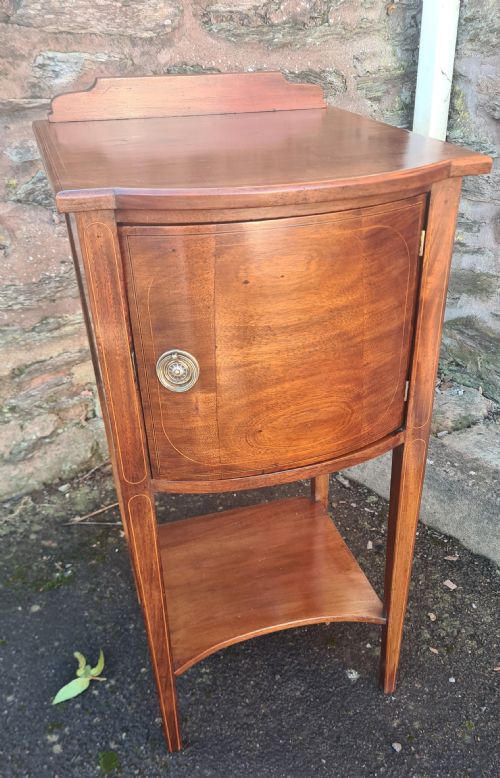
Curved Bedside Tables
Curved bedside tables bring together sweeping lines and practical bedside storage, spanning from eighteenth century mahogany to nineteen-thirties walnut.
Curved Bedside Tables
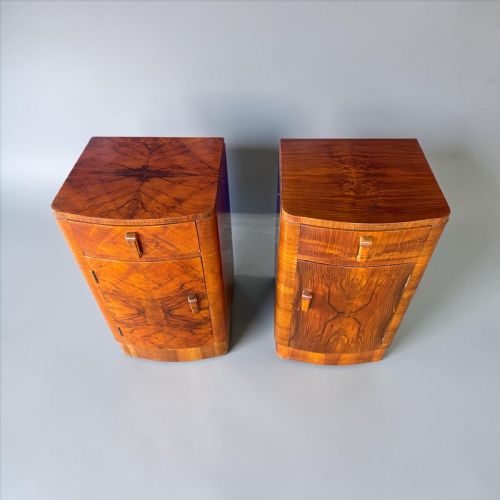
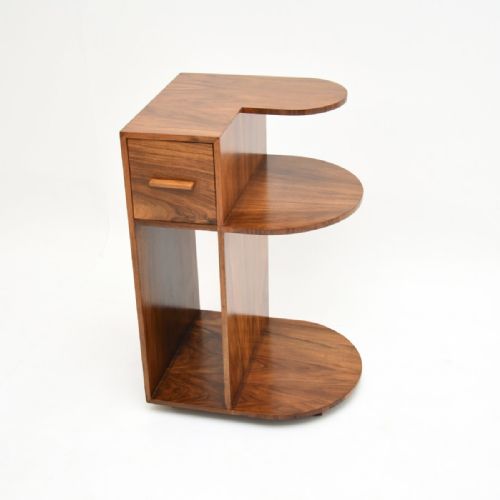
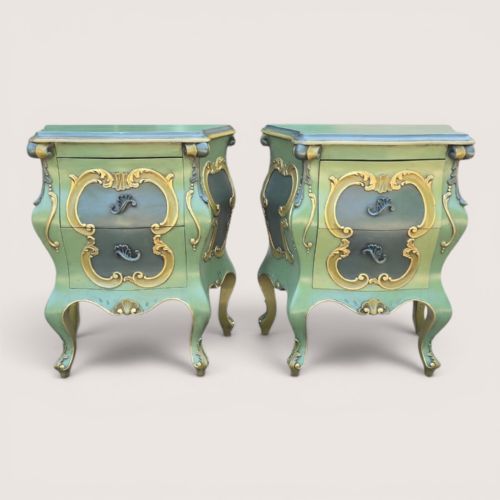
Curved bedside tables are compact bedroom items designed with rounded, bowfront, kidney, drum, or bombé shapes that soften the corners of a room. When you search for curved bedside tables, you encounter forms ranging from eighteenth century mahogany nightstands to nineteen-thirties Art Deco walnut cabinets.
Buyers find single items as well as matching pairs, alongside larger bedroom suites that integrate bedside cabinets directly into headboards. These pieces serve as functional nightstands, side tables, and small chests of drawers beside a bed.
How they were made
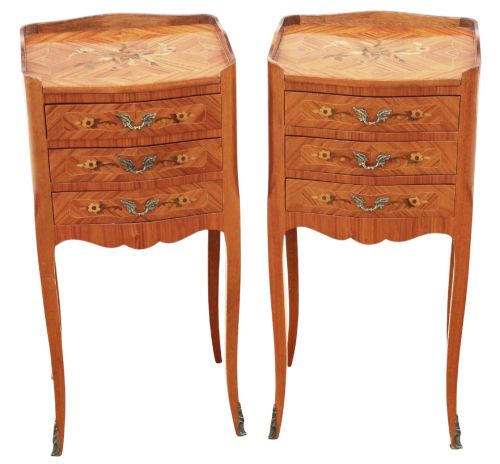
Cabinet makers constructed these pieces using solid timbers such as mahogany, oak, and satinwood, often applying figured walnut, burr walnut, or general wood veneer across curved surfaces. Veneering allowed workshops to create dramatic grain patterns that followed the sweeping contours of bowfront and serpentine forms.
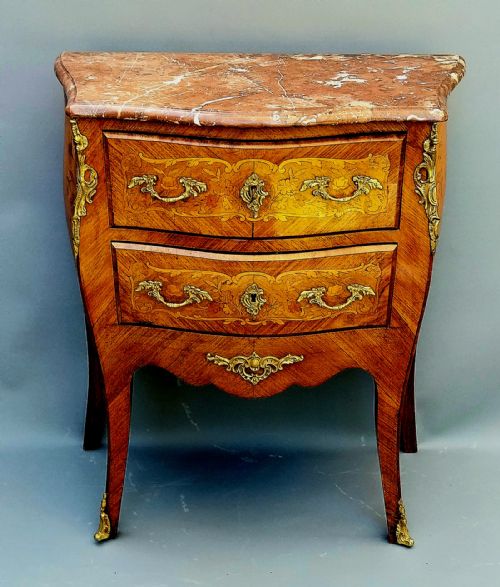
Many French and English examples incorporate fine marquetry, inlay, and painted decoration, while period marble tops provide durable surfaces on bombé chests. Brass and ormolu mounts appear on select nineteenth century and revival pieces to accent the framework.
Listings span from seventeen-fifty oak tables up to nineteen-thirties Art Deco walnut and mahogany designs.
What varies in quality
The quality of curved bedside tables rests upon the selection of timber veneers and the precision of the joinery along difficult curved edges. Superior examples display continuous grain matching across drawers and doors, indicating careful planning by the cabinet maker.
Original hardware, sound marble tops, and intact marquetry elevate certain items well above standard utility pieces. The harmony between the structural curve and the proportions of the handles or mounts dictates the visual success of the piece.
Maurice Adams·Gillows
The Curved Bedside Tables Glossary
- Bombé
- A swelling, outward-curving convex shape characteristic of certain eighteenth and nineteenth century furniture. This profile requires advanced woodworking skill to maintain structural integrity along the curves.
- Bowfront
- A convex, outwardly curved front facade common on chests of drawers and nightstands. It softens the linear appearance of standard rectangular furniture.
- Kidney shaped
- A curved furniture top resembling the bean shape of a kidney. This form appeared frequently in French decorative tables.
- Marquetry
- The art of applying decorative pieces of veneer to a structure to form intricate patterns. Artisans used various coloured woods to achieve pictorial designs.
Curved Bedside Tables: Frequently Asked Questions
How do I style curved bedside tables?
Pair these distinctive curved silhouettes with simple lamps or minimalist accessories to let the wood grain and shape stand out. Placing them beside lower bed frames helps maintain the correct scale in the room.
Because many examples come in pairs, position them symmetrically or use a single piece as a striking accent table in a smaller guest bedroom.
Are curved bedside tables practical for storage?
Most variants offer cupboards, open shelving, or drawers despite their rounded contours. The internal capacity depends on the specific curve, with bombé and drum shapes offering surprisingly deep compartments.
Consider whether you need concealed cupboard space for books and nighttime essentials or open areas for easy access from the mattress.
How do I tell Art Deco from older styles?
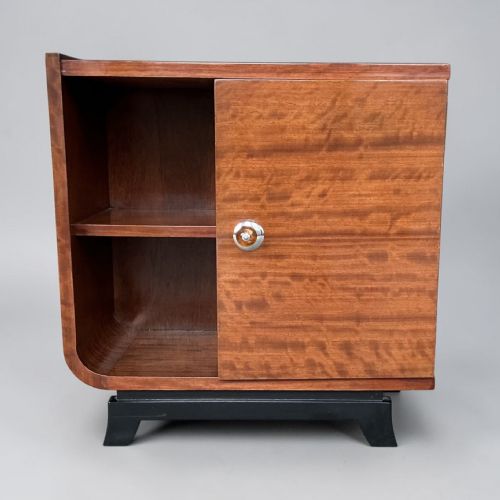
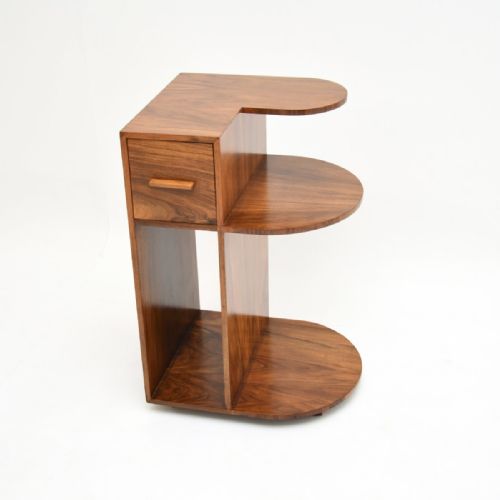
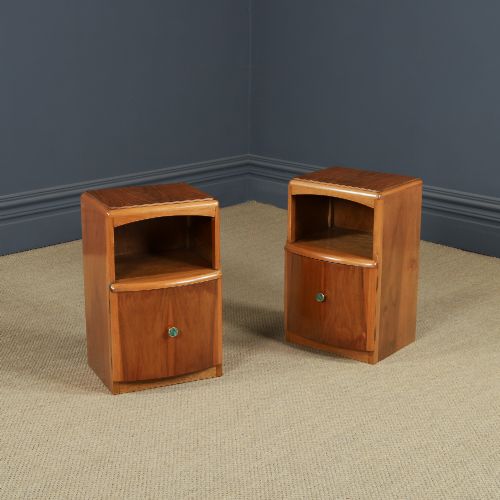
Art Deco pieces from the nineteen-thirties favour smooth figured or burr walnut veneers with clean, streamlined curves and minimal ornamentation. Older eighteenth and nineteenth century pieces rely on solid mahogany, intricate inlay, or painted surfaces.
Examining the construction methods inside the drawers and the type of finish helps confirm whether a piece dates to the Georgian era or the interwar period.
Can I mix different wood tones in the bedroom?
Mixing walnut, mahogany, and satinwood works well if the overall scale and period feel complement one another. The shared element of curved woodwork creates visual harmony even among different timber species.
Focus on matching the height of the bedside table to the top of your mattress rather than matching the exact wood finish of other furniture.