


Curved Back Reading Chair
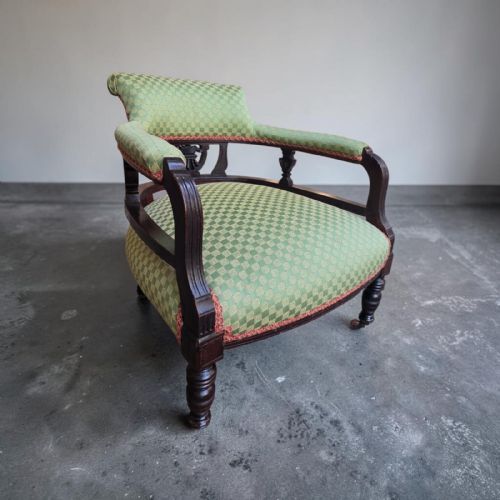
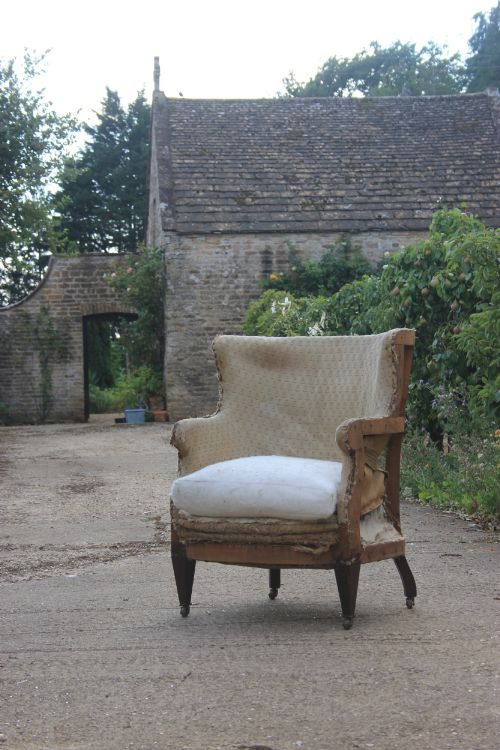
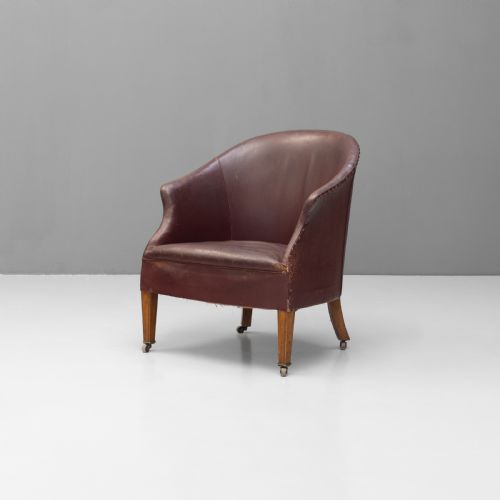
These curved back reading chair examples offer enveloping timber frames and supportive seats designed for long hours with a book.
Curved Back Reading Chair
A curved back reading chair brings together supportive seating and a distinct enveloping silhouette designed for comfort during extended periods of sitting. These pieces serve as functional deskside seats or fireside armchairs suited to studies and libraries.
The selections span multiple eras including the Georgian, Regency, Victorian, and Edwardian periods. Common variations appearing here include barrel backs, tub chairs, library chairs, and corner chairs.
Makers historically shaped these forms to support the occupant while reading or writing. Mahogany frames paired with upholstered elements dominate the designs seen across these historical periods.
How they were made
Makers built the foundational frames of these seats using solid timber, predominantly relying on mahogany. Structural integrity relied on traditional joinery methods suited to supporting curved arm and back rails.
Upholstery techniques involved layered internal stuffings held in place by hessian before finishing with top covers in leather, velvet, or woven fabric. Brass details sometimes appeared as castors or structural accents on desk chairs and library models.
The inventory encompasses English Country House styles alongside formal Georgian, Regency, and Victorian iterations.
What varies in quality
The refinement of the timber carving and the grace of the curved backrest dictate the visual standing of an example. Superior pieces display smooth, uninterrupted sweeps of mahogany along the arms and back.
The choice of covering material and the precision of the upholstery work establish the tactile standard of each piece. Finer examples retain quality leather or velvet upholstery that follows the complex contours of the frame without bunching.
The Curved Back Reading Chair Glossary
- Barrel back
- A seating form characterised by a semicircular upholstered backrest that wraps continuously around the sides. This shape provides enclosed comfort and blocks draughts.
- Tub chair
- An armchair featuring a rounded, tub-like back that flows directly into the arms. The low, enveloping profile suits domestic reading and writing tasks.
- Sabre leg
- A concave tapering furniture leg that curves outward toward the floor in the manner of a cavalry sword. This leg style frequently appears on Regency desk chairs.
- Corner chair
- A seat designed to fit into the corner of a room with a diagonal orientation towards the centre. The curved back rail typically rests upon multiple vertical supports.
- Hessian
- A coarse woven fabric utilised historically as an internal foundation material beneath top upholstery layers. It provides breathable support for stuffing.
Curved Back Reading Chair: Frequently Asked Questions
Where were these chairs used?
These seats found places in studies, libraries, and private drawing rooms where occupants spent hours reading or writing.
Their enclosed backs provided comfort and warmth away from draughty corners in traditional homes.
How do I identify a Regency example?
Regency models often feature characteristic details like sabre legs and refined mahogany frames dating from the early nineteenth century.
They frequently served as library or desk chairs with practical yet elegant proportions.
How should I care for leather upholstery?
Leather surfaces benefit from regular dusting with a soft, dry cloth and occasional treatment with appropriate conditioning balms.
Keeping the material away from direct sunlight and excessive heat prevents drying and cracking over time.