



Curved Back Mahogany Chair
A curved back mahogany chair brings timber warmth and tailored lines to a room, ranging from dining seats to library armchairs.
Curved Back Mahogany Chair
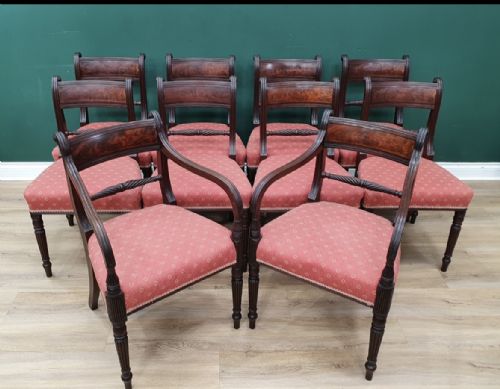
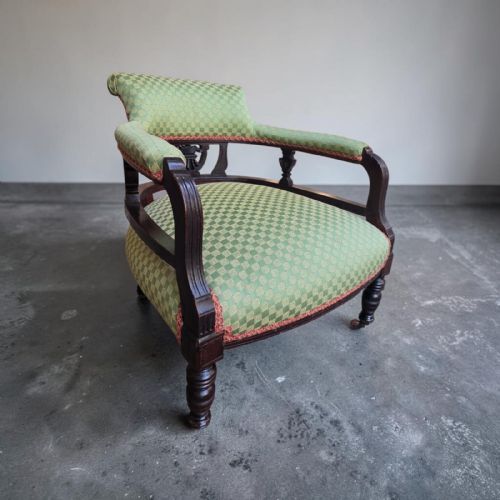
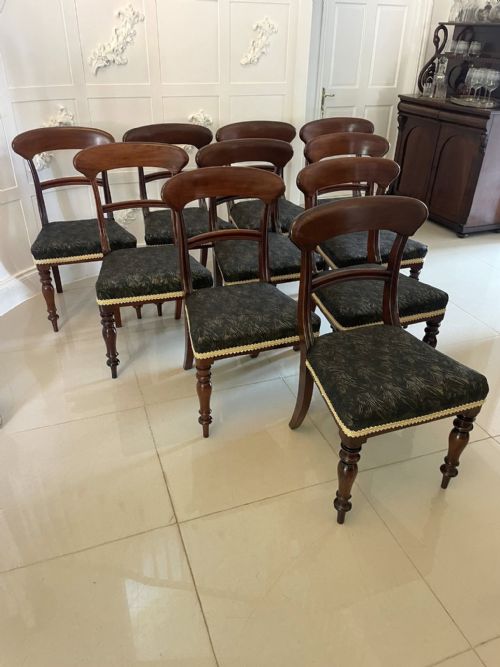
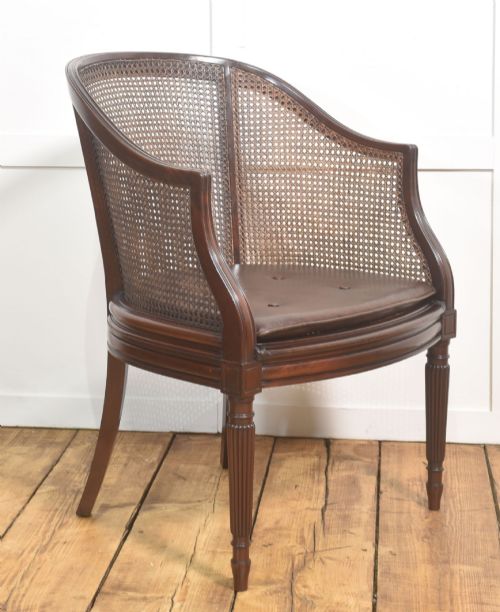
A curved back mahogany chair unites rich hardwood frames with rounded silhouettes, spanning forms from single dining seats to spacious library armchairs and tub chairs. The pieces on this page emerge from several distinct eras, notably the Georgian, Regency, Victorian, and Edwardian periods.
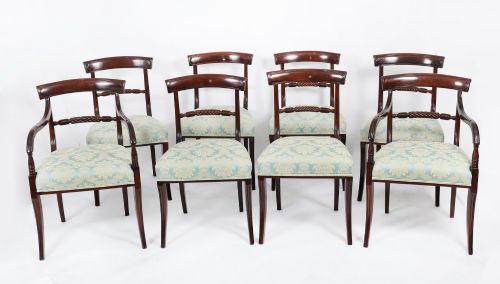
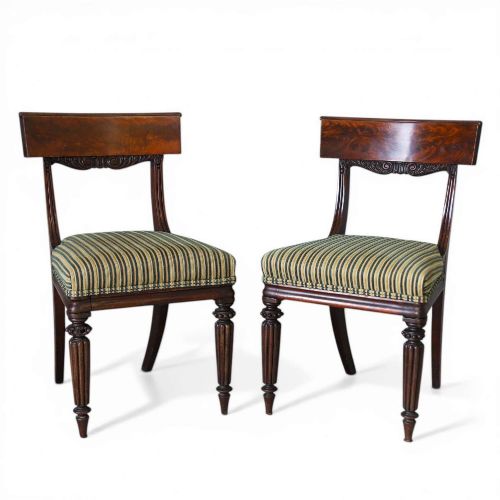
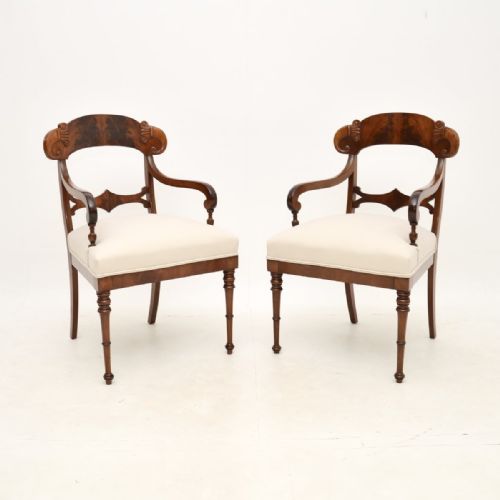
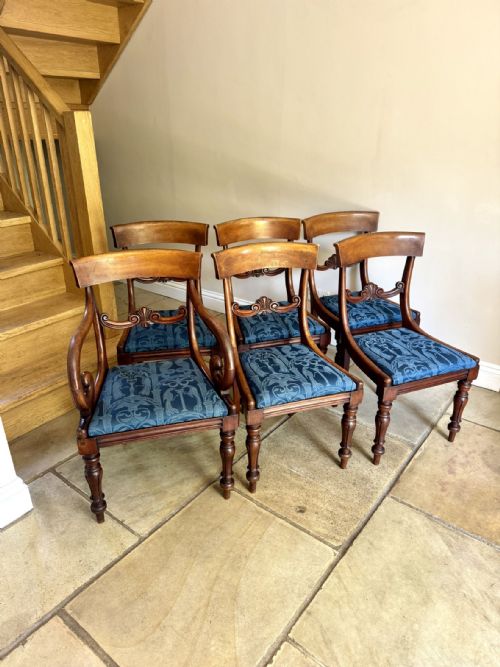
Dining chairs appear frequently, often in large sets complete with sabre legs or carved details, while desk chairs, corner chairs, and barrel back armchairs offer more intimate seating. Makers utilised mahogany across all these types, sometimes incorporating satinwood inlay or cane panels to soften the dense timber grain.
How they were made
Cabinet makers built these frames using solid mahogany, frequently figuring the timber to highlight natural grain patterns, and occasionally adding satinwood inlay or marquetry details. Structural elements relied on traditional joinery, while supporting details included brass fittings and canework.
Upholstery varied by period and function, employing materials such as leather, velvet, fabric, and traditional upholstery webbing. Chairs designed for desks or libraries often featured swiveling mechanisms or padded armrests tailored for prolonged use.
Several chairs arrive ready for work with revolving desk mechanisms, proving that Victorians took their correspondence just as seriously as their dining.
What varies in quality
The sophistication of the timber work and the crispness of any carved detailing set individual pieces apart. Chairs designated for exhibition or fine dining display thoughtful proportions and careful matching of figured mahogany veneers.
Structural integrity and the retention of original elements, such as cane panels, brass castors, or period upholstery styles, influence the character of each piece. Simpler bedroom or side chairs rely on clean joinery and honest proportion rather than elaborate decoration.
The Curved Back Mahogany Chair Glossary
- Mahogany
- A durable tropical hardwood prized for its deep reddish-brown colour and smooth grain. It forms the primary structural material for the frames listed on this page.
- Tub chair
- An upholstered armchair featuring a continuous curved back and arms that form a protective, rounded enclosure. This form appears across Victorian and Edwardian examples.
- Sabre leg
- A concave, outwardly curving furniture leg that tapers toward the foot, commonly seen on Regency dining and desk chairs. It provides both stability and a sense of forward motion.
- Bergère
- An enclosed upholstered armchair with exposed wooden framing and woven cane panels along the back or sides. These pieces often date from the Georgian and Edwardian eras.
- Marquetry
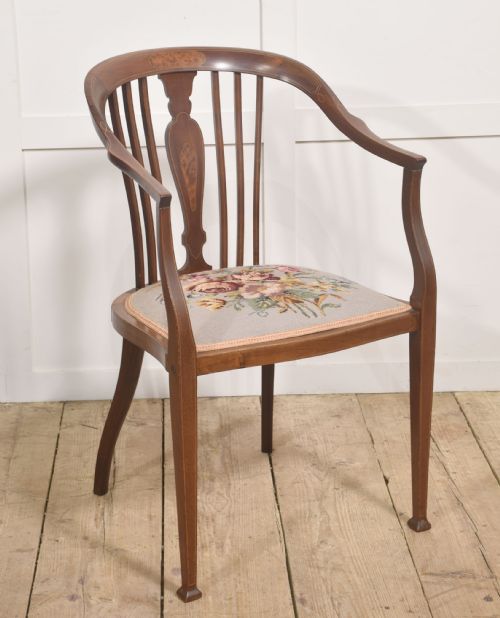
- Decorative inlay work using various coloured wood veneers to create floral or geometric patterns. It appears frequently on Edwardian salon and occasional chairs.
Curved Back Mahogany Chair: Frequently Asked Questions
How do I identify a Regency curved back chair?
Regency pieces often feature clean architectural lines, reeded frames, and characteristic sabre legs that sweep outward from the seat. The timber choice leans toward dark, dense mahogany with minimal carved distraction.
Look for classical restraint in the design, sometimes accompanied by brass inlay or understated brass mounts rather than heavy Victorian ornamentation.
Where should I place a mahogany tub chair?
A tub chair works well in a study, corner of a bedroom, or beside a fireplace where its curved back provides a comfortable, enveloping seat. Their compact footprints allow them to sit easily in smaller conversational groupings.
Pairing a mahogany frame with leather or neutral upholstery helps the chair anchor a room without overwhelming surrounding furniture.
Were these chairs used for dining or desks?
The listings include both specific dining sets and specialised desk or library armchairs. Dining versions generally have straight or sabre legs designed to tuck neatly under a table, while desk variants often incorporate swivel mechanisms or lower, broader armrests.
Examining the height of the seat and the configuration of the arms usually reveals the original intended function of the piece.
What is the difference between Georgian and Edwardian styles?
Georgian chairs, spanning the eighteenth and early nineteenth centuries, tend to display rigorous proportion, architectural restraint, and substantial timber substance. Edwardian pieces, made around the turn of the twentieth century, often embrace lighter forms, satinwood inlay, and revived historical motifs.
Edwardian makers frequently revisited earlier Georgian or Sheraton ideals, resulting in brighter, occasionally more delicate salon and tub seating.