


Curved Arm Chair
A curved arm chair provides supportive seating through sweeping contours, bringing historic character and comfort to a study or drawing room.
Curved Arm Chair
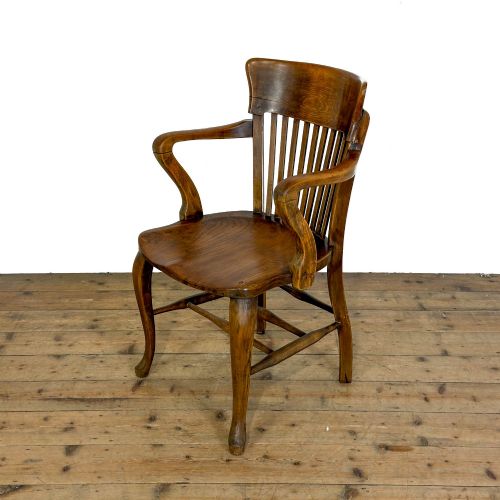
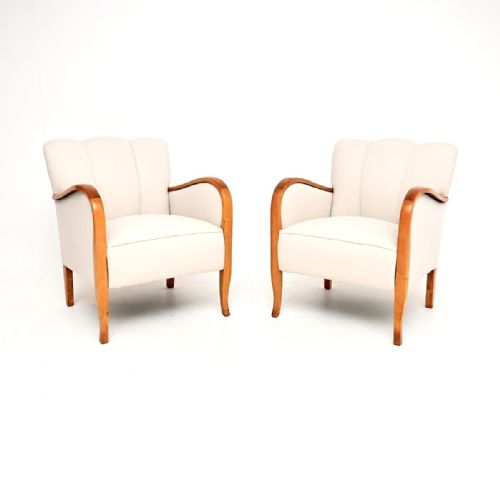
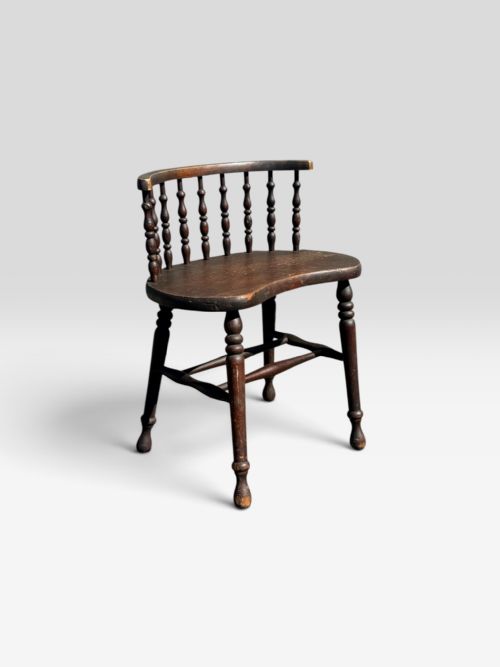
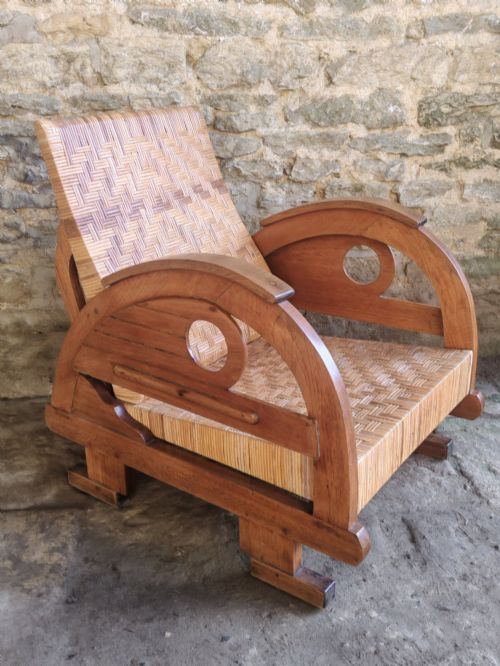
A curved arm chair encompasses a wide variety of seating forms designed with rounded supports or backs, spanning from nineteenth century library seats to twentieth century club designs. When exploring a curved arm chair on this page, buyers most frequently encounter mahogany desk chairs, nineteenth century French pieces, and walnut or birch iterations from the Art Deco period.
The materials utilised range from solid woods such as mahogany, elm, oak, and beech to upholstered surfaces in leather and fabric, often accented with brass details. Origins stretch across England, France, Sweden, and China, incorporating styles from the Regency and Victorian eras alongside Biedermeier and traditional country aesthetics.
How they were made
Makers constructed these seats using traditional timber joinery, steam-bent wood for curved frames, and hand-carved mahogany, walnut, or birch components. Upholstered varieties relied on buttoning, fabric, or leather stretched over supportive springs and stuffing.
Inlaid brass, ebonised finishes, and lacquer work added decorative refinement to structural woods like oak, elm, and satinwood.
One unexpected nineteenth century piece arrives complete with a sturdy iron back for ultimate resilience.
What varies in quality
Quality rests in the precision of the timber joinery, the integrity of steam-bent frames, and the execution of carved or inlaid details. Superior examples exhibit balanced proportions, refined wood grains, and well-preserved original materials such as leather or brass inlay.
Thonet
The Curved Arm Chair Glossary
- Bentwood
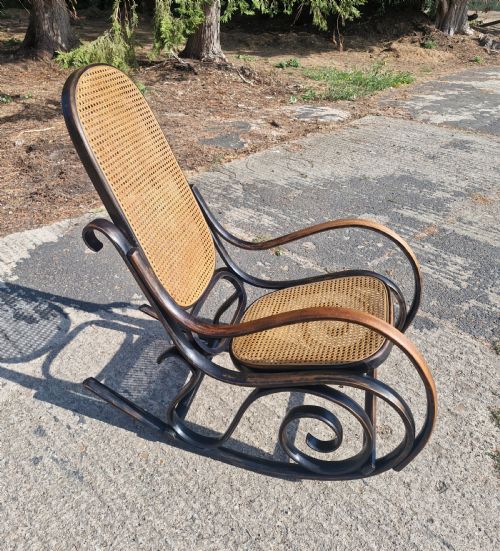
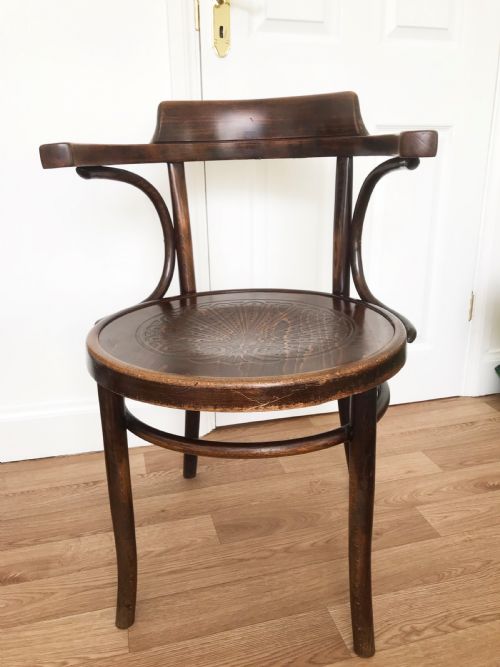
- Wood that has been heated and bent into curved shapes. This technique creates lightweight yet strong frames seen in rocking chairs and bistro seats.
- Sabre leg
- A concave sweeping leg shape that tapers toward the floor. This profile is frequently observed on Regency period desk chairs.
- Horseshoe shape
- A continuous curved backrest that sweeps around to form the arms. This classic profile appears on traditional Chinese armchairs.
- Tub armchair
- A fully upholstered seat with a low, enclosed curved back. Edwardian iterations often feature inlaid mahogany frames.
- Biedermeier
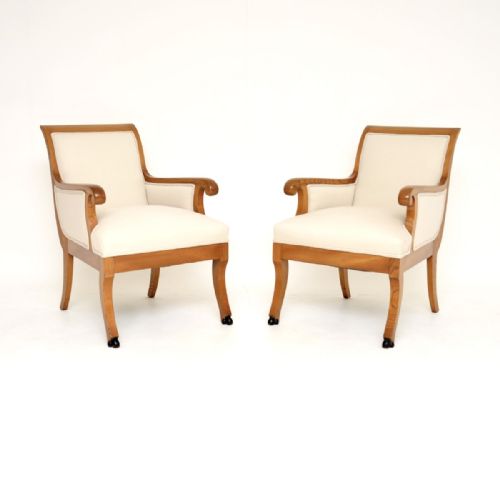
- A central European style emphasising clean lines and warm wood veneers. Birch and satinwood are typical of this aesthetic.
Curved Arm Chair: Frequently Asked Questions
Where should I place a curved arm chair?
These seats suit studies, drawing rooms, and bedrooms where their distinct profiles can stand out.
Desk variants pair naturally with writing tables, while upholstered club and rocking versions fit reading corners.
How do I identify a Regency curved arm chair?
Regency examples typically feature mahogany construction, sabre legs, and classical proportions.
Look for refined woodworking and curved lines characteristic of the early nineteenth century.
What is a bentwood curved arm chair?
Bentwood chairs utilise steam-bent timber to achieve continuous curved frames without heavy joints.
This technique produced lightweight armchairs and rocking chairs popular in the late nineteenth and early twentieth centuries.
Are these chairs suitable for daily desk use?
Many historical iterations function well as desk chairs, particularly mahogany and oak desk armchairs from the Victorian and Edwardian periods.
Their curved arm designs accommodate seated work while offering robust structural support.