


Curule Seat Footstool
These curule seat footstool pieces are X-framed seats built for elegance and utility, offering classical form and sturdy resting places.
Curule Seat Footstool
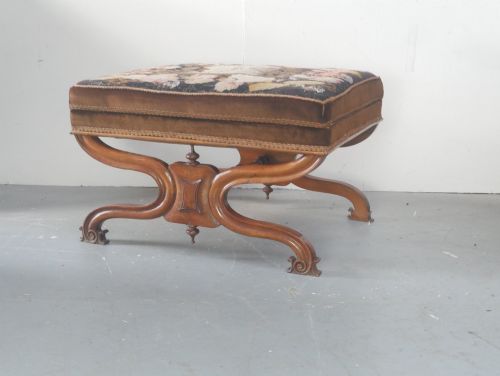
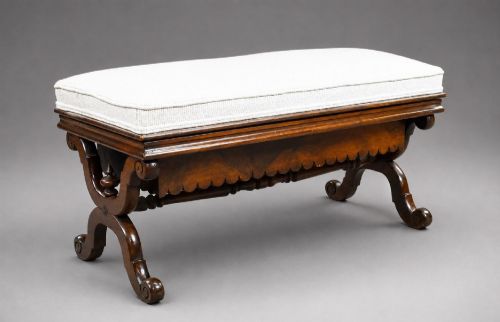
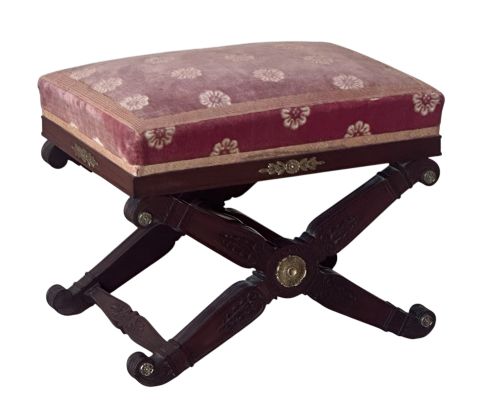
A curule seat footstool draws on ancient Roman folding chair designs, translating the X-frame shape into domestic stools and footstools. When searching for a curule seat footstool, buyers encounter pieces originating from the Regency, Victorian, and Georgian periods.
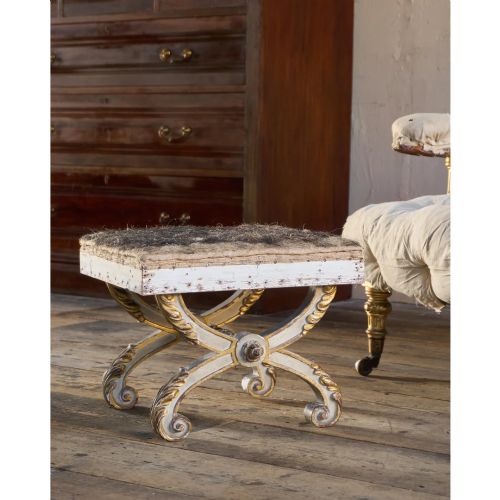
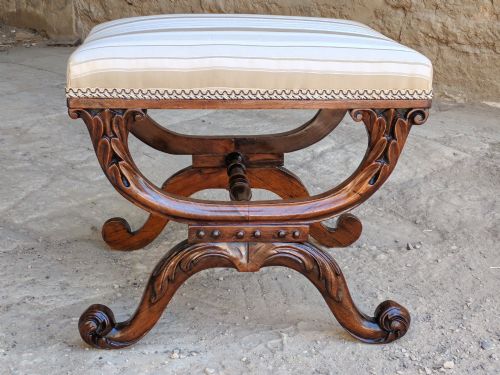
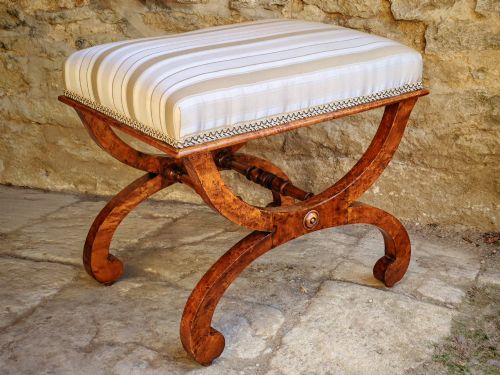
The physical form relies on intersecting curved legs that create a distinctive cross-frame silhouette. Most examples on this page date through the nineteenth century, including specific Victorian and William IV variations.
Makers often integrated these X-framed stools into dressing rooms, libraries, and window seats. The primary function remains a low seat or footrest, executed in forms ranging from plain mahogany frames to heavily carved walnut structures.
Construction and materials
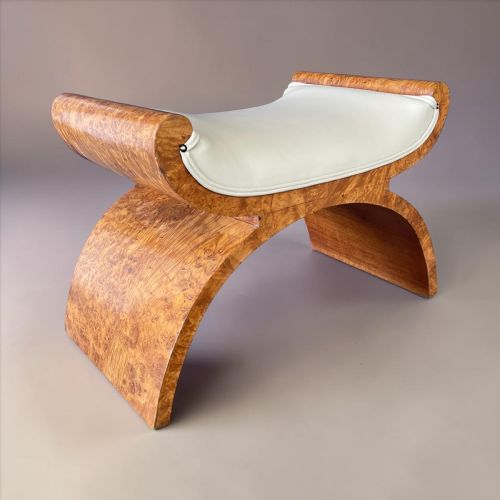
Carpenters constructed the frames using dense timbers such as mahogany, rosewood, walnut, and burr maple. Ebonised and gilt finishes also appear on frames from the aesthetic period.
Upholstery methods varied from traditional horsehair stuffing beneath fabric and leather to intricate beadwork and floral trellis tapestry seats. Brass accents occasionally reinforce the structural joints of the X-frame.
Some Victorian frames feature carved hunting dog heads keeping watch beside your feet.
Judging quality in cross-frame stools
Quality rests in the crispness of the timber carving and the architectural balance of the intersecting X-frame legs. Superior pieces demonstrate tight joinery at the central pivot and precise hand-carving upon the wood.
The integrity of the original upholstery materials, whether needlework, damask, or leather, separates standard items from exceptional ones. Finer examples maintain their original finish and structural rigidity without excessive timber shrinkage.
Miles and Edwards·Harry and Lou Epstein
The Curule Seat Footstool Glossary
- Curule
- An ancient Roman magistrate's chair shape characterised by crossing legs that form an X-frame. This classical silhouette defines the core geometry of these stools.
- X-Frame
- A structural furniture design utilising two curved members intersecting in the middle to support a seat. It provides both load-bearing strength and visual lightness.
- Ebonised
- Wood treated with a dark stain or finish to imitate ebony. This technique was common in nineteenth-century aesthetic pieces.
- Damask
- A reversible figured fabric traditionally woven on a jacquard loom. It frequently appears as seat upholstery on neoclassical and Victorian examples.
- Tapestry
- A heavy hand-woven or machine-woven textile featuring pictorial or floral designs. Surviving examples often display detailed floral trellis patterns.
Curule Seat Footstool: Frequently Asked Questions
What is a curule seat footstool?
A curule seat footstool is a low X-framed seat inspired by ancient Roman folding furniture.
Craftsmen adapted this historic cross-leg shape during the Georgian, Regency, and Victorian eras to create decorative dressing stools and footrests.
How do I date an antique X-frame stool?
Dating relies on examining the timber species, upholstery technique, and stylistic influences present in the frame.
Early nineteenth-century pieces often utilise rosewood or mahogany with neoclassical lines, while later Victorian examples frequently feature walnut, ebonising, or aesthetic movement details.
Where were these stools used historically?
These stools served primarily in dressing rooms, libraries, and formal drawing rooms.
Their compact X-frame construction allowed them to function easily as window seats, footrests, or secondary seating near larger chairs.
What fabrics cover these footstools?
Upholstery materials include leather, velvet, damask, needlework, and floral trellis tapestry.
Many surviving pieces retain period beadwork or patterned textiles applied during the nineteenth century.