



Crystal Whiskey Decanter
A crystal whiskey decanter brings weight and brilliant refractive depth to a sideboard, holding spirits in lead crystal or cut glass.
Crystal Whiskey Decanter
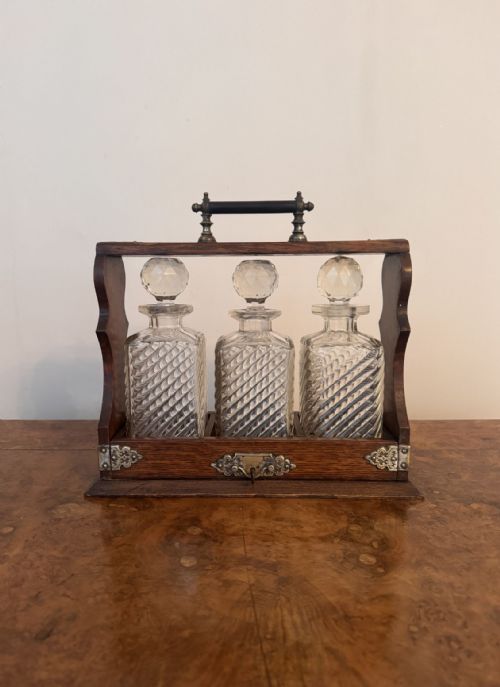
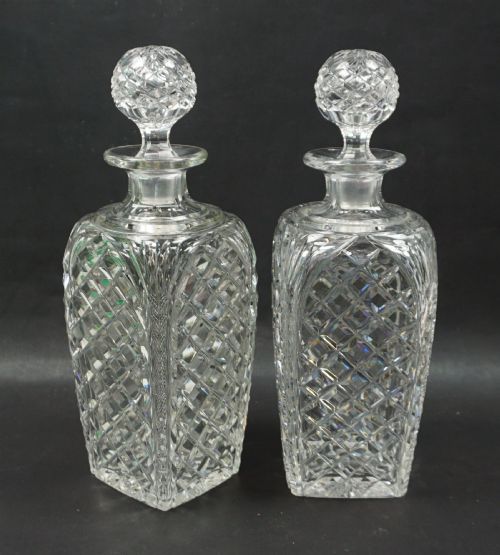
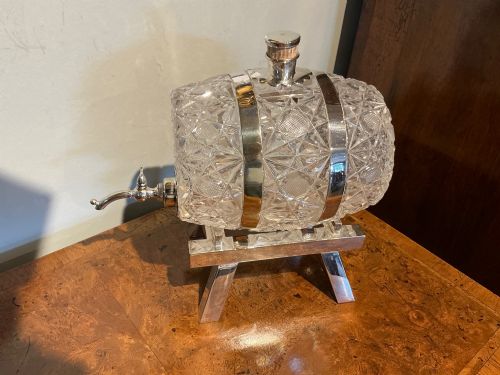
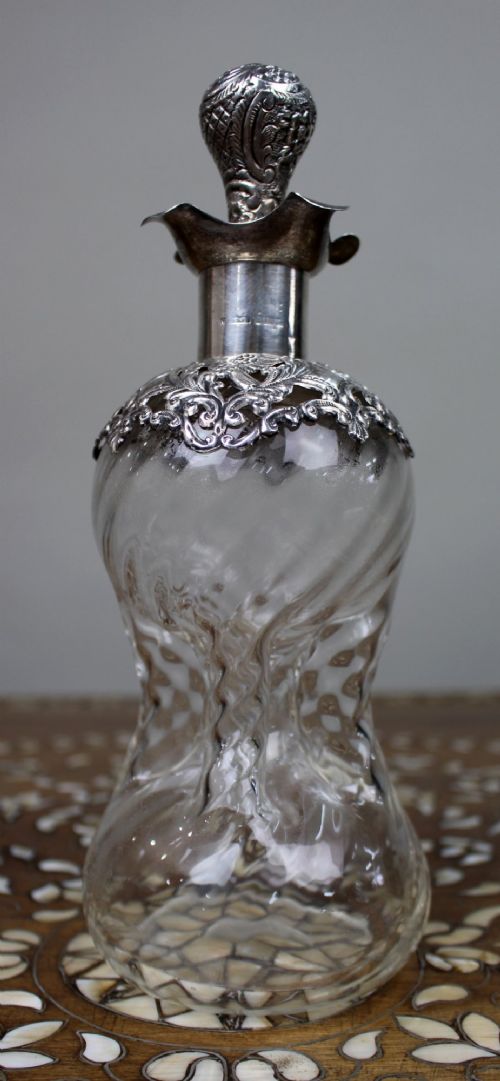
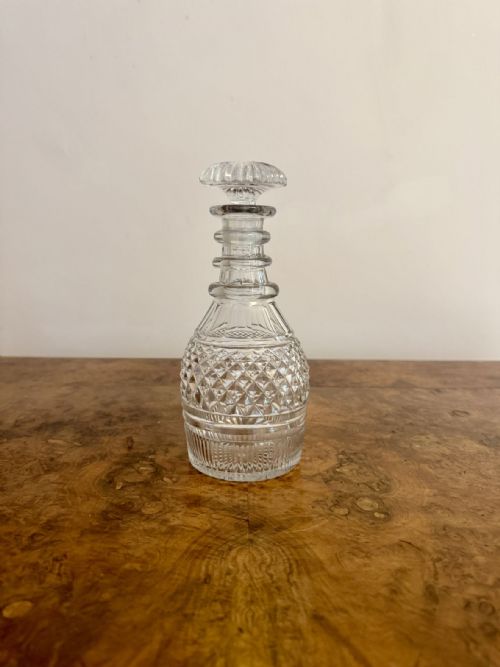
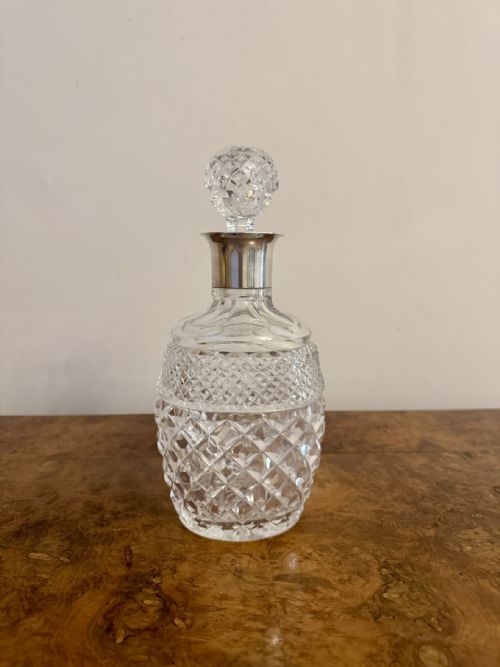
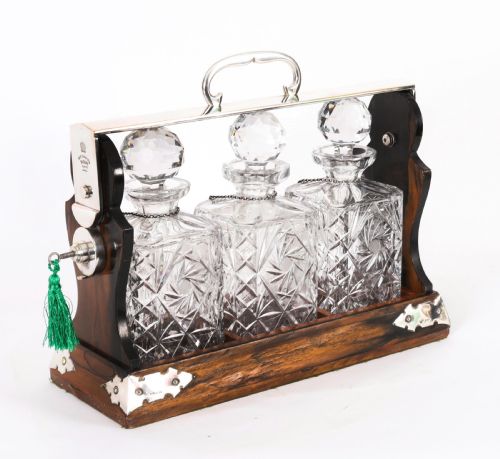
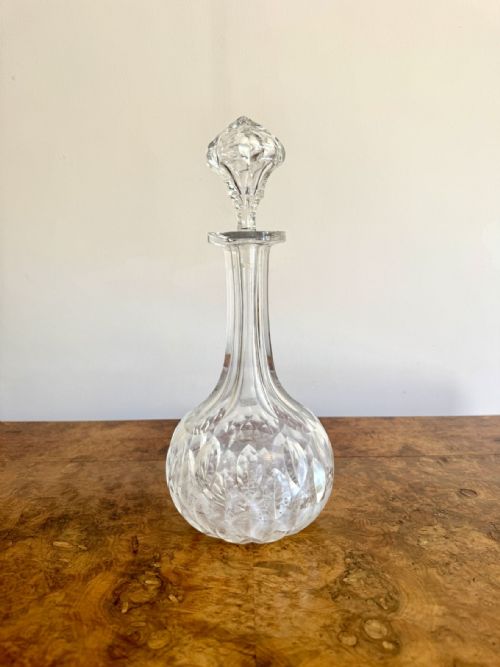
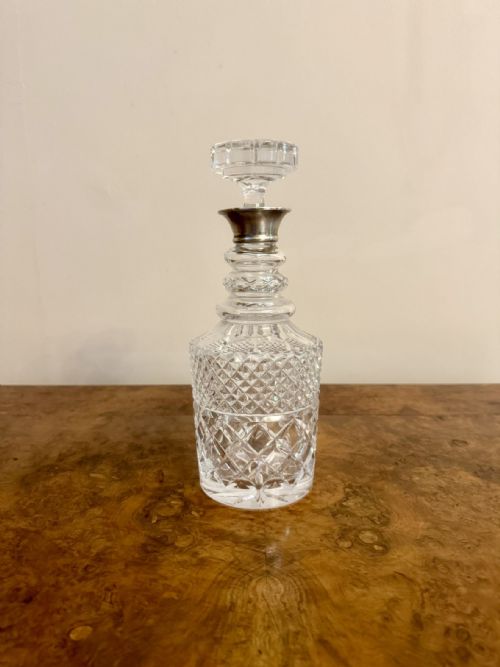
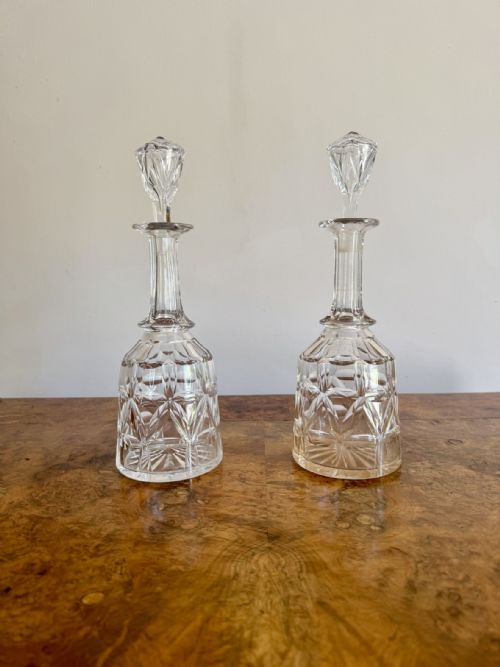
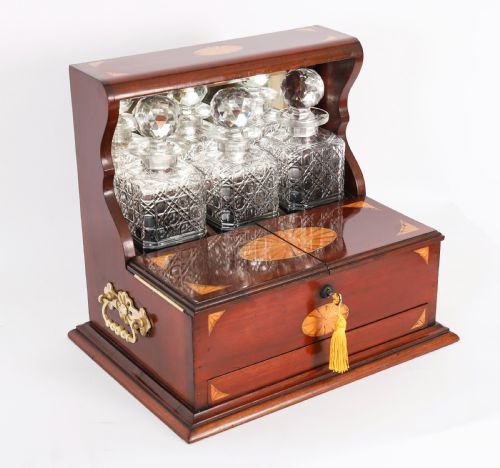
A crystal whiskey decanter is a staple of period entertaining, taking forms from square section tapered bottles to bell shaped vessels and complete tantalus sets. The pieces seen here span the Victorian, Edwardian, and Art Deco periods, encompassing solo spirit bottles, pairs, and multi bottle frames.
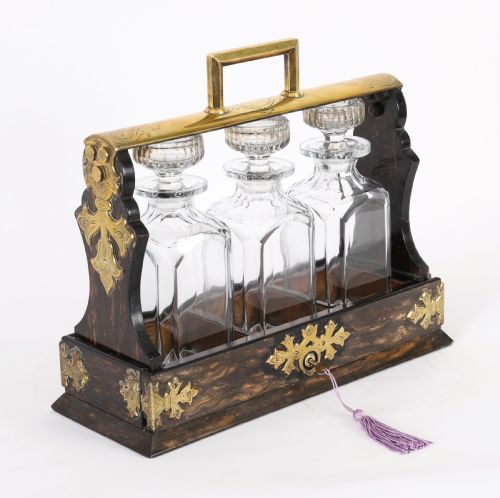
Edwardian and Victorian examples dominate the selection, often incorporating silver collars, mounts, and oak or coromandel tantalus frames fitted with locks. Alongside conventional decanters, buyers encounter hip flasks and geometric Czech glass sets from the nineteen thirties.
Materials and construction
Makers shaped these vessels from lead crystal and cut glass, applying deep geometric facets and optical blowing techniques to catch the light. Many pieces incorporate sterling silver collars, silver plated mounts, or brass hardware.
Housing frames utilise timbers such as oak, satin wood, and coromandel to securely hold bottles behind locking bars, often pairing the glassware with games compendiums or fitted trays.
Listings feature lead crystal, cut glass, oak, sterling silver, and brass across Victorian, Edwardian, and Art Deco styles.
Distinctions in execution
Quality rests in the crispness of the glass cutting and the weight of the crystal body. Heavier lead crystal vessels with sharp, cleanly defined facets sit at the upper end of the range.
The sophistication of the enclosing framework distinguishes standard examples from finer pieces. Solid oak or exotic wood tantalus frames with hallmarked silver mounts and functioning locks represent superior manufacturing standards.
Betjemann·Karl Palda·James Powell
The Crystal Whiskey Decanter Glossary
- Tantalus
- A locking wooden frame designed to secure spirit decanters and prevent unauthorized access to the contents. The mechanism holds the stoppers firmly in place until the front bar is unlocked and lowered.
- Lead Crystal
- Heavy glass containing metallic oxide that increases refractive index and brilliance. This material allows for deep, sharp cutting without fracturing.
- Silver Collar
- A band of sterling silver fitted around the neck of a decanter. These collars frequently carry Birmingham or London hallmarks providing exact dating clues.
- Square Section
- A bottle body shaped with four flat sides tapering toward the base or shoulder. This geometry prevents rolling and fits efficiently inside fitted wooden boxes or tantalus frames.
- Optically Blown
- Glass formed by blowing molten metal into a ribbed mould to create internal pattern lines. The resulting vessel displays subtle vertical waves within the transparent walls.
Crystal Whiskey Decanter: Frequently Asked Questions
What is a tantalus?
A tantalus is a locking wooden frame that holds decanters securely by their stoppers. It was designed in the nineteenth century to keep servants or guests from helping themselves to the whiskey.
The locking bar prevents the stoppers from being removed until a key is turned. This kept the spirits secure while still displaying the cut crystal bottles on the sideboard.
How do I date a decanter?
Dating relies on the style of the glass cutting, the shape of the bottle, and any accompanying metal elements. Victorian pieces often feature heavy cut glass and star cut bases, while Edwardian examples favour silver collars with legible hallmarks.
Looking at the lip, stopper ground joints, and surrounding fitted frames helps narrow the production era to specific decades like nineteen hundred or eighteen eighty.
Can I use antique decanters daily?
These glass and crystal bottles hold whiskey effectively for modern use as long as they are handled with care. Hand washing is essential to protect the clear lead crystal and any fitted silver collars from damage.
Checking that the glass stopper fits the neck snugly keeps the spirits sealed. Avoid exposing antique glass to rapid temperature changes during cleaning.
What is the difference between glass and crystal?
Lead crystal contains added metallic content that makes the material heavier and softer than standard glass. This composition allows artisans to cut deep, sharp geometric facets that refract light brilliantly.
Standard glass vessels feel lighter and lack the high refractive sparkle characteristic of lead crystal. Both materials appear across the Victorian and Edwardian periods in this collection.