

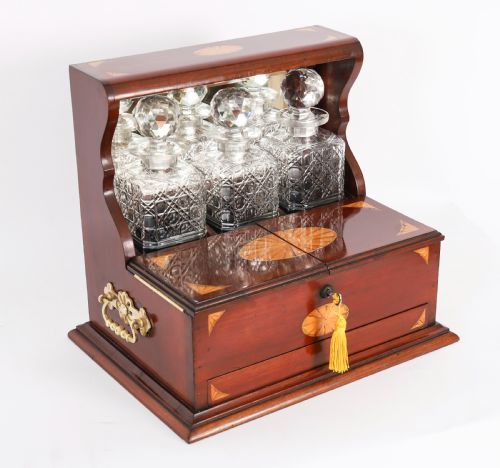


Crystal Whiskey Bottle
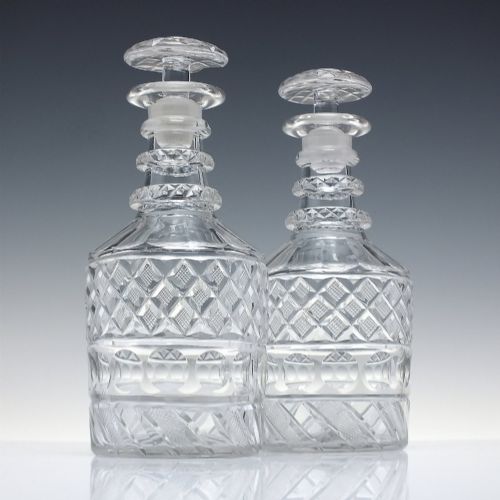
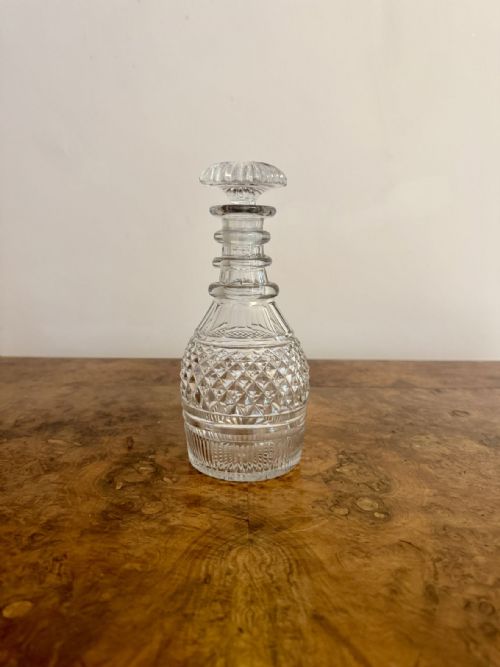
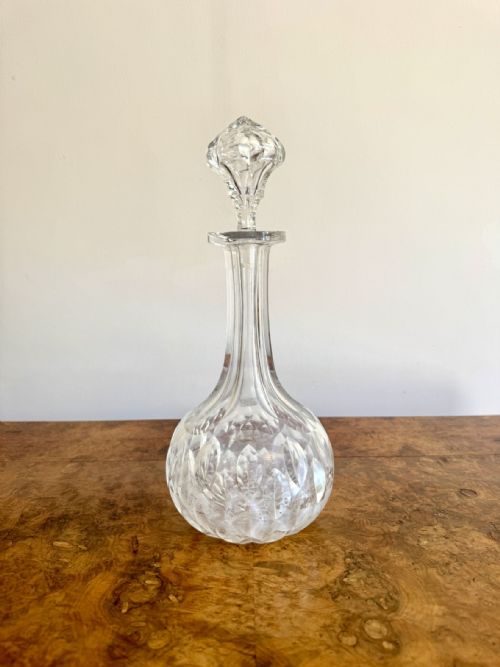
A crystal whiskey bottle sits on the sideboard as a heavy, brilliant piece of functional barware from the Victorian and Edwardian periods.
Crystal Whiskey Bottle
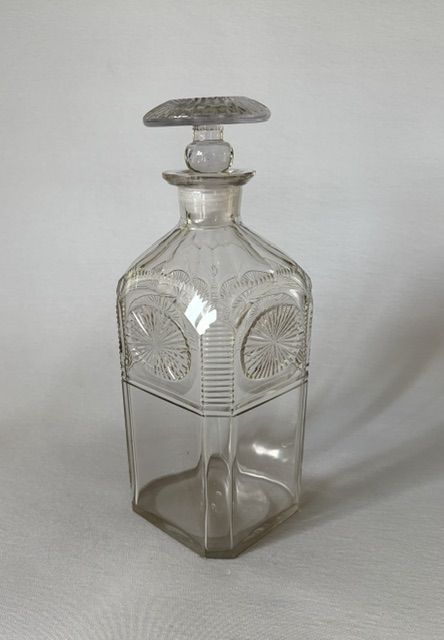
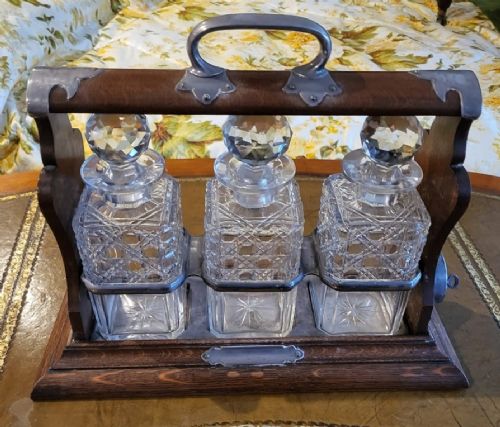
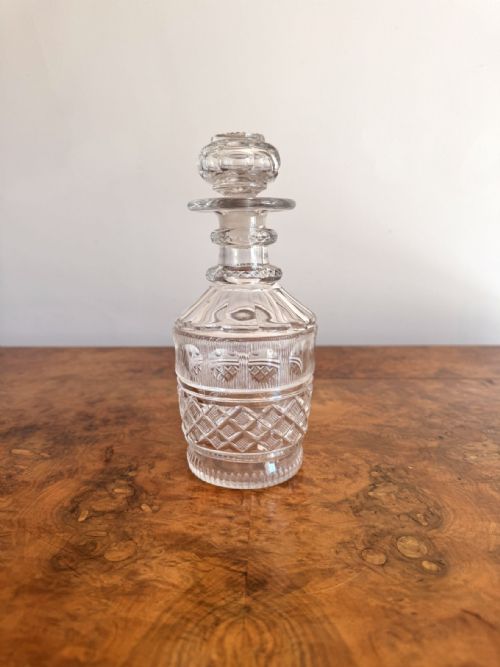
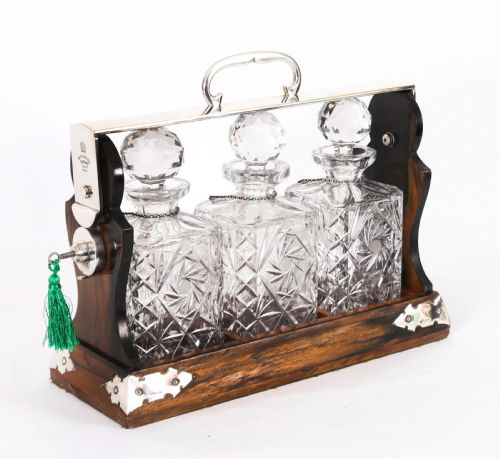
A crystal whiskey bottle search brings up heavy glass spirit containers, often listed as decanters or housed within oak and brass tantalus sets. The pieces you meet most frequently on this page date from the Victorian and Edwardian eras, spanning the mid-nineteenth century up to the 1920s.
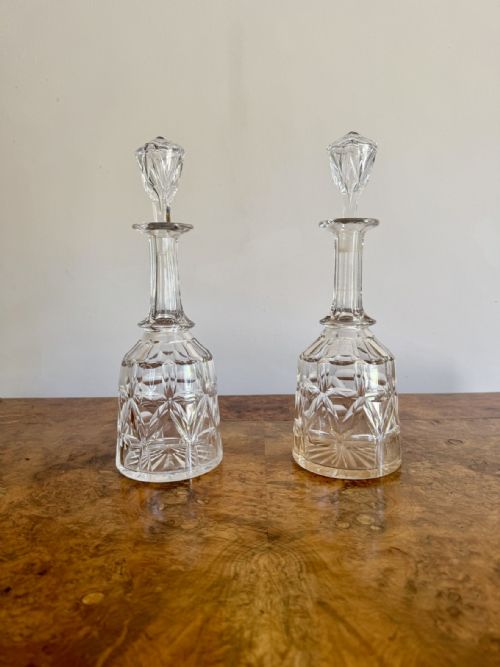
Makers often shaped these glass bottles into bell forms, hourglass profiles, or glug-glug designs, frequently fitted with sterling silver collars or stoppers. Alongside standalone bottles, the selection includes matched sets in silver-plated stands and locking security frames.
The material ranges from plain lead crystal to deeply cut glass, occasionally paired with coromandel wood, satinwood inlay, or brass mounts. These vessels were designed to hold and pour spirits on the Victorian dining table or in the Edwardian smoking room.
Evaluating the range of quality
The standard of a crystal whiskey bottle rests upon the depth and crispness of the glass cutting, alongside the weight of the metal collars. Heavy lead crystal with sharp, clean facets separates finer productions from simpler, lighter moulded glass.
In cased tantalus sets, the quality shows in the choice of cabinet timbers like coromandel or satinwood, the tightness of the joinery, and the mechanical precision of the locking mechanisms fitted by makers such as Betjemann.
Crystal Whiskey Bottle Retail Price Guide 2026
Typical asking prices for crystal whiskey bottle among the pieces listed under this phrase on Sellingantiques today, from the lower quarter to the upper quarter. They describe what is for sale here now, not the wider market.
Some Victorian decanters earned the nickname glug-glug bottles because of the distinctive gurgling sound the spirit made while pouring.
Betjemann·James Powell·Elkington·Hukin & Heath Ltd·Freeman & Son Ltd
The Crystal Whiskey Bottle Glossary
- Tantalus
- A locking wooden frame that holds decanters securely while displaying the contents, preventing servants or guests from pouring a drink without a key.
- Cut Glass
- Glass decorated by grinding facets and patterns into the surface with rotating abrasive wheels, creating light reflections.
- Decanter
- A vessel designed to hold and serve liquor, typically fitted with a ground glass stopper to seal the contents.
- Hallmark
- A stamp impressed into silver mounts indicating the assay office, standard of purity, and date letter.
Crystal Whiskey Bottle: Frequently Asked Questions
What is a tantalus?
A tantalus is a locking wooden frame that secures spirit bottles behind a metal bar so people could see the whiskey inside but could not pour a glass without the key.
Victorian and Edwardian households used these locking stands in dining rooms and studies to control access to expensive imported spirits.
How do I date a crystal decanter?
Dating relies on combining the cutting style of the glass with any metal hallmarks on the silver collar and the wood type of the housing.
Victorian pieces often feature deep hand-cutting and oak frames, while Edwardian and later examples show lighter cutting styles alongside Art Deco geometric influences.
Were these bottles made for whiskey?
These vessels served various spirits, with some bearing engraved labels such as whisky, brandy, or scotch directly on the glass or mounted on small silver neck chains.
Owners filled the same decanter styles with whichever spirit suited the evening, though specific spirit names appear on several surviving examples.
How should I clean an old decanter?
Cleaning requires warm water and mild detergent, avoiding harsh scrubbing brushes that might scratch the interior or damage old glass surfaces.
Because many vintage bottles feature narrow necks, traditional bottle cleaning beads or rice shaken inside with water help loosen interior residue without damaging the crystal.