




Crystal Lustre Vase
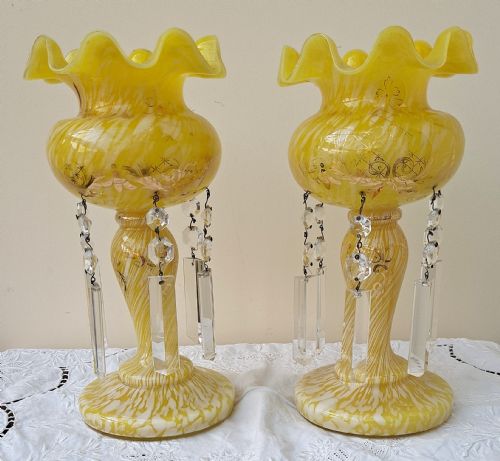
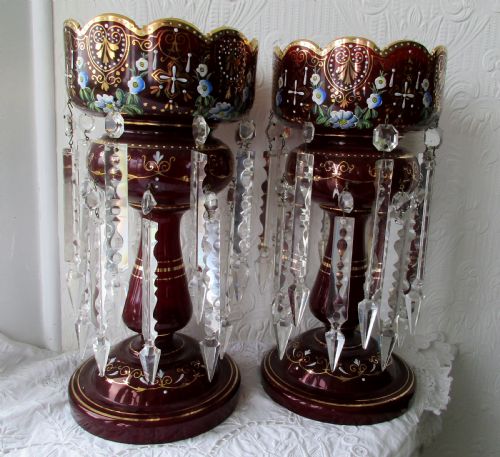
These crystal lustre vase examples bring Victorian candlelight and cut glass sparkle to a mantelpiece, offering the classic hanging drop ornaments that collectors seek.
Crystal Lustre Vase
A crystal lustre vase is typically found as a mantel lustre, table lustre, or glass lustre originating from the nineteenth century. These pieces function primarily as decorative mantel ornaments rather than vessels for holding water and flowers.
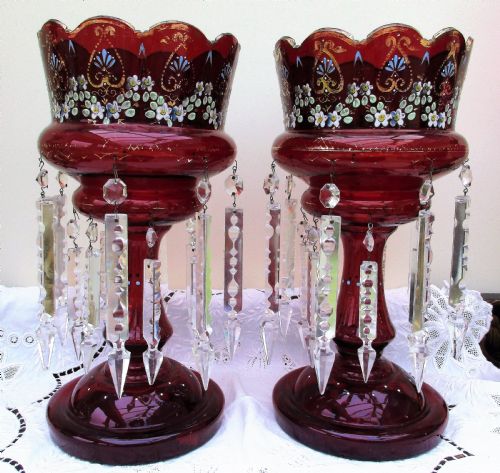
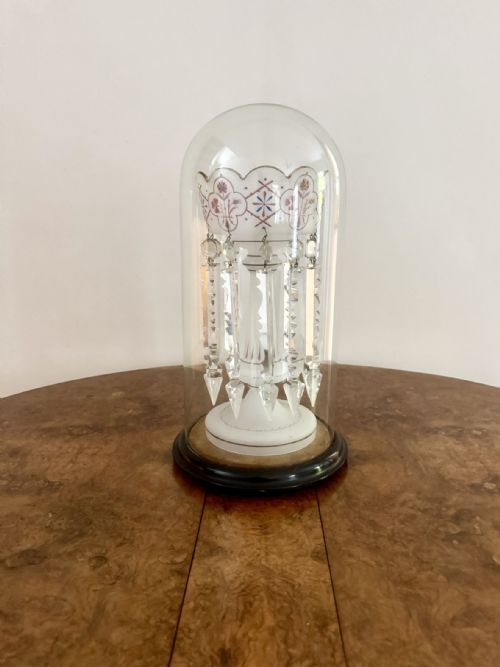
Most examples appearing here belong to the Victorian period, dating from the 1860s through to 1900. Pairs dominate the selection, though single pieces and items accompanied by glass domes also occur.
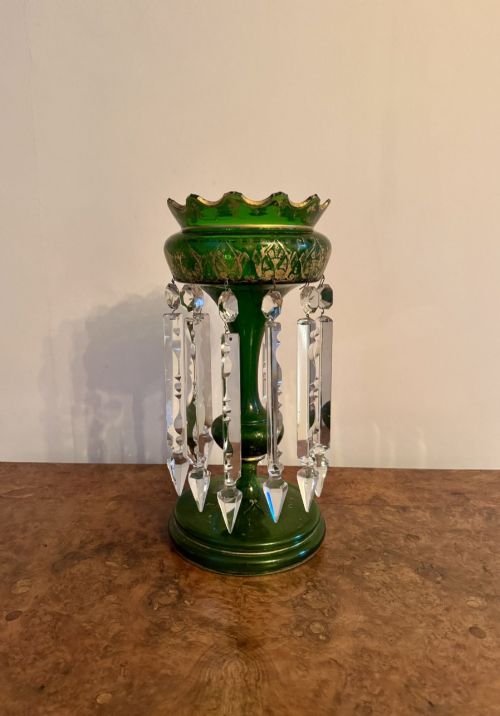
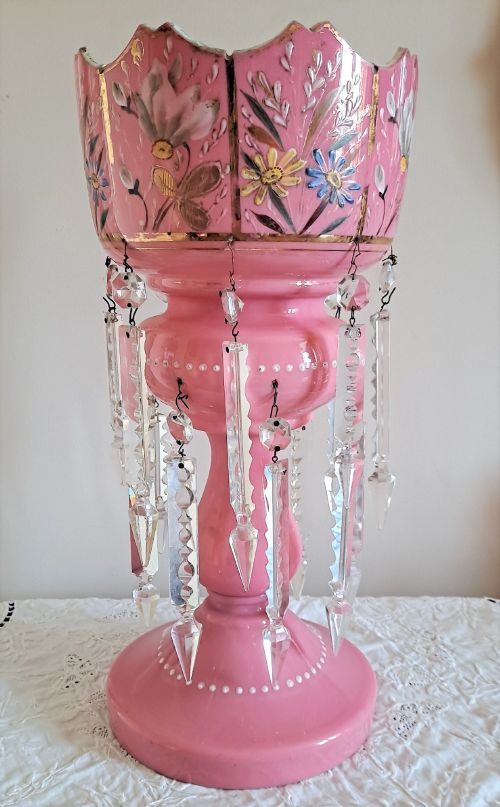
The form incorporates a central stem and bowl adorned with dangling glass pendants, known as drops or prisms, which catch and refract ambient light.
Materials and construction methods
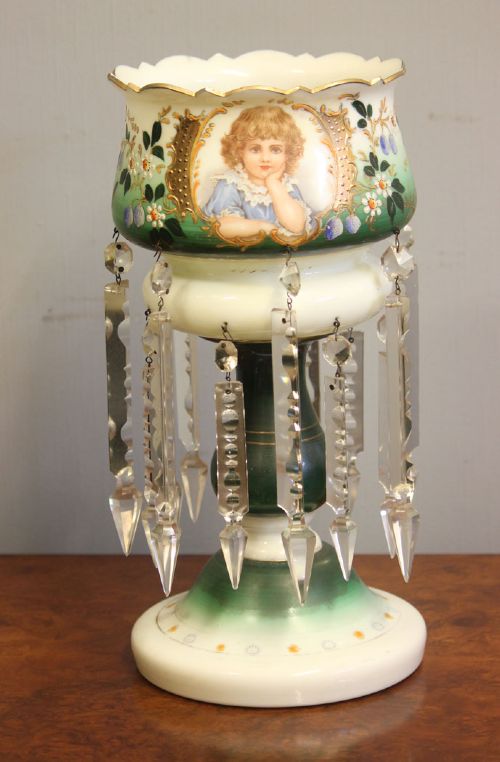
The bodies of these pieces utilise coloured or clear glass and lead crystal, shaped into forms like ruby glass, green glass, yellow glass, cranberry glass, and opaline glass. Techniques such as Bohemian flash glass and overlay glass appear across the nineteenth-century examples.
Decoration frequently includes cut crystal facets, enamel work, and gold leaf or gilt detailing applied to the glass body. Glass drops hang from the rim via metal loops or wire attachments, completing the construction.
Crystal Lustre Vase Retail Price Guide 2026
Typical asking prices for crystal lustre vase among the pieces listed under this phrase on Sellingantiques today, from the lower quarter to the upper quarter. They describe what is for sale here now, not the wider market.
Some Victorian examples come paired with glass domes, offering a dusty time capsule straight from the parlour.
Assessing craftsmanship and finish
Quality separates simple moulded glass bodies from heavy lead crystal examples featuring deep, precise cutting and substantial weight. The richness and saturation of the ruby, cranberry, or overlay glass colours also distinguish finer items.
The presence of matching original glass drops significantly impacts the character of a piece. Delicate hand-painted enamel details and intact gilding represent higher standards of period craftsmanship.
The Crystal Lustre Vase Glossary
- Lustre
- A decorative vase or pedestal fitted with hanging glass pendants designed to refract light. They were popular on nineteenth-century mantelpieces.
- Flash glass
- A vessel made from a thin layer of coloured glass fused over a colourless base glass before being cut through to reveal the clear layer underneath. This technique creates sharp contrast in patterns.
- Overlay glass
- A method where two or more distinct layers of coloured glass are fused together, allowing sections of the outer layer to be ground away to expose the contrasting colour beneath.
- Opaline glass
- An opaque, pale glass with a milky appearance, frequently tinted in pastel shades and utilised for decorative nineteenth-century table wares.
- Cranberry glass
- A rich red-pink transparent glass coloured with gold chloride, commonly utilised for Victorian decorative tableware and mantel ornaments.
Crystal Lustre Vase: Frequently Asked Questions
What are crystal lustre vases?
These are nineteenth-century decorative glass vessels designed with hanging pendants around the rim to catch the light.
They were intended to stand on mantelpieces and tables rather than hold fresh flowers.
How were lustre vases used?
Victorian households placed them on mantelpieces and parlour tables to brighten rooms by reflecting candlelight and gaslight.
The dangling prisms created movement and sparkle within the dim interiors of the period.
Are they usually sold as pairs?
Many examples survive as matching pairs intended to flank a clock or other mantel ornament.
Single pieces also appear on the market for collectors with space for an individual display.
How do I date a lustre vase?
Dating relies on stylistic markers from the Victorian era, spanning the nineteenth century from the 1860s to 1900.
Specific glass colours like cranberry and ruby, alongside overlay and flash techniques, point directly to this period.