





Crystal Glass Clock
These crystal glass clock pieces combine heavy bevelled panels with precise mechanical movements, offering a striking centrepiece for any mantelpiece.
Crystal Glass Clock
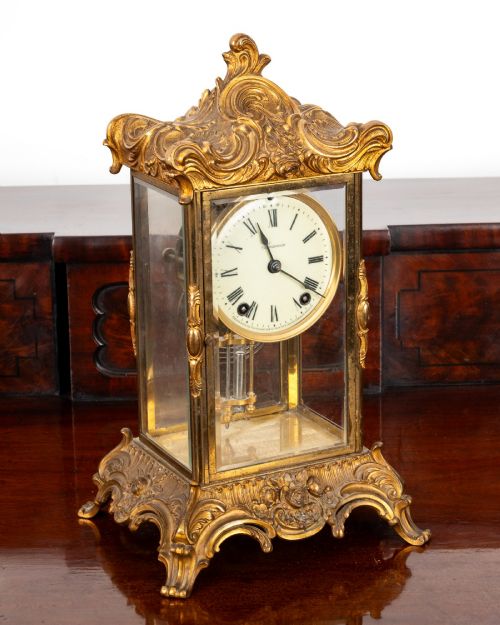
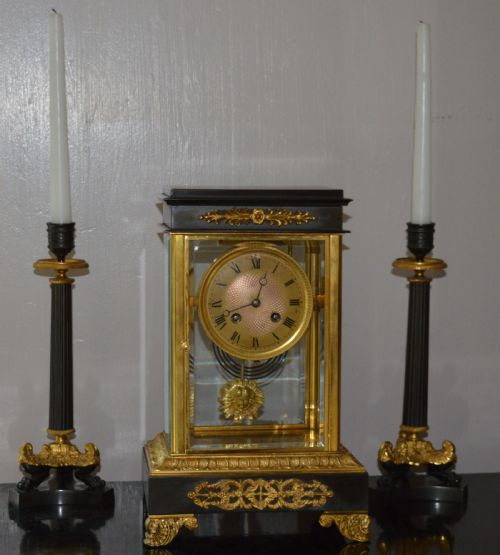
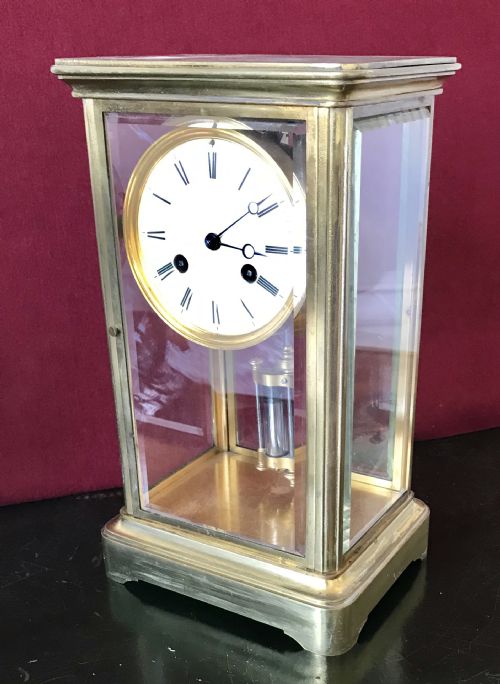
A crystal glass clock brings together transparent housing and intricate brass or gilt metal framing to showcase the moving parts within. When searching for a crystal glass clock, buyers encounter nineteenth-century French regulators and portico designs alongside later Victorian examples.
Most pieces on this page take the form of mantel clocks or four-glass clocks housed within heavy bevelled glass cases. These decorative timepieces range from elaborate portico structures to upright regulator cabinets with enamel dials.
French workshops dominate these listings, particularly from the late nineteenth century and the Belle Epoque period. Makers such as Samuel Marti et Cie and L'Epee produced many of the notable regulators and clock sets seen here.
Materials and construction methods
Construction relies heavily on thick cut crystal and bevelled glass panels secured within frames of brass, ormolu, gilt bronze, and gilt brass. These transparent walls allow a clear view of the mechanical escapement and pendulum from all sides.
Many dials feature delicate blue enamel panels and hand-painted numerals set within ornate metal bezels. The heavy metal components provide the structural stability needed to support the thick glass panes and precision gear trains.
Crystal Glass Clock Retail Price Guide 2026
Typical asking prices for crystal glass clock among the pieces listed under this phrase on Sellingantiques today, from the lower quarter to the upper quarter. They describe what is for sale here now, not the wider market.
Current listings span the nineteenth and twentieth centuries, incorporating Victorian, Charles X, and French Belle Epoque design traditions.
Distinguishing quality in timepieces
Quality rests in the weight and clarity of the glass panels and the precision of the cast metal mounts. Finer pieces display crisp chasing on the ormolu and bronze frames, with clean bevelling on every glass edge.
The sophistication of the movement and the signature of the maker elevate certain pieces above standard production. Signed movements by established makers indicate a higher tier of horological craftsmanship and finishing.
Ansonia New York·Samuel Marti et Cie·L Epee France
The Crystal Glass Clock Glossary
- Crystal Regulator
- A weight-driven or spring-driven mantel clock housed in a glass case with bevelled panels. These pieces often feature a mercury-filled pendulum designed to compensate for temperature changes.
- Portico Clock
- A monumental mantel clock supported by columns or pillars in a classical architectural style. This form frequently pairs cut crystal elements with gilt bronze or ormolu mounts.
- Ormolu
- Finely ground high-carat gold mercury-gilded onto a bronze base. This technique creates a rich, durable metallic finish found on nineteenth-century French clock mounts.
- Bevelled Glass
- Glass with edges ground and polished at an angle to catch the light. This treatment adds depth and refinement to the transparent panels of the clock case.
- Enamel Panel
- A fused glassy compound applied to a metal substrate to create decorative surfaces on clock dials. These panels often feature painted numerals and delicate floral motifs.
Crystal Glass Clock: Frequently Asked Questions
How do I wind a crystal glass clock?
Most of these mechanical timepieces require a matching winding key inserted directly into the enamel dial face. Turning the key clockwise tensions the mainspring inside the movement barrel.
Care must be taken not to overwind the mechanism, stopping as soon as resistance is felt. Regular winding keeps the pendulum swinging at a consistent rate for accurate timekeeping.
Where should I place a four glass clock?
A sturdy mantelpiece or flat surface away from direct sunlight and heavy vibrations provides the ideal home. Because the glass panels offer an all-around view of the movement, positioning the piece where light passes through enhances its visual appeal.
Level placement is essential for the pendulum to beat evenly and keep the clock running properly.
How do I identify a French regulator?
French regulators typically feature a tall brass-framed case with heavy bevelled glass on all four sides. The dial is often suspended centrally within the upper portion of the glass housing, allowing a clear view of the mercury or compensating pendulum below.
Signatures on the movement backplate or dial frequently name makers such as Samuel Marti.
What causes a portico clock to stop?
Stopping often results from the clock being placed on an uneven surface, which causes the pendulum to catch against the movement components. Dust accumulation within the gear train can also impede the smooth transfer of power from the mainspring.
Gentle centring of the pendulum usually restores the beat, though periodic professional cleaning maintains long-term reliability.