

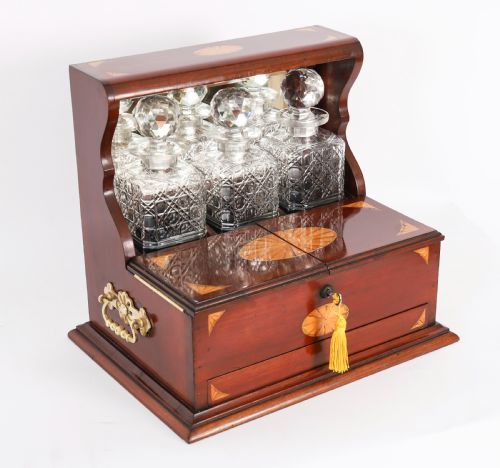


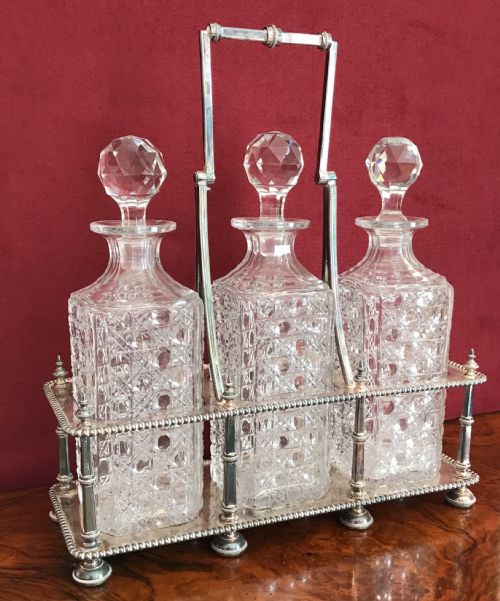
Crystal Decanter Holder
A crystal decanter holder secures your finest spirits behind locked bars or within sturdy frames, combining utility with formal hospitality.
Crystal Decanter Holder
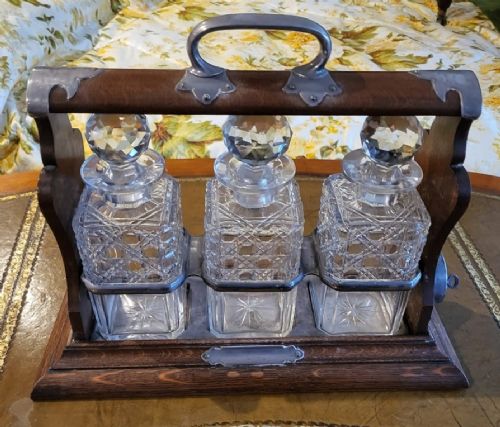
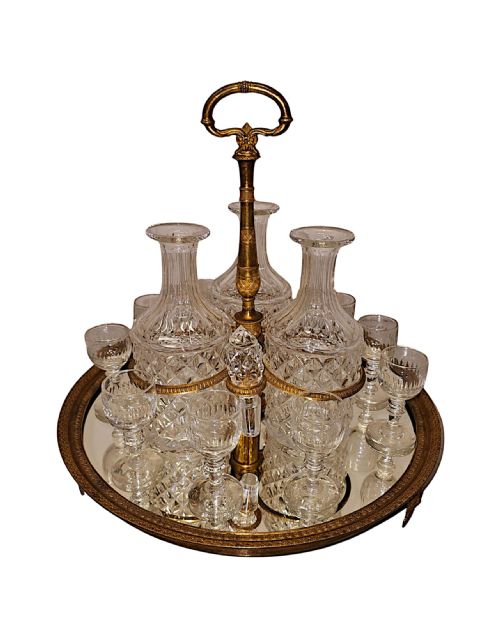
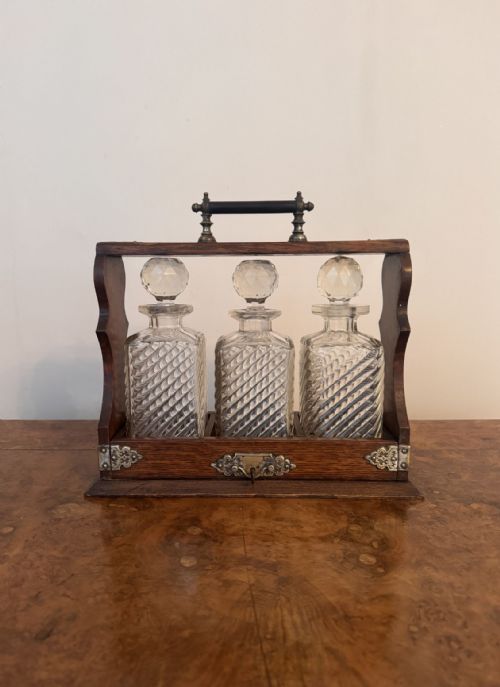
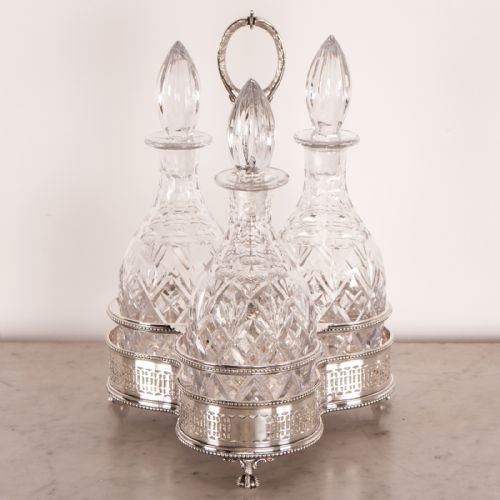
When you search for crystal decanter holder, you encounter a selection of Victorian, Edwardian, and Art Deco barware designed to hold glass bottles securely. The pieces include tantalus frames, liqueur stands, and fitted decanter caddies from the nineteenth and twentieth centuries.
You are most likely to meet the tantalus version on this page, which uses a locking mechanism to secure the bottles against unauthorised access. These objects range from two-bottle oak stands to elaborate three-bottle setups equipped with games compendiums.
The materials span oak, satinwood, and mahogany fitted with silver-plated or chrome metalwork to cradle the cut glass and crystal decanters. Such pieces reflect the social rituals of late nineteenth-century dining and early twentieth-century modernism.
How They Were Made
Maker workshops built the wooden frames using solid oak, mahogany, or satinwood, often incorporating marquetry and inlaid details. Metal components such as silver plate, brass, and chrome were cast and plated to form the locking mechanisms, carrying handles, and bottle collars.
Glassmakers produced the vessels using heavy cut crystal or cut glass with deep geometric facets that catch the light. Craftsmen then fitted the metal frames precisely to the contours of the individual decanters to prevent movement during carriage.
Crystal Decanter Holder Retail Price Guide 2026
Typical asking prices for crystal decanter holder among the pieces listed under this phrase on Sellingantiques today, from the lower quarter to the upper quarter. They describe what is for sale here now, not the wider market.
The selection spans Victorian, Edwardian, and Art Deco periods of barware.
What Varies in Quality
Quality rests on the integrity of the locking mechanism and the weight of the metal plating over the base metal. Superior examples feature fully operational locks with matching keys and robust silver plating that covers the structural framework without thin patches.
Walker & Hall·Elkington·Jacques Adnet
The Crystal Decanter Holder Glossary
- Tantalus
- A locking drink cabinet or frame that holds decanters securely while allowing the contents to remain visible. The locking bar prevents the removal of the bottles until the key is turned.
- Decanter Stand
- An open frame designed to hold one or more serving bottles without a locking mechanism. These stands often include a central carrying handle.
- Silver Plate
- A thin layer of silver fused to a base metal such as copper or nickel brass. It provided the appearance of solid silver at a lower production cost.
- Cut Crystal
- High-clarity glass containing lead oxide, cut with facets to refract light. It forms the heavy bottles housed within these frames.
- Satinwood
- A durable exotic hardwood with a lustrous, golden sheen. It was frequently used for fine nineteenth-century cabinetwork and inlay.
Crystal Decanter Holder: Frequently Asked Questions
What is a tantalus?
A tantalus is a locking beverage stand that holds decanters securely within a frame. It takes its name from the mythological figure Tantalus because the drinks remain visible yet out of reach.
These devices were used in Victorian and Edwardian homes to prevent household staff from sampling the master's spirits.
How do you open a tantalus?
Opening a tantalus requires a small key that releases the vertical locking bar. Once unlocked, the bar slides or tilts to allow the decanters to be lifted free from their fitted bases.
Many antique pieces survive without working keys, meaning the locking mechanism remains permanently engaged unless opened by a specialist.
What is the difference between a stand and a tantalus?
A decanter stand is an open frame designed purely for carrying and displaying bottles on a sideboard or dining table. A tantalus adds a mechanical locking bar across the stoppers to restrict access.
Stands offer easy access for pouring, whereas tantalus frames prioritise security and formal presentation.
How do you date these pieces?
Dating relies on the combination of materials, cabinet styles, and metalworking techniques. Victorian examples often feature heavy oak frames and ornate silver plate, while Art Deco pieces utilise chrome and glass with streamlined geometry.
Maker marks stamped onto the metal mounts also help narrow down the period of production.
Were these made for three bottles?
Many examples feature configurations for three decanters alongside two-bottle variants. The three-bottle formats frequently housed spirits such as whisky, brandy, and gin.
Larger frames sometimes incorporated extra compartments for playing cards and dice drawers beneath the bottles.