

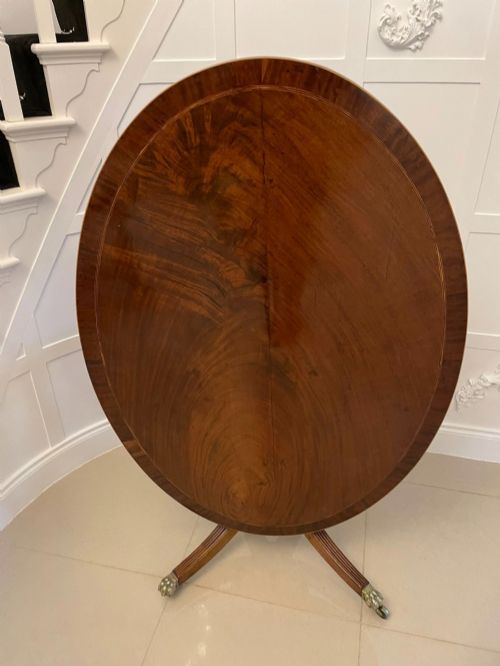
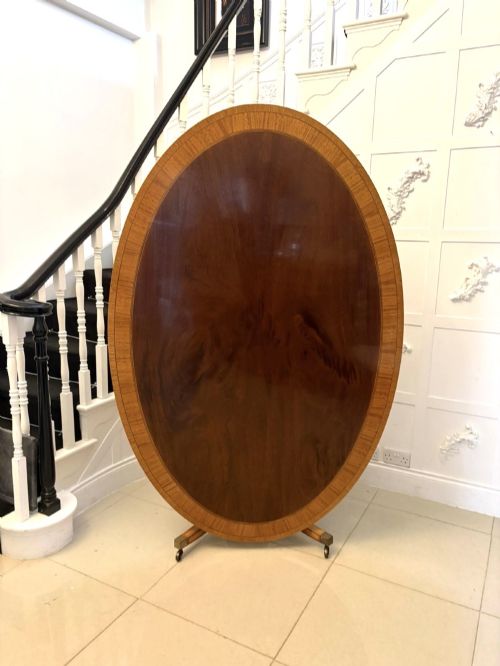
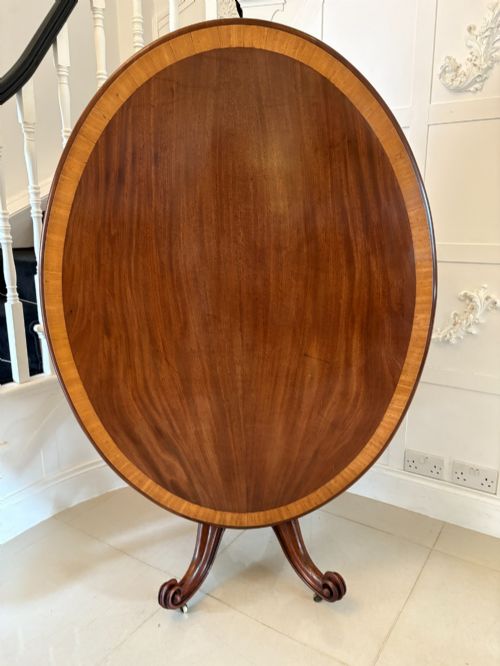
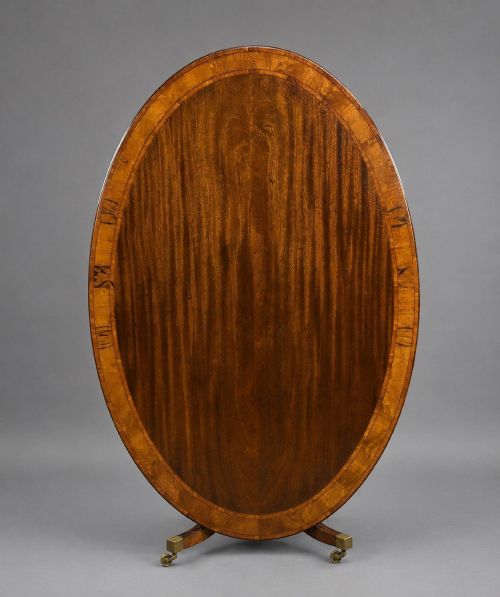



Crossbanded Tilt Top Table
A crossbanded tilt top table combines flexible dining utility with the crisp, decorative framing of contrasting timber borders.
Crossbanded Tilt Top Table
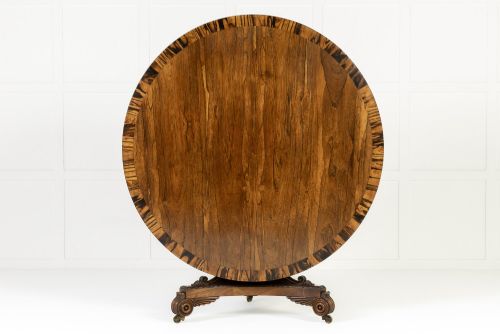
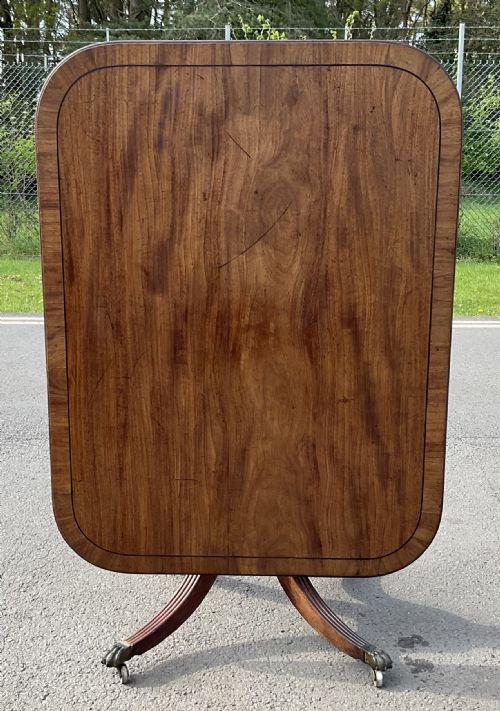
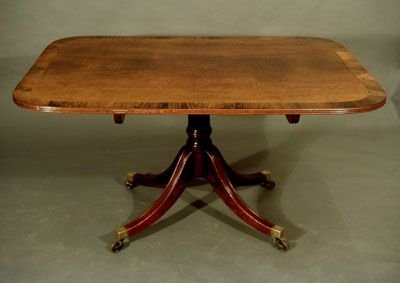
A crossbanded tilt top table is typically encountered as a breakfast, supper, or loo table originating from the Georgian, Regency, or Victorian periods. These pieces feature a top designed to pivot upright for compact storage against a wall when not in use. You will frequently find them in mahogany or rosewood, often displaying circular or oval tops supported by central pedestals.
The selections span from the late 18th century through to the early 20th century, including revival pieces from the Edwardian era. Forms range from occasional and lamp tables to larger dining and centre tables designed for versatile domestic use. The defining characteristic across these forms is the pivoting mechanism paired with decorative border work.
Materials and construction
Construction relies heavily on dense timbers such as mahogany and rosewood, frequently enhanced by decorative veneers like satinwood, coromandel, and gonçalo alves. Cabinetmakers laid these contrasting grain patterns as borders around the main top panel to create a distinct framing effect. Brass elements and tilt mechanisms provide the structural support required for heavy wooden tops.
Makers utilised skilled joinery to ensure the pivoting top sat flat and secure when lowered for use. The combination of figured timber surfaces and sturdy central pedestals demanded precise carpentry to balance weight distribution when the table was horizontal or vertical.
Crossbanded Tilt Top Table Retail Price Guide 2026
Typical asking prices for crossbanded tilt top table among the pieces listed under this phrase on Sellingantiques today, from the lower quarter to the upper quarter. They describe what is for sale here now, not the wider market.
Rooms gained precious floor space each evening as tables tilted upright to wait patiently against the wall until breakfast.
Assessing craftsmanship
Quality rests in the crispness of the crossbanding and the choice of figured timber for the primary panels. Finer examples display meticulously matched grain patterns and subtle contrasting wood selections that frame the surface without overwhelming it.
The engineering of the tilt mechanism and the stability of the central pedestal also define the upper tier of pieces. A well-made table operates smoothly at the pivot point and rests firmly on its base without looseness or wobble.
Peters of Genoa
The Crossbanded Tilt Top Table Glossary
- Crossbanding
- A border of veneer laid with the grain running perpendicular to the central panel. This technique creates a contrasting frame around the edge of the tabletop.
- Tilt top
- A tabletop mounted on a pivot mechanism that allows the surface to rotate vertically. This design enabled tables to be pushed aside against a wall to save floor space.
- Breakfast table
- A dining table designed for morning use, typically featuring a single central pedestal and a circular or oval top. Many examples incorporate the tilt top function.
- Loo table
- A large Victorian round or oval table originally intended for the card game loo. These tables almost universally feature tilting mechanisms.
- Veneer
- A thin layer of figured timber applied to a secondary wood base. This method allowed cabinetmakers to display decorative grain patterns economically.
Crossbanded Tilt Top Table: Frequently Asked Questions
How do you tilt the top?
The mechanism usually involves a brass catch or release pin beneath the tabletop. Lifting this catch allows the surface to pivot on its central block.
Once upright, a secondary lock often secures the top in place to prevent accidental movement while stored.
Were these used for dining?
Breakfast and supper tables served as primary dining surfaces in smaller rooms or for informal meals. Their versatile size made them practical for daily household use.
The tilting function simply permitted the room to be cleared afterwards.
How do I spot a Georgian piece?
Georgian tables from the late 18th century often display restrained mahogany framing and simpler pedestal designs. The construction tends to rely on solid timber foundations alongside early veneer work.
Proportions remain balanced and architectural without the heavier ornamentation seen later in the 19th century.
What is crossbanding?
Crossbanding is a decorative technique where strips of veneer are applied to the border of a tabletop. The grain runs across the width of the strip rather than along the length of the table.
This creates a neat visual frame that highlights the central panel.