


Crimson Velvet Seating
Crimson velvet seating brings rich colour and deep texture into a room, offering striking focal points rooted in nineteenth-century and early twentieth-century design.
Crimson Velvet Seating
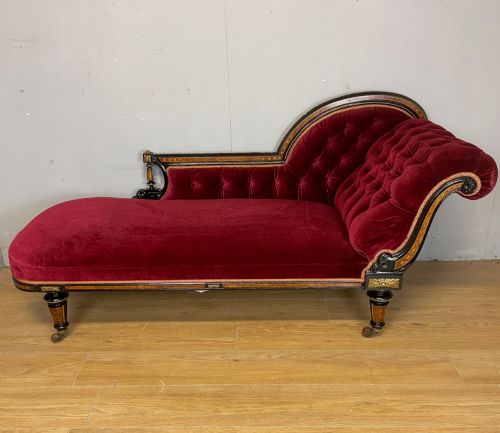
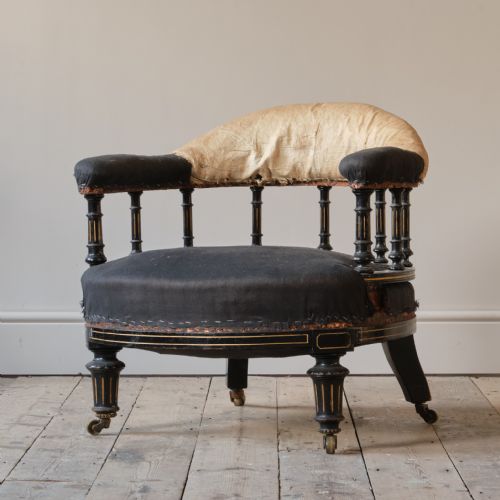
Crimson velvet seating encompasses a variety of opulent upholstered forms, from nineteenth-century ebonised chaise longues and Victorian parlour chairs to Edwardian settees. Buyers seeking crimson velvet seating will find pieces ranging from grand William IV mahogany fireside armchairs to intimate centre stools and footstools.
The selection frequently highlights Victorian Rococo Revival, Aesthetic Movement, and Queen Anne style influences. Makers such as Gillows appear alongside French Consulate period interpretations, creating a diverse palette of historical seating.
Whether choosing an upholstered wing back armchair or a complete set of coronation armchairs, these items combine deep pile textiles with sturdy timber frames. Each piece reflects the decorative priorities of its specific period, spanning the Regency era to the 1930s.
How they were made
Frames are constructed from dense timbers including mahogany, walnut, and ebonised wood, providing robust structural foundations for the upholstery. Skilled cabinetmakers shaped these woods to suit prevailing tastes, incorporating inlaid walnut panels and exposed carved details.
Decorative embellishments often include brass and ormolu mounts, enhancing the formal appearance of the frames. The primary textile is velvet, occasionally accompanied by corduroy, stretched taut over internal padding to achieve supportive and resilient seating surfaces.
What varies in quality
Quality rests in the precision of the timber framing and the sophistication of decorative elements like ormolu mounts and inlaid walnut panels. Finer examples display meticulous carving and superior wood selection, distinguishing standard utility pieces from high-status workshop productions.
The integrity of the structural joinery and the execution of distinct style traits, such as those associated with Gillows or the Aesthetic Movement, elevate certain pieces. Better items maintain balanced proportions and harmonious integration between the wooden framework and the velvet upholstery.
Gillows
The Crimson Velvet Seating Glossary
- Chaise longue
- An elongated upholstered chair designed for reclining, popular in nineteenth-century interiors. These pieces combine seating and rest with elaborate wooden frames.
- Ormolu
- Gilt bronze mounted onto furniture as decorative enrichment. This technique adds metallic brilliance against dark wood and crimson velvet.
- Ebonised wood
- Timber treated to resemble expensive ebony through a dark staining process. It provides a stark, dramatic contrast to bright upholstery.
- Aesthetic Movement
- A nineteenth-century design style emphasising visual beauty over narrative content. Pieces from this movement often feature refined lines and artistic detailing.
Crimson Velvet Seating: Frequently Asked Questions
What periods do these chairs represent?
The available pieces span the nineteenth and early twentieth centuries, encompassing Regency, Victorian, Edwardian, and later 1930s examples.
Specific stylistic influences range from the French Consulate period to the Aesthetic Movement and Queen Anne revivals.
How do I care for velvet upholstery?
Velvet requires gentle brushing to maintain the pile direction and regular light vacuuming to prevent dust accumulation.
Keep these items away from direct sunlight to preserve the depth and richness of the crimson dye over time.
Where were these seating forms placed?
Armchairs and settees traditionally occupied principal reception rooms, parlours, and fireside settings in period homes.
Centre stools and chaise longues served as decorative and functional additions to larger drawing rooms and chambers.
What timbers are used in the frames?
Makers utilised hard timbers such as mahogany and walnut for structural strength and attractive grain patterns.
Ebonised wood also appears frequently, offering a solid black finish that highlights gilt or brass ornaments.