
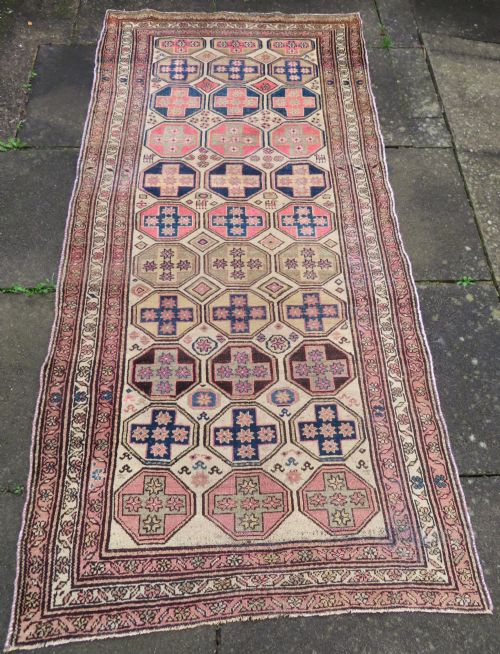

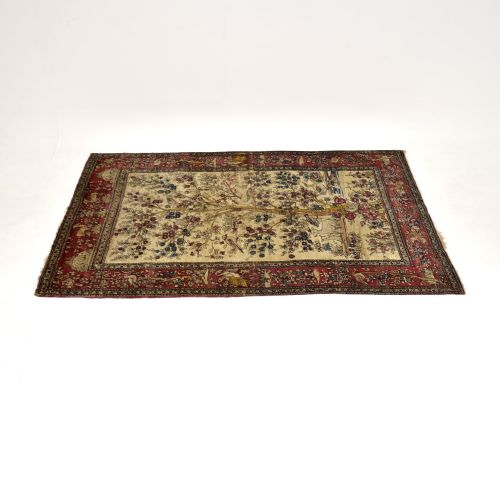
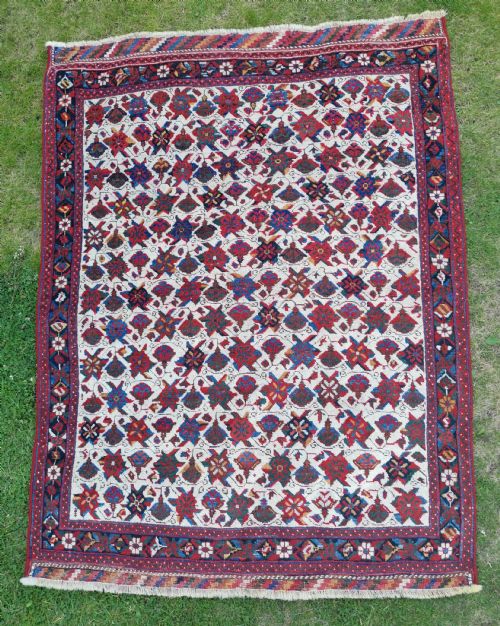
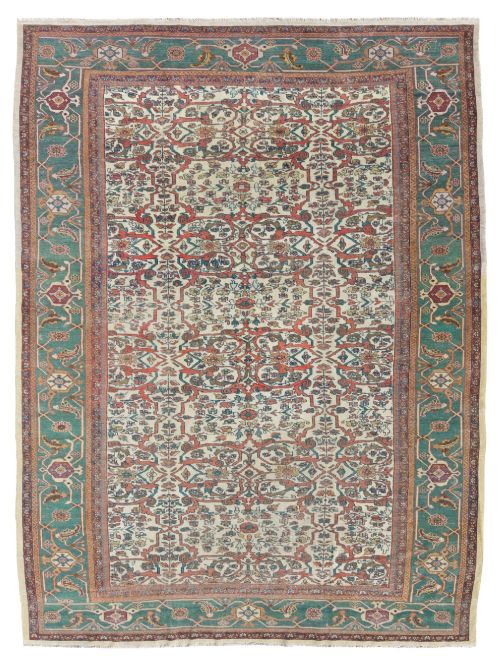
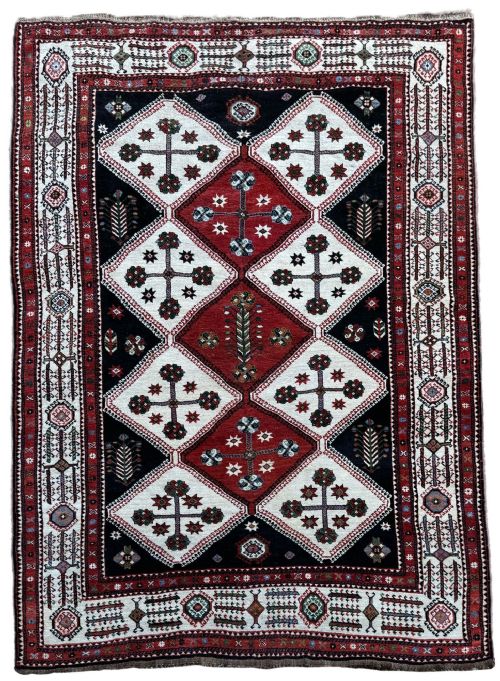
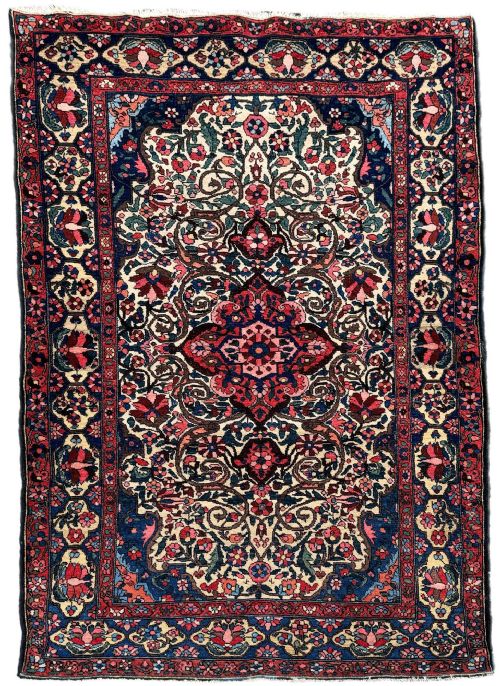
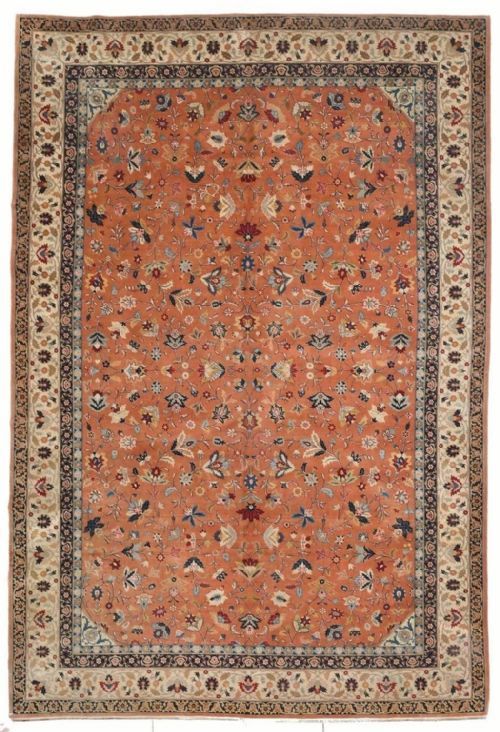
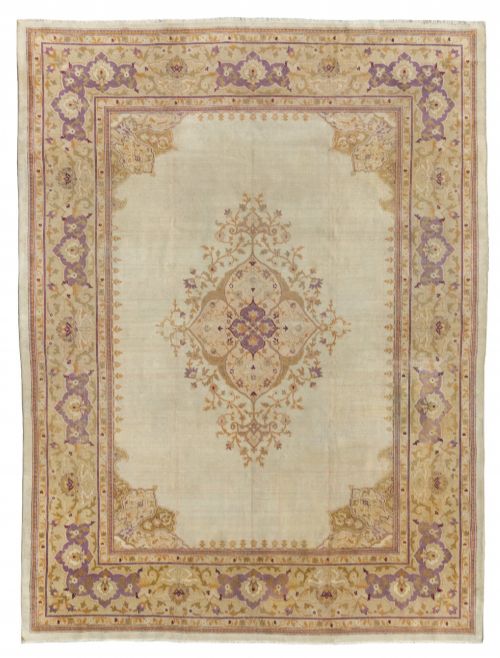
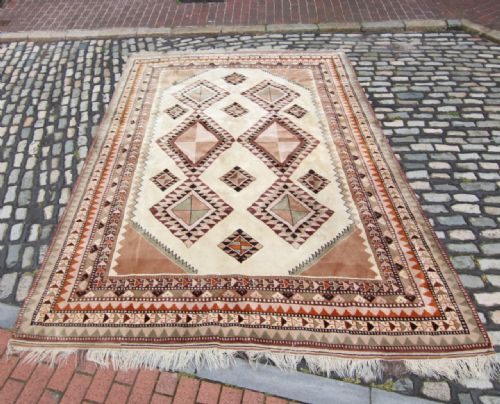
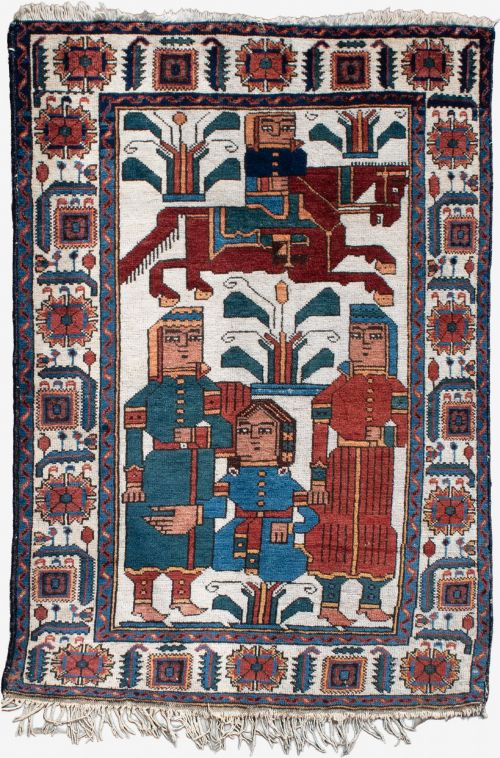
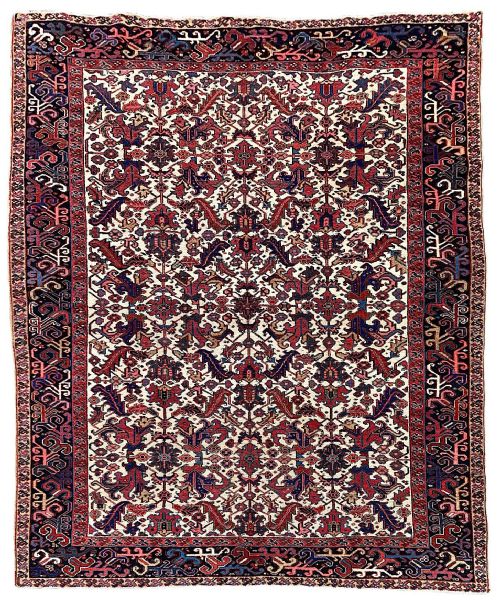
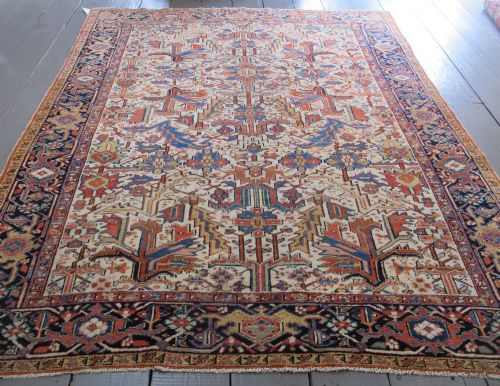
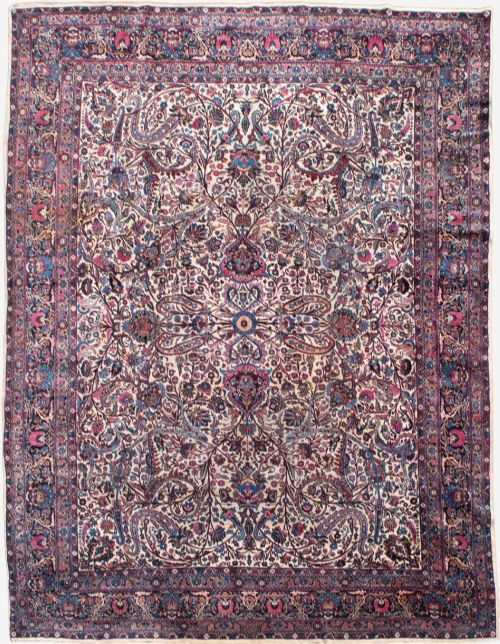
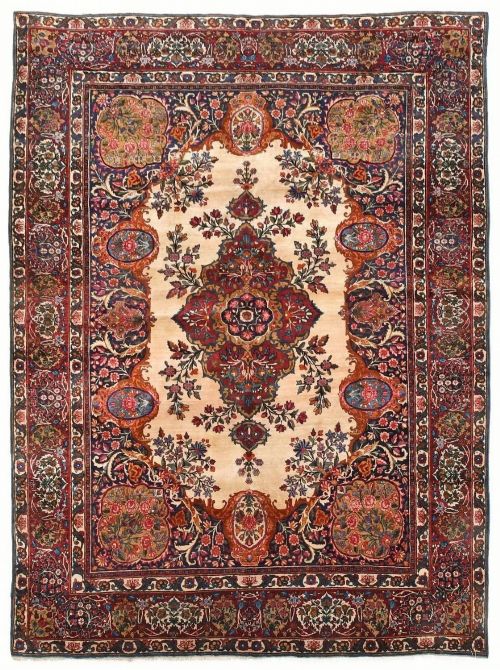
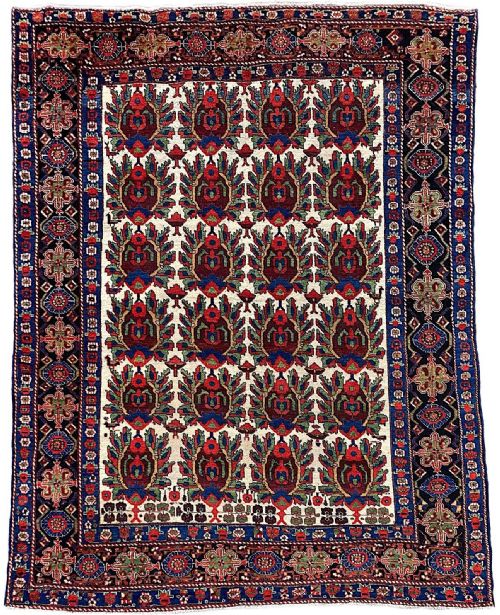
Cream Wool Floor Rug
These cream wool floor rug examples bring warmth and historical depth to a room through genuine hand-woven Persian and tribal artistry.
Cream Wool Floor Rug
A cream wool floor rug typically takes the form of an antique Persian or tribal carpet originating from workshops and villages across nineteenth and early twentieth-century Persia. These woven floor coverings range from intimate scatter sizes to expansive room-sized carpets, reflecting diverse regional aesthetics.
Buyers encounter traditional styles such as Heriz, Tabriz, Bakhtiar, Afshar, and Kashan, alongside nomadic tribal pieces like Gabbeh and Baluch rugs. While described by the search phrase, the actual ground colours span ivory and natural wool tones accented by intricate field designs.
The selection on this page spans productions from the mid-nineteenth century up to the 1930s. Each piece carries the distinct structural signatures of its weaving origin, whether tightly knotted city workshops or rustic country houses.
How they were made
These floor coverings are hand-woven primarily using wool, cotton foundations, and occasionally silk highlights, dyed with natural colorants. Artisans tie dense piles onto cotton or wool warp and weft threads, creating resilient surfaces designed for heavy domestic use.
Nomadic and village weavers utilised local sheep's wool alongside vegetable dyes to achieve varied earth tones and ivory grounds. City workshop carpets like those from Tabriz and Kashan display finer knot densities and more structured geometric or floral compositions.
Some antique rugs preserve accidental stray animal hairs spun directly into the wool, reminding us of the village flocks.
What varies in quality
Knot density and structural integrity distinguish fine city workshop productions from coarser village and tribal weavings. A tighter knot count allows for sharper curvilinear precision in floral motifs, whereas tribal pieces rely on bold, simplified geometry.
The choice of materials also dictates calibre, with select carpets incorporating fine wool or part-silk highlights on sturdy cotton foundations. The uniformity of the natural dyes and the crispness of the drawing reveal the weaver's skill.
Benlian·Mohtasham
The Cream Wool Floor Rug Glossary
- Warp
- The stationary vertical threads stretched onto a loom that form the foundational skeleton of a rug. The exposed ends often terminate in decorative fringes.
- Weft
- The horizontal threads passed alternately over and under the warp threads to lock the knots in place. This structure gives the carpet its lateral stability.
- Pile
- The vertical tufts of wool, cotton, or silk that make up the soft upper surface of the rug. The height and density of this layer affect how the floor covering wears over time.
- Natural Dyes
- Colourants derived from plants, insects, and minerals utilised before the invention of synthetic aniline dyes. These materials yield rich, complex tones that age gracefully.
- Knot Density
- The measurement of individual knots per square unit, which generally correlates with the intricacy of the design and the origin of the weaving.
Cream Wool Floor Rug: Frequently Asked Questions
How do I clean an antique wool rug?
Vacuum gently without a rotating brush to remove surface dust and loose debris. Professional specialist washing is essential for deeper cleaning to protect natural dyes.
Avoid household chemical cleaners and excessive moisture, which can weaken the wool pile and cotton foundation threads over time.
Can I place these rugs in high traffic areas?
Traditional wool and cotton carpets withstand regular foot traffic well due to the inherent resilience of natural animal fibres. Placing a quality underlay beneath the rug prevents slipping and reduces friction against the floor.
Heavily trafficked hallways benefit from sturdy runners like Malayer or Afshar pieces, which distribute wear evenly.
How do I identify a tribal rug from a city carpet?
Tribal rugs feature bold geometric motifs, asymmetrical layouts, and thicker, rustic wool piles woven by nomadic or village communities. City carpets display precise floral medallions, fine curvilinear drawing, and higher knot counts.
Regional styles such as Heriz or Tabriz indicate urban workshop production, while Gabbeh and Baluch pieces reflect nomadic traditions.
What period do most of these rugs come from?
The available pieces predominantly date from the late nineteenth century through to the 1930s, spanning various Persian dynasties and regional traditions. A smaller number originate from earlier nineteenth-century eras.
Stylistic markers and structural techniques help narrow down the production decade of each individual textile.