


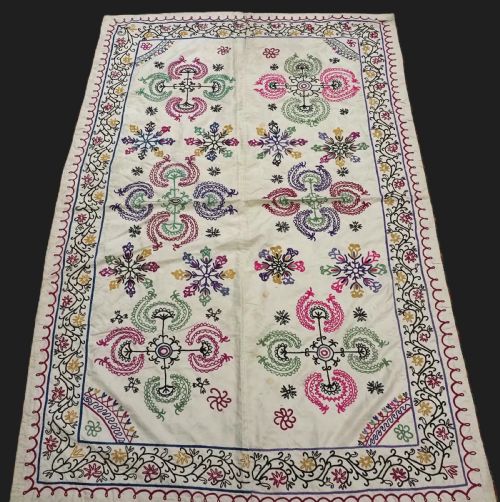


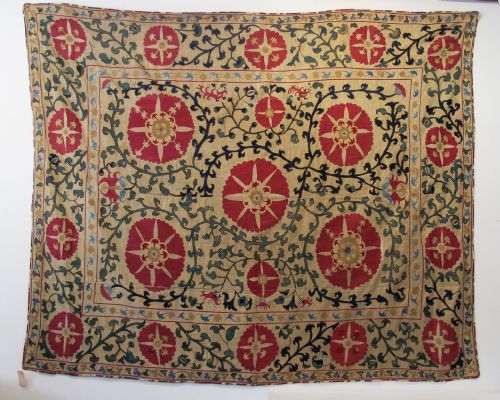
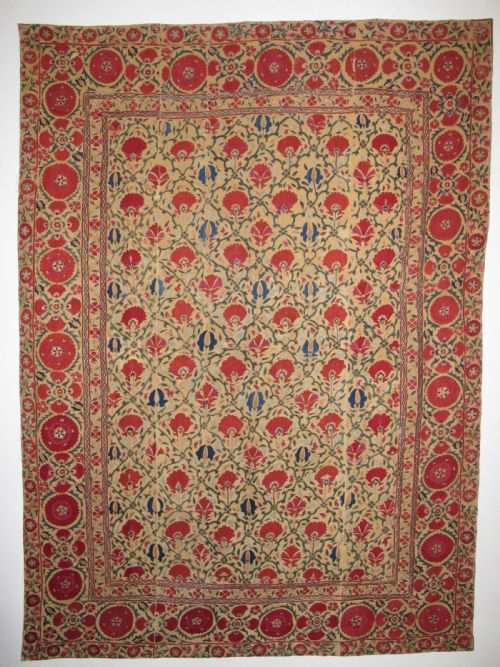


Cream Suzani Wall Hanging
A cream suzani wall hanging is a Central Asian embroidered textile worked in silk thread on a pale cotton or linen ground, prized for rich folk art motifs.
Cream Suzani Wall Hanging
A cream suzani wall hanging comprises traditional Central Asian decorative textiles originating from regions such as Uzbekistan, Bokhara, Samarkand, Nurata and Ura Tube. These wall hangings span periods from the mid-nineteenth century through to the early twentieth century, including examples from around 1850, 1860, 1870, 1880, 1900, 1910 and 1930.
The pieces on this page appear in various formats suited for display as textiles and tapestries. Buyers frequently encounter standard wall hangings alongside specific variations such as the nim-suzani, smaller mounted embroidery pieces, architectural designs and prayer formats.
Originating largely from Uzbek and Tajik traditions, these items display distinct Central Asian folk art characteristics. The fundamental composition relies on pale cream foundations of cotton or linen, heavily worked with decorative needlework.
Materials and construction methods
The construction of these textiles relies upon a base fabric of cotton or linen, providing a pale ground for the heavy embroidery. Artisans executed the needlework using fine silk thread, often covering substantial portions of the underlying cloth.
Techniques follow traditional Central Asian and Uzbek methods, utilising silk on cotton or silk on silk grounds. The execution involves dense stitches that build up elaborate botanical, geometric or architectural compositions.
Cream Suzani Wall Hanging Retail Price Guide 2026
Typical asking prices for cream suzani wall hanging among the pieces listed under this phrase on Sellingantiques today, from the lower quarter to the upper quarter. They describe what is for sale here now, not the wider market.
Every embroidered blossom hides the nimble fingers of a nineteenth-century artisan who probably stitched by the pale light of an oil lamp.
Evaluating the standard of workmanship
Quality in these embroideries is determined by the density and precision of the silk threadwork across the cotton or linen ground. Finer examples display meticulous stitch control that maintains intricate patterns within traditional motifs.
The sophistication of the regional design, whether an architectural layout, a prayer format or a traditional Bokhara pattern, influences the visual impact of the textile. Superior pieces combine harmonious colour palettes with balanced compositions executed on sturdy foundational cloth.
The Cream Suzani Wall Hanging Glossary
- Suzani
- A type of embroidered Central Asian wall hanging traditionally worked in silk thread on a cotton or linen ground. These decorative textiles often feature floral and geometric folk art motifs.
- Nim-Suzani
- A smaller or half-sized version of a traditional suzani textile. These pieces offer a more compact format while retaining the characteristic embroidery styles of the region.
- Bokhara
- A historic centre of textile production in Uzbekistan known for distinctive regional embroidery patterns. Pieces attributed to this area often feature complex botanical and architectural layouts.
- Nurata
- A specific town and stylistic centre in Uzbekistan associated with fine suzani embroidery. Work from this origin typically emphasises refined floral compositions.
- Prayer Format
- A design layout featuring an architectural arch or mihrab motif reminiscent of prayer rugs. These pieces are structured around a distinct directional focal point.
Cream Suzani Wall Hanging: Frequently Asked Questions
What is a suzani wall hanging?
A suzani wall hanging is a traditional embroidered textile originating from Central Asia, particularly Uzbekistan. They were created as decorative furnishings for domestic interiors.
The ground fabric is typically cotton or linen, completely or partially covered in vibrant silk thread embroidery. These pieces reflect rich folk art traditions from centres like Bokhara and Samarkand.
How were these textiles used?
Historically, these embroideries functioned as decorative wall hangings or domestic furnishings within Central Asian homes. They were often produced as part of a bride's dowry.
Today, collectors mount and display them as wall art or tapestries to showcase the intricate silk embroidery. Their formats range from large wall pieces to smaller mounted examples.
How do I care for a textile?
Protecting these historic textiles involves keeping them out of direct sunlight to prevent the silk threads from fading. Gentle handling helps preserve the delicate structure of the cotton or linen ground.
Professional mounting using archival methods supports the weight of the embroidery safely. Vacuuming should be avoided in favour of dusting gently with a soft brush if necessary.
How do I date a piece?
Dating relies on examining the characteristics of the materials, dyes, and regional embroidery styles. Mid-nineteenth century examples often display specific botanical motifs distinct from later twentieth-century pieces.
The weave of the cotton or linen ground and the twist of the silk thread also provide clues to the period of origin. Comparing design structures helps place a piece within eras such as the 1850s or the 1920s.