




Cream Stone Lighting
Cream stone lighting brings together natural minerals and soft illumination, offering table lamps, chambersticks, and pendant lights fashioned from alabaster, marble, and onyx.
Cream Stone Lighting
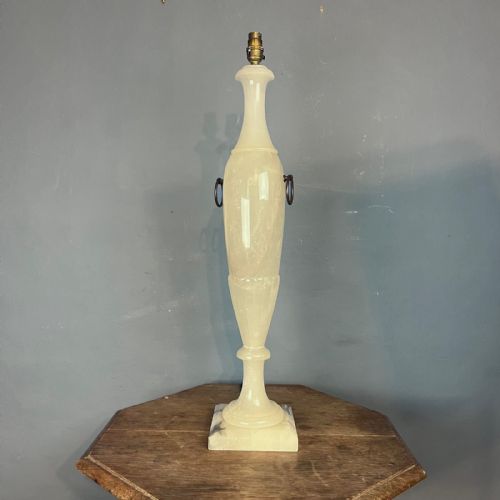
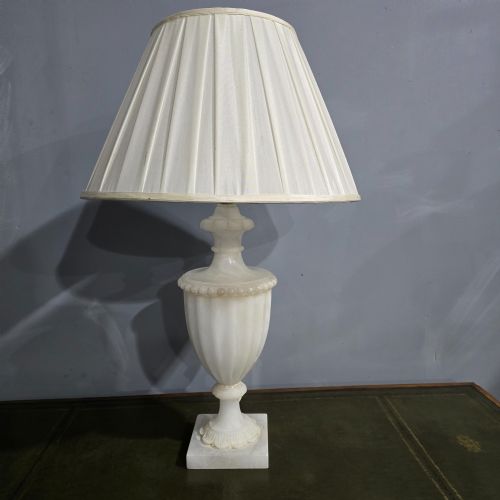
Cream stone lighting encompasses pieces designed to diffuse light through translucent minerals, drawing heavily on materials like alabaster, white marble, and onyx. These fixtures primarily take the form of table lamps, alongside occasional pendant lights and chambersticks originating from the Victorian era up through the Art Deco period.
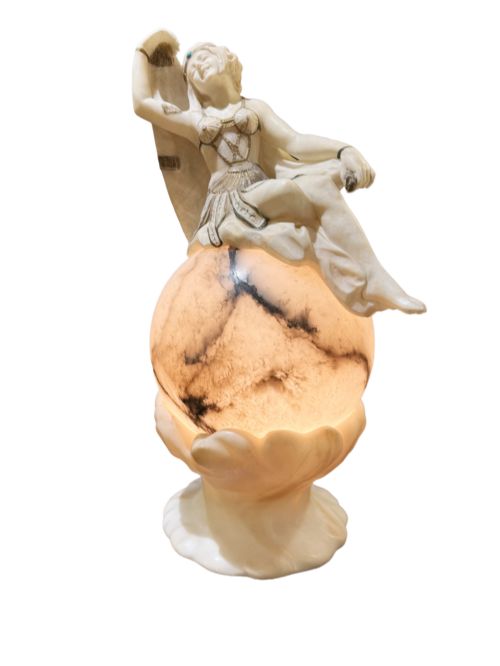
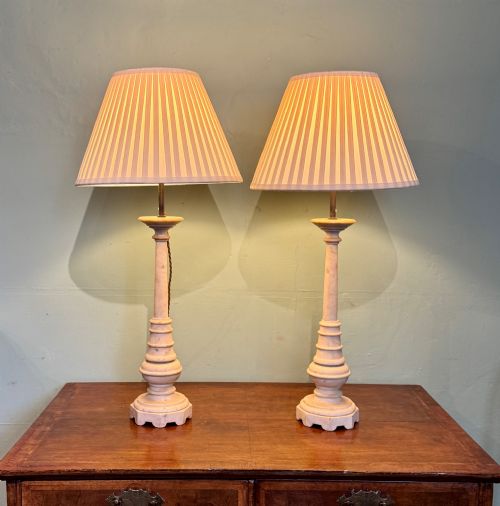
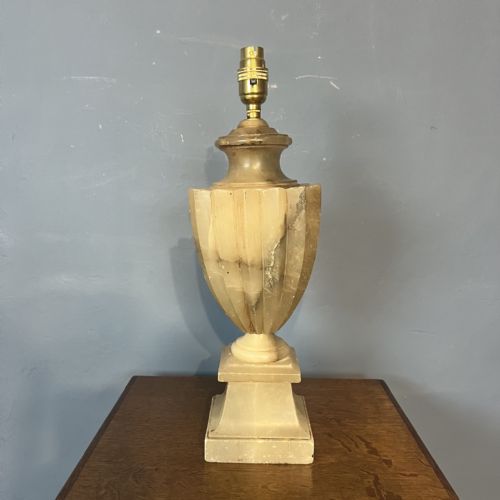
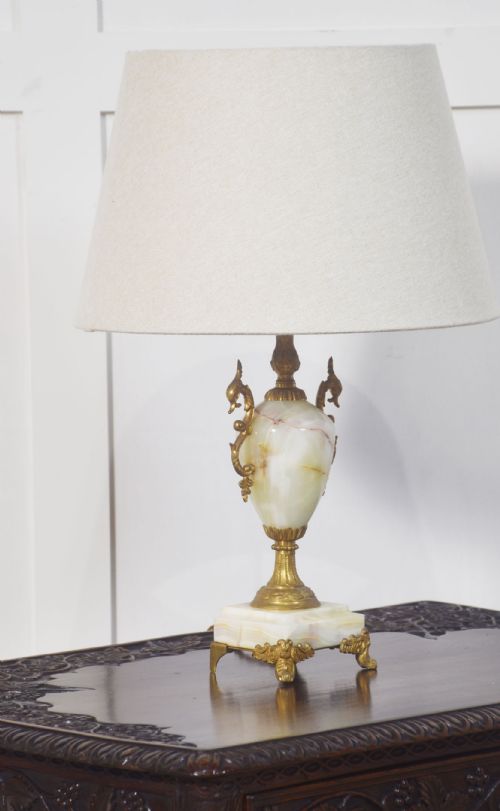
Buyers browsing these selections frequently encounter alabaster lamps from the 1920s and 1930s, often displaying classical or modernist silhouettes. Alongside these, 19th-century marble and onyx pieces provide heavier, column-based or urn-shaped forms derived from earlier revival styles.
The aesthetic leans toward classical restraint, shifting from ornate Victorian mountings to clean geometric lines in Art Deco designs. Originating largely from European workshops, these objects integrate natural mineral veining with functional illumination.
Materials and construction methods
Makers shaped soft stones like alabaster and denser minerals like marble and onyx on lathes or carved them by hand to achieve hollow forms suitable for housing electrical fittings or candles. The natural translucency of alabaster allowed light to pass directly through the body of the stone rather than solely reflecting from a shade.
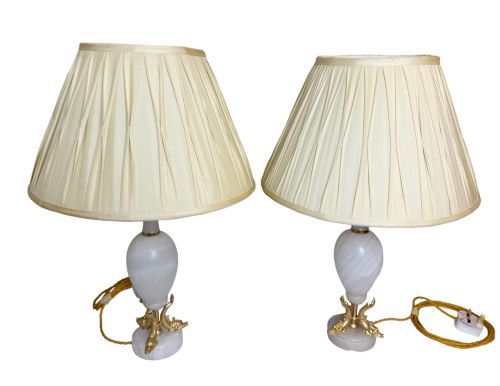
Metal mounts in brass, gilt bronze, and ormolu were cast and fitted to secure the stone components, reinforcing collars, bases, and rims. Fabric shades sometimes complemented the stone structures, particularly on table lamps dating from the early twentieth century.
Stonework often incorporated multi-part assemblies, joining turned pedestals to central shafts and capitals with threaded metal rods or adhesives suited to the weight of the material.
Cream Stone Lighting Retail Price Guide 2026
Typical asking prices for cream stone lighting among the pieces listed under this phrase on Sellingantiques today, from the lower quarter to the upper quarter. They describe what is for sale here now, not the wider market.
Current listings feature pieces spanning the 1880s to the 1930s, utilising alabaster, marble, onyx, and brass.
Distinctions in quality
Quality rests heavily on the purity and clarity of the stone, where even distribution of natural veining and freedom from internal fractures elevate a piece. Finer examples display meticulous lathe work and precise alignment in any associated metal mounts.
Artisanal execution distinguishes mass-produced items from superior works, particularly in the hand-chiselled details of Neoclassical columns or the sculptural modelling of Art Deco figures. The integration of durable brass or gilt bronze elements rather than base metals indicates higher initial manufacture.
The Cream Stone Lighting Glossary
- Alabaster
- A fine-grained, translucent stone utilised extensively for carved lamp bodies and pendant bowls. Its natural softness allows for intricate turning and sculptural detail.
- Onyx
- A banded variety of chalcedony or calcite prized for layered transparency and polished surfaces. It appears frequently in table lamp bases combined with metal trim.
- Cassolette
- A decorative vessel shaped like a vase or urn, sometimes adapted as a table lamp. Originating in French design, these pieces feature fitted covers or mounted rims.
- Ormolu
- Gilded bronze applied as decorative mounts and trims on stone lighting fixtures. This technique enhances the contrast between the pale mineral body and metallic detailing.
- Chamberstick
- A short candleholder equipped with a pan to catch dripping wax and a handle for transport. Marble and metal examples survive from nineteenth-century contexts.
Cream Stone Lighting: Frequently Asked Questions
What periods do these lights cover?
The pieces span from the late nineteenth century through the Edwardian era and into the Art Deco period of the 1920s and 1930s. Styles shift accordingly from Victorian and Neoclassical revivals to streamlined modernist forms.
Earlier items often incorporate heavy marble columns and gilt bronze mounts, while later examples favour simple alabaster bowls and geometric figures.
How do I care for alabaster lamps?
Alabaster is a soft and porous material that reacts poorly to excess moisture and harsh chemical cleaners. Dusting with a dry, soft cloth remains the safest method for routine maintenance.
Avoid placing these lamps in areas prone to high humidity, as water can permanently stain or degrade the polished stone surface.
Are these lamps wired for modern use?
Many antique lamps have been rewired at various points in their history to meet contemporary safety standards. Buyers should inspect the internal wiring and consult a qualified electrician if updates are required.
Original brass fittings and holders are often retained where possible to preserve the integrity of the piece.
How do marble and onyx differ?
Marble is a metamorphic rock formed from limestone, characterised by cloudy crystalline structures and varied veining. Onyx is a banded form of stone that typically exhibits greater translucency and layered colour patterns.
Both materials provide substantial weight, but onyx often yields a brighter glow when illuminated from within.