





Cream Silk Suzani Panel
A cream silk suzani panel brings rich Central Asian needlework into a room, offering vibrant embroidery on traditional textiles.
Cream Silk Suzani Panel
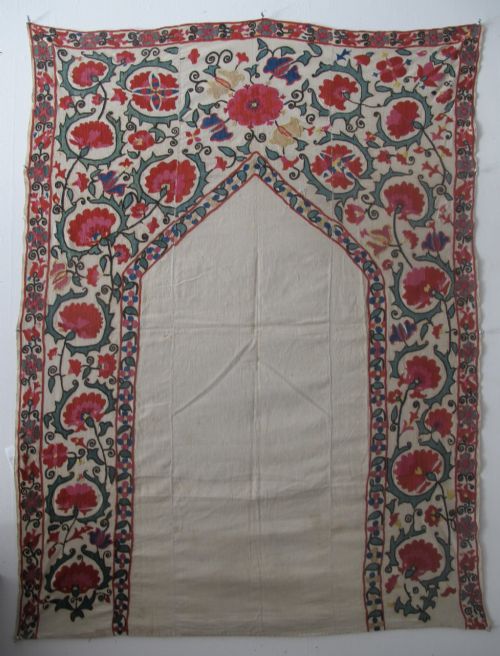
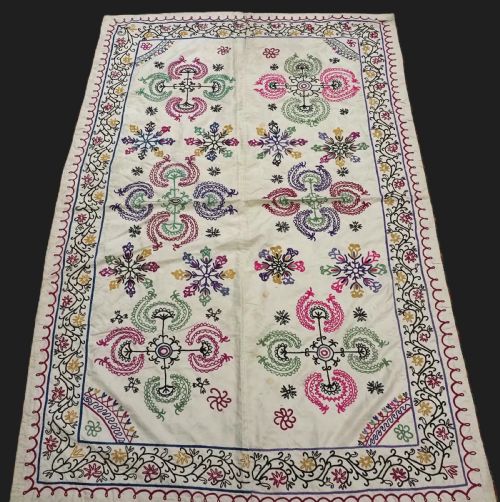
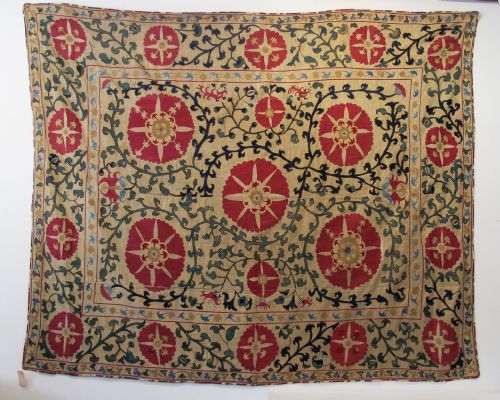
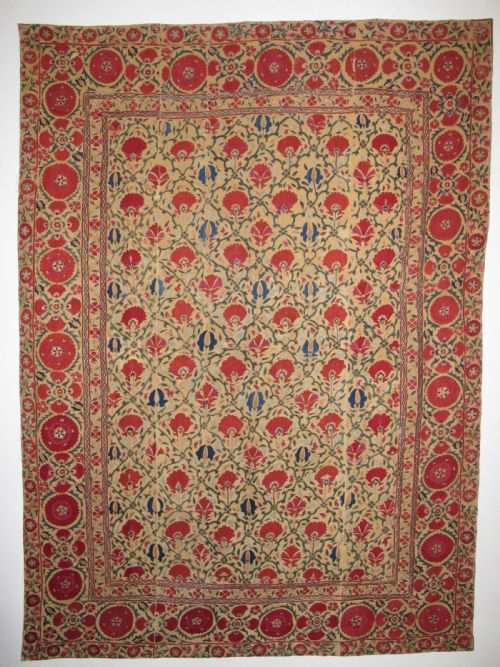
A cream silk suzani panel is a textile wall hanging originating from Central Asia, including regions such as Uzbekistan, Bokhara, Samarkand, and Nurata. These pieces display traditional designs and folk art patterns developed across the nineteenth and early twentieth centuries.
The versions most frequently met on this page include Bokhara and Uzbek examples created in formats ranging from small mounted panels to large wall hangings. Makers utilised prayer formats and architectural layouts executed in fine embroidery.
Buyers look for these decorative textiles to display on walls, where their intricate needlework and historical character define an interior space. Each panel reflects regional traditions from Central Asian tribal workshops.
How they were made
Makers stitched silk thread onto supportive foundations of silk, cotton, or linen, building up dense pictorial and geometric surfaces. This needlework technique requires sustained hand labour by skilled artisans.
Regional workshops across Bukhara and surrounding areas prepared these embroidered panels using local materials suited to long-term preservation. The combination of silk thread on woven grounds creates the characteristic texture of the textile.
Cream Silk Suzani Panel Retail Price Guide 2026
Typical asking prices for cream silk suzani panel among the pieces listed under this phrase on Sellingantiques today, from the lower quarter to the upper quarter. They describe what is for sale here now, not the wider market.
Stitchers often hid tiny intentional flaws in the pattern to ward off the evil eye.
What varies in quality
The finesse of the needlework and the complexity of the design separate finer panels from simpler examples. Dense silk embroidery distributed across the ground demonstrates greater skill than sparse composition.
Clarity of regional pattern work and the preservation of the silk thread determine the overall visual impact of the hanging. Format proportions and the scale of the design also influence how well the piece holds a wall.
The Cream Silk Suzani Panel Glossary
- Suzani
- A type of embroidered tribal textile originating in Central Asia, traditionally worked in silk thread on a woven ground. These panels served as dowry items and wall decorations.
- Bokhara
- A historic centre of textile production in Uzbekistan known for distinctive suzani designs and fine needlework. Pieces from this region often feature structured floral or architectural motifs.
- Nim-Suzani
- A smaller version of a standard suzani panel, often created in a reduced format while maintaining the same embroidery techniques. These smaller formats suit restricted wall spaces.
- Nurata
- A specific stylistic centre in Uzbekistan associated with finely executed suzani embroideries. Panels from here display particular attention to floral arrangements.
- Prayer format
- A compositional layout featuring a mihrab or arch design rooted in traditional Islamic textiles. This layout directs the eye through the embroidered imagery.
Cream Silk Suzani Panel: Frequently Asked Questions
What is a suzani panel?
A suzani panel is an embroidered textile from Central Asia, traditionally worked by hand with silk thread on foundations like cotton or linen.
These pieces were made as domestic furnishings and wall hangings, displaying regional folk art designs.
How were suzani panels used?
Historical users displayed these embroidered textiles as wall hangings or used them within domestic interiors as decorative coverings.
Today, collectors mount them on walls to showcase the traditional needlework and historic Central Asian patterns.
How do I care for a silk suzani?
Protect antique silk embroidery from direct sunlight to prevent the natural threads from fading over time.
Mount the panel securely without placing undue tension on the delicate silk, cotton, or linen ground.
How do I date an antique suzani?
Dating relies on examining the materials, regional style, and characteristics of the silk thread embroidery.
Nineteenth-century examples often display specific folk art motifs associated with workshops in Bokhara, Samarkand, and Nurata.