


Cream Shade Standard Lamp
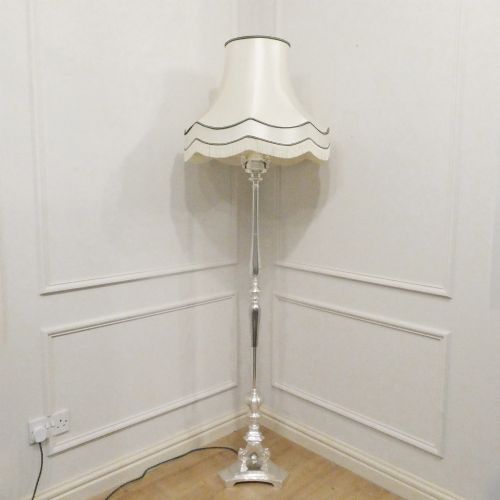
A cream shade standard lamp brings warm, diffused light to a corner, combining height and a fabric cover.
Cream Shade Standard Lamp
A cream shade standard lamp is a tall floor-standing light source designed to illuminate a room from a corner or beside seating. These pieces span the Victorian, Edwardian, and early twentieth century periods, reflecting domestic lighting needs of the past.
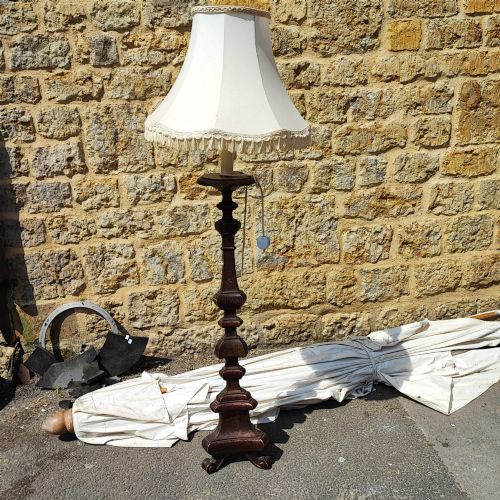
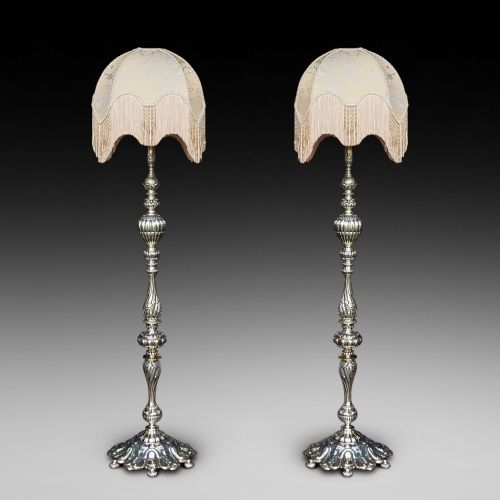
The standard lamps on this page appear in various forms including heavy brass columns, wrought iron with adjustable arms, and carved wood. They frequently feature fabric shades that soften the output, casting a gentle glow across the floor.
Combinations of materials such as brass and mahogany or giltwood provide height and stability. Floor lamps and standard lamps share similar proportions, often standing tall enough to tower over surrounding furniture.
How they were made
Makers constructed these standard lamps using solid metals like brass, wrought iron, and silver plate, alongside carved wood and mahogany. Metal components were cast, turned, or forged to create sturdy vertical shafts capable of supporting heavy fixtures.
Wooden examples relied on traditional joinery, turning, and gilding to shape mahogany and giltwood into decorative columns and tripod bases. Fabric and fringe were applied to shades to finish the upper section and diffuse the light.
Periods represented across the available standard lamps span from the Victorian era through the 1930s.
What varies in quality
Quality rests in the weight and integrity of the materials, where solid brass or heavy wrought iron provides stability that lighter alloys or thin metals cannot match. The precision of the turning on wooden columns and the durability of the structural joints dictate how well the lamp stands over time.
The refinement of decorative detailing on the metalwork or carved wood separates standard production pieces from finer examples. Proportion and balance matter deeply, ensuring the height of the lamp harmonises with its base without listing or swaying.
The Cream Shade Standard Lamp Glossary
- Standard lamp
- A tall floor-standing lamp designed to illuminate a room from a fixed position. These tall fixtures carry light sources at eye level or above.
- Tripod lamp
- A standard lamp supported by three distinct legs rather than a central circular base. This three-legged construction offers stability on uneven floors.
- Giltwood
- Wood that has been coated with a thin layer of gold leaf or gold paint. This technique adds a bright metallic finish to carved wooden lamp stems.
- Canterbury/lamp standard
- A hybrid furniture piece combining a low rack for books or music with an integrated upright lamp standard. It serves multiple domestic functions in a single footprint.
Cream Shade Standard Lamp: Frequently Asked Questions
Where should I place a standard lamp?
These tall lamps sit best beside armchairs or sofas where they can direct light downward for reading. Placing them in dark corners also helps to open up a room through ambient illumination.
Ensure the cord reaches a wall socket safely without creating a trip hazard across open floor space.
How do I date a standard lamp?
Dating relies on observing the materials, manufacturing methods, and stylistic cues present in the base and column. Victorian and Edwardian examples often display heavier metal castings or distinct turned woodwork compared to later twentieth-century styles.
Examining the wiring methods and construction fixings can provide additional clues regarding the era of manufacture.
Can I adjust the height?
Certain designs include mechanical adjustments, such as an adjustable arm found on specific wrought-iron models from the Victorian period. These joints allow the user to angle or raise the light source as needed.
Fixed-stem lamps maintain a single permanent height, relying on their inherent tall stature to cast light across a wider area.
What maintenance do they need?
Regular dusting keeps wooden columns and metal bases looking their best, while gentle cleaning preserves fabric shades. Brass and silver-plated surfaces may require occasional polishing depending on the desired finish.
Electrical components should be checked periodically by a qualified person to ensure safety during daily use.