






Cream Shade Desk Lamps
Cream shade desk lamps bring soft light and period character to a room, drawn from converted candlesticks, vases, and classical urns.
Cream Shade Desk Lamps
Cream shade desk lamps gathered here span from the seventeenth century through the Edwardian era and the nineteen-thirties, taking the form of table lamps and converted candlesticks. You will frequently find converted vessels and metal standards carrying neutral shades, blending period craftsmanship with functional illumination.
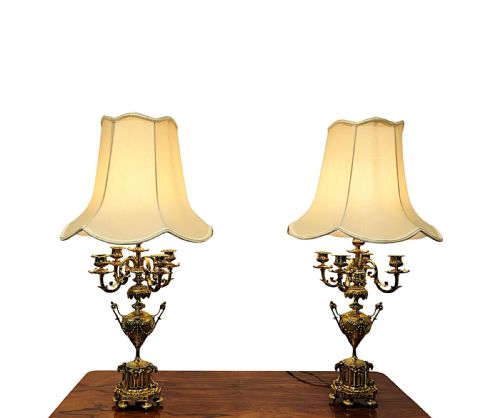
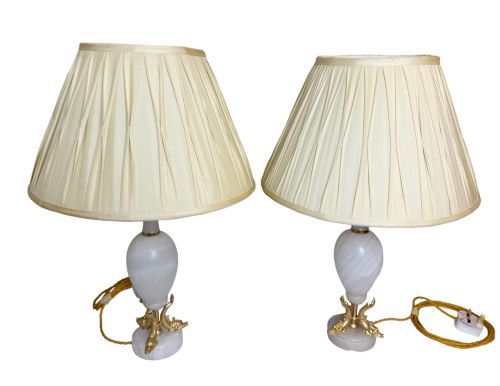
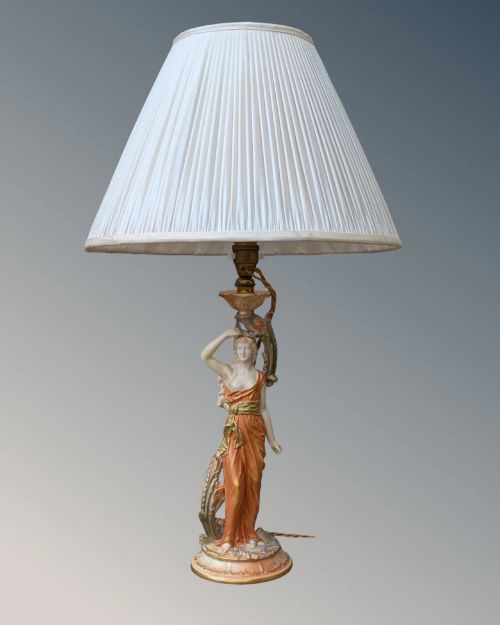
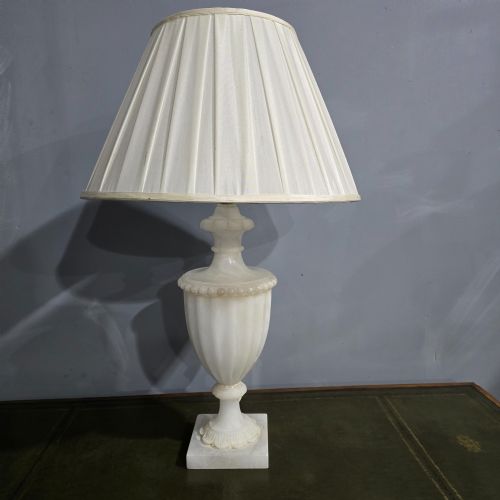
The selection ranges from neoclassical brass and ormolu mounts to porcelain bodies by makers like Ernst Bohne and Sohn, alongside regional works in marble, alabaster, and glass. These pieces reflect diverse stylistic revivals, including French neoclassical, Empire, and Art Deco designs.
Materials and construction methods
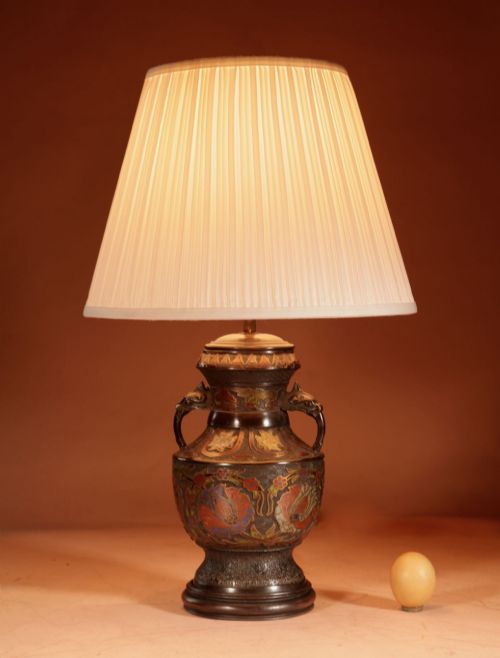
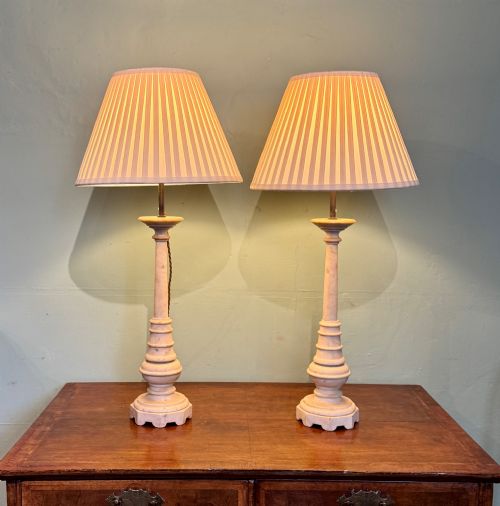
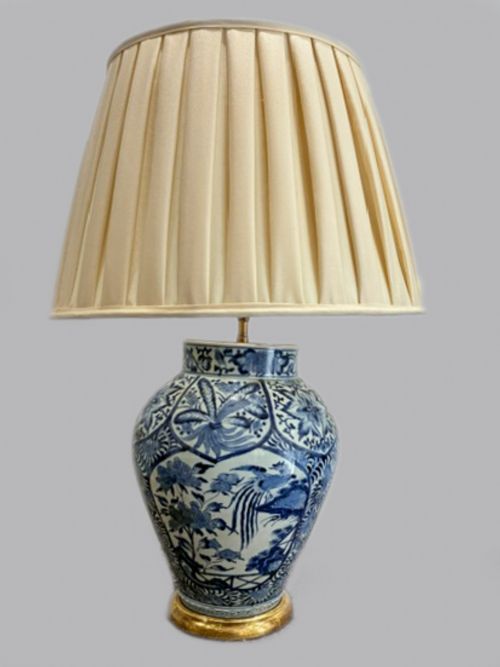
Makers utilised cast brass, ormolu, and bronze alongside carved marble, onyx, and alabaster to form the structural bodies of these lamps. Many examples began as utilitarian items, such as eighteenth-century candlesticks or Japanese ceramic vases, which were later adapted for electrical fittings.
Finishes involve hand-painted ceramic details, giltwood, and moulded plaster, paired with traditional fabric and silk shades. The integration of metal mounts often draws upon French Empire and Neoclassical vocabularies, employing precise casting and patination.
Cream Shade Desk Lamps Retail Price Guide 2026
Typical asking prices for cream shade desk lamps among the pieces listed under this phrase on Sellingantiques today, from the lower quarter to the upper quarter. They describe what is for sale here now, not the wider market.
An eighteenth-century Japanese vase quietly moonlights as a modern reading lamp.
Distinctions in quality
Quality rests upon the crispness of the casting in metalwork, the weight and purity of stone bases such as marble or alabaster, and the integrity of original porcelain bodies. Finer examples display meticulous hand-chasing on ormolu mounts and authentic period conversion methods.
The balance between the original artefact and its lamp fittings dictates overall harmony, where superior pieces retain their structural coherence without compromising the historical integrity of the base.
Ernst Bohne and Sohn·Royal Worcester·Denby Ware
The Cream Shade Desk Lamps Glossary
- Ormolu
- A gilded bronze finish achieved through an amalgam of mercury and gold, commonly found on French neoclassical and Empire mounts.
- Alabaster
- A fine-grained stone used for carved lamp bodies, prized for its translucent qualities when illuminated.
- Spelter
- A zinc alloy utilised as a cost-effective alternative to bronze for figural lamp bases, typically given a bronze or painted finish.
- Candelabra
- A branched candlestick designed to hold multiple candles, frequently converted into electrified table lamps in later periods.
- Satsuma
- A type of Japanese earthenware featuring a crackle glaze and elaborate polychrome enamel decoration, often adapted into lamps.
Cream Shade Desk Lamps: Frequently Asked Questions
How do I choose the right size desk lamp?
Consider the scale of your workspace and the height of the lamp standard so that light spreads evenly across the surface without obstructing your view.
Larger monumental pairs suit spacious tables, whilst single compact standards work best on smaller writing desks.
Can I replace the fabric shade safely?
Fabric and silk shades can be updated provided the fitting matches the original bulb holder and allows adequate heat dissipation.
Choose neutral cream tones that complement the antique ceramic or metal base without overwhelming its proportions.
How do I identify a converted candlestick?
Look for a central wiring channel inserted through the original nozzle or stem, along with adaptation hardware near the base.
Many seventeenth and eighteenth-century brass and giltwood pieces were adapted for electricity during the twentieth century.
What maintenance do marble and alabaster require?
Dust these stone surfaces gently with a soft dry cloth and avoid using chemical cleaners that might strip the natural finish.
Keep them away from excessive moisture to preserve the polished texture of the mineral.