
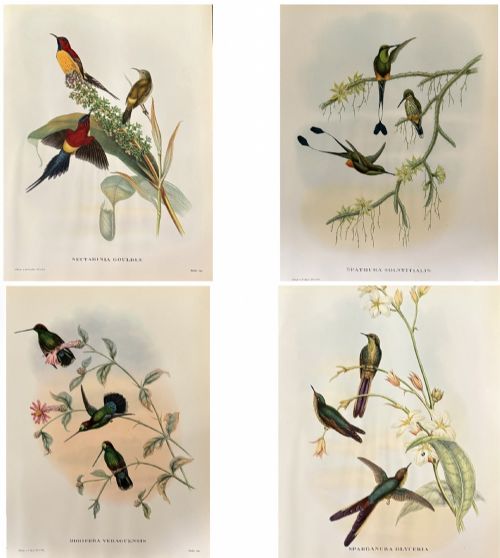


Cream Paper Botanical Art
Cream paper botanical art brings scientific observation and delicate natural forms together, offering delicate floral and ornithological studies for modern interiors.
Cream Paper Botanical Art
Cream paper botanical art encompasses framed prints, hand-coloured engravings, watercolours, and academic sketch studies spanning from the eighteenth century to the mid-twentieth century. These works capture plants, flowers, insects, and birds with scientific precision and artistic grace, originating from European and Chinese traditions.
Buyers frequently encounter nineteenth-century works alongside twentieth-century print sets and earlier eighteenth-century plates. These pieces range from solitary framed watercolours to expansive sets of botanical and ornithological engravings.
The aesthetic relies on the warm tone of aged paper combined with fine ink lines and watercolour pigments. Such works suit studies, drawing rooms, and hallways where traditional natural history displays fit the room.
How they were made
Makers produced these works using paper supports inscribed with ink and graphite, frequently enhanced by hand-applied watercolour pigments. Engravers and artists applied fine lines to capture plant structures, insect wings, and bird plumage with exact detail.
Framed examples utilise wood and glass to protect the delicate paper substrates from environmental damage. Dried flora occasionally appears alongside pigments, adding physical texture to botanical specimens.
Several pieces feature unexpected six-legged guests, as eighteenth and nineteenth-century naturalists diligently catalogued insects alongside the flora.
What varies in quality
Quality separates through the precision of the draughtsmanship and the vibrancy of the surviving watercolour pigments. Works by documented figures or those retaining strong, original hand-colouring demonstrate higher artistic investment than standard decorative prints.
The condition of the paper substrate and the clarity of the printed lines dictate the visual impact of the piece. Complete sets from the same series maintain greater desirability than isolated single sheets.
John Curtis·George Dionysius Ehret·Edith Barrow
The Cream Paper Botanical Art Glossary
- Engraving
- A printmaking technique where an artist cuts an image into a metal plate to hold ink. This method produces crisp, enduring lines suitable for scientific illustration.
- Watercolour pigment
- A coloured substance suspended in a water-soluble vehicle used for painting on paper. These pigments provide translucent colour layers on botanical plates.
- Botanical specimen
- A preserved plant or a detailed drawing of a plant intended for scientific study. These studies record leaf structures, petals, and stems.
- Chinese export
- Goods produced in China specifically for Western markets. These floral paintings blend traditional Eastern brushwork with Western composition.
Cream Paper Botanical Art: Frequently Asked Questions
How should I hang botanical art?
Hang these pieces away from direct sunlight to prevent the watercolour pigments and cream paper from fading over time. Utilise stable interior walls with controlled humidity.
Group sets together in symmetrical arrangements to replicate the traditional appearance of historic studies and natural history cabinets.
What periods do these pieces span?
The available selection spans from the mid-eighteenth century through the nineteenth century and into the mid-twentieth century. Earlier pieces often originate from illustrated botanical folios.
Later works include twentieth-century print sets and academic sketch studies from nineteen-ten.
Are these works original or reproductions?
The inventory includes hand-coloured copperplate engravings, original watercolours, and period print sets created across multiple centuries. Each piece reflects the production methods of its specific era.
Examine the paper surface and pigment application to understand the distinction between hand-painted works and mass-produced modern copies.
How do I care for antique paper art?
Protect the paper and framed artwork by ensuring conservation-grade backing and framing materials are used. Glass shields the fragile ink and watercolour from airborne dust and moisture.
Maintain consistent indoor temperatures to avoid warping the wooden frames and degrading the paper fibres.