

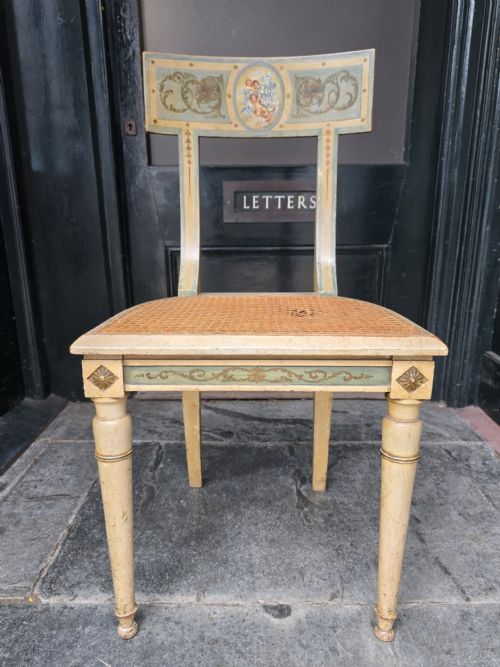
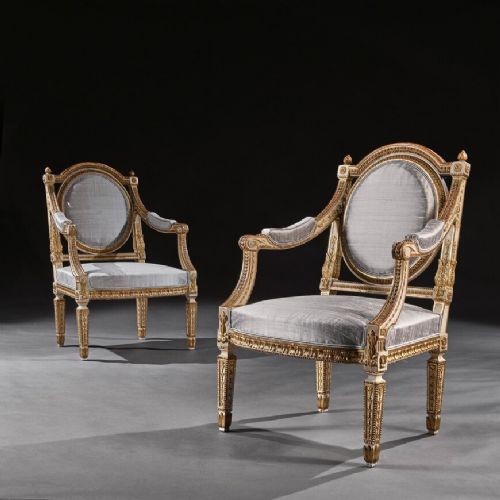
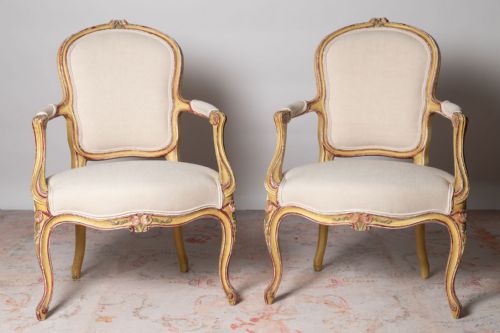
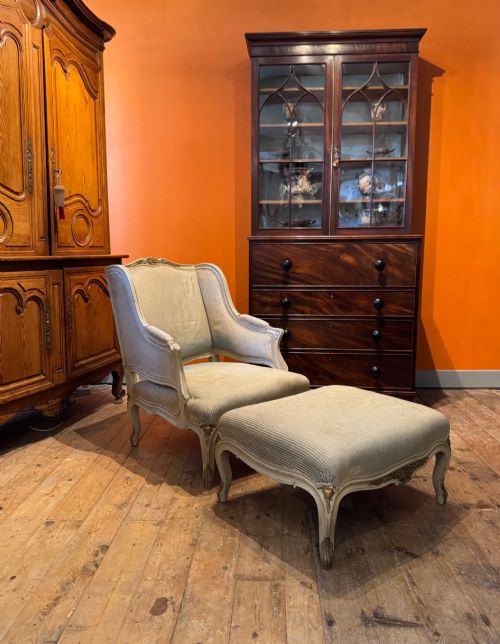
Cream Painted Chair
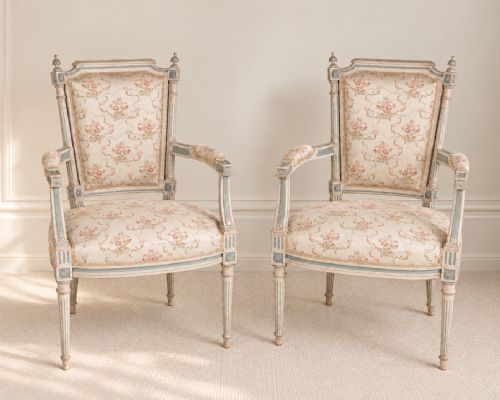
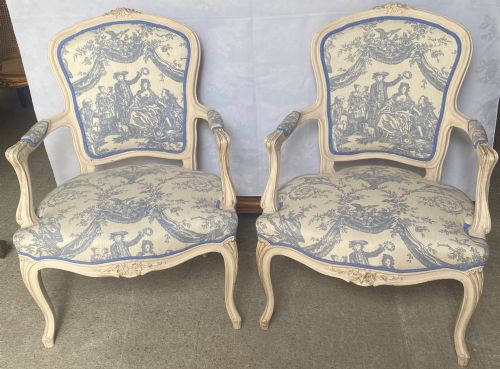
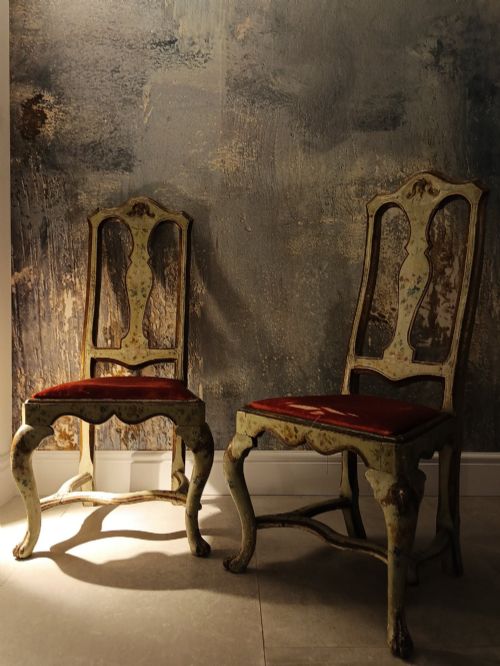
A cream painted chair brings light and sculptural form to a room, offering the decorative surface of painted wood combined with period seating.
Cream Painted Chair
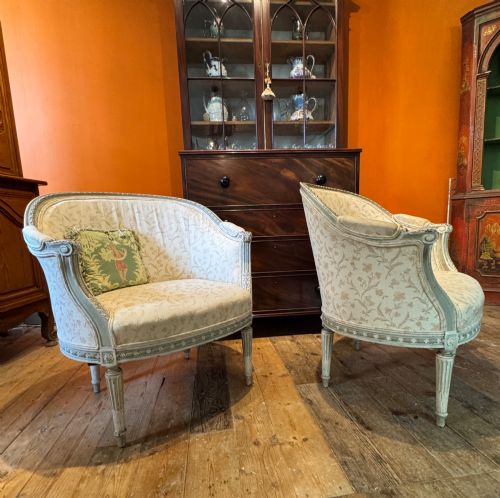
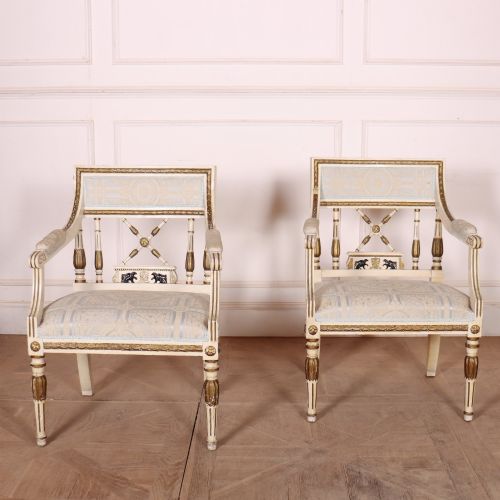
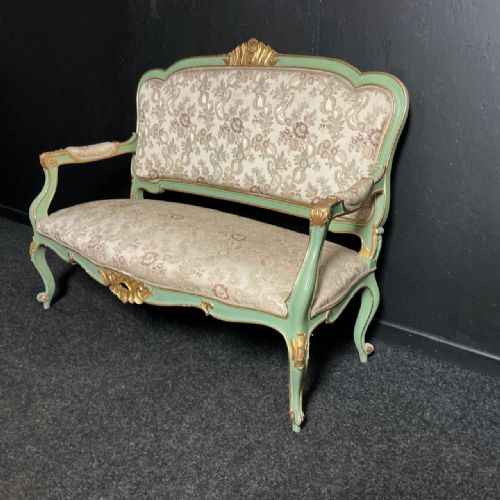
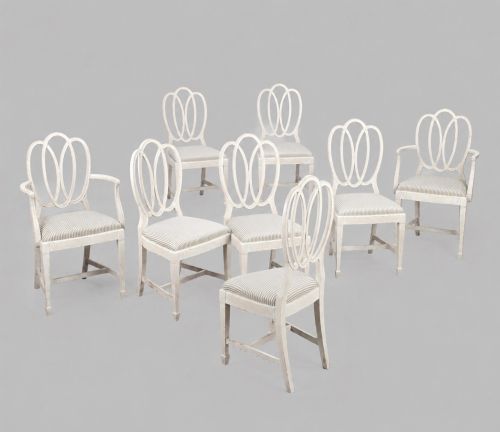
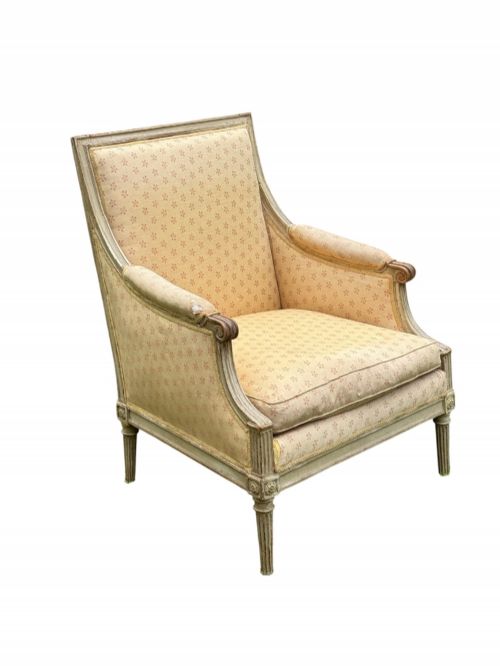
A cream painted chair encompasses seating ranging from formal eighteenth-century armchairs and Regency elbow chairs to nineteenth-century French salon pieces and twentieth-century boudoir seating. The selection relies heavily on French and Italian revival designs, alongside English George III and Regency forms, providing options from single statement seats to sets of dining chairs.
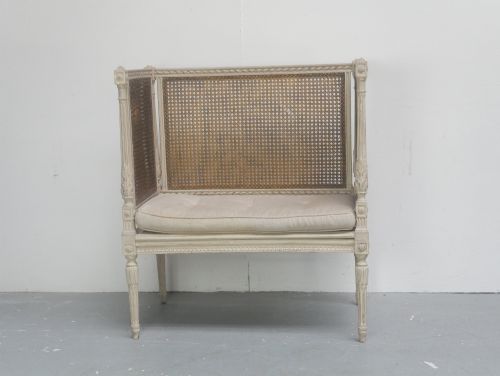
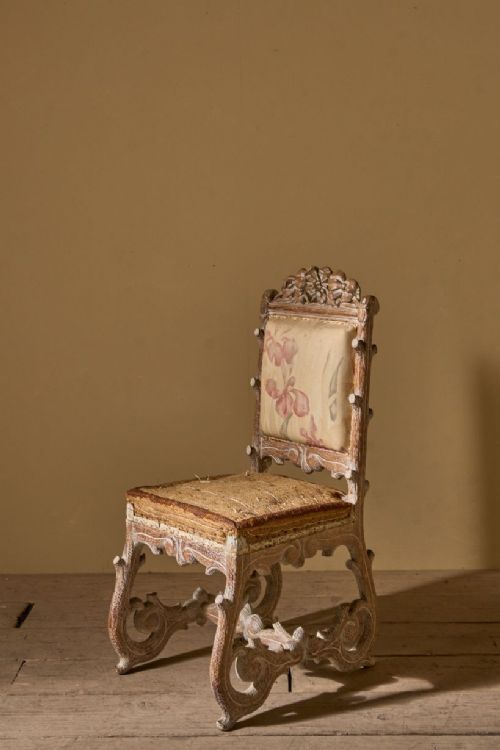
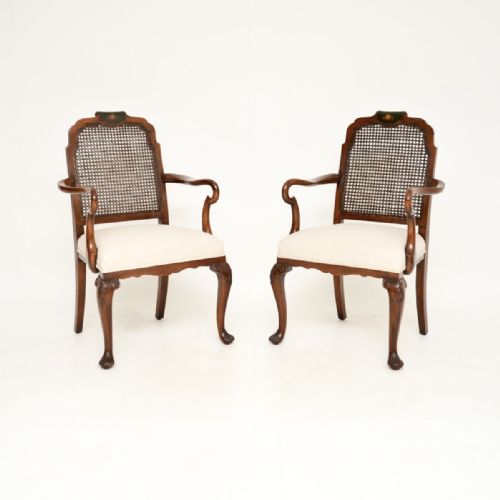
Buyers will encounter various formats on this page, including bergere tub armchairs, side chairs, window seats, and chaise longues. Many pieces display original paint, gilt highlights, and traditional upholstery such as needlework or cane seats.
How they were made
Construction typically involves traditional timber frames, including beech, walnut, and wrought iron, prepared as painted wood. Artisans applied successive layers of gesso and paint, sometimes finished with gold leaf or silver gilt details to accentuate carved neoclassical motifs.
Upholstery methods match the periods of construction, integrating woven cane panels, fabric upholstery, and needlework interiors. Frames exhibit hand-carved details aligned with Louis XV, Louis XVI, and Regency stylistic conventions.
Cream Painted Chair Retail Price Guide 2026
Typical asking prices for cream painted chair among the pieces listed under this phrase on Sellingantiques today, from the lower quarter to the upper quarter. They describe what is for sale here now, not the wider market.
Listings feature painted wood, fabric, cane, and gesso across eighteenth- and nineteenth-century forms.
What varies in quality
Quality rests in the preservation of the original paint surface and the crispness of the carved woodwork. Pieces retaining their initial polychrome decoration or untouched patination command greater interest than later repainted surfaces.
The refinement of the frame proportions and the execution of carved details, such as parcel gilt accents or neoclassical motifs, distinguish standard output from finer workshops.
Henri Jacob
The Cream Painted Chair Glossary
- Gesso
- A plaster-like mixture applied to wood surfaces to prepare them for painting or gilding. It provides a smooth base for decorative finishes.
- Fauteuil
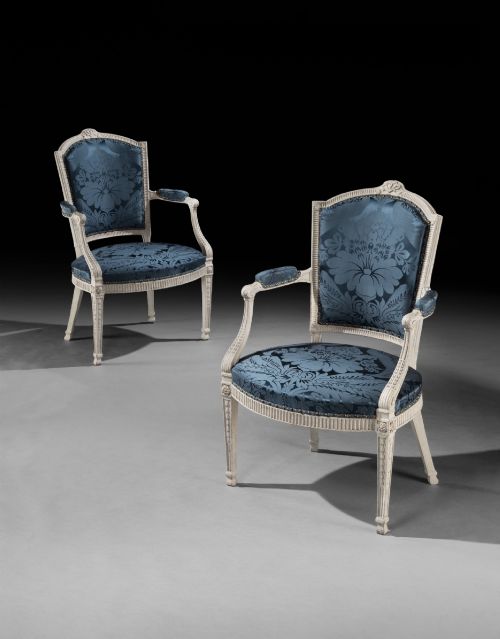
- An open-framed armchair with upholstered armrests, originating in seventeenth- and eighteenth-century France. The wooden arms typically end in carved scrolls.
- Parcel gilt
- A decorative technique where specific carved elements of an object are partially gilded with gold leaf. This creates contrast against a painted wood ground.
Cream Painted Chair: Frequently Asked Questions
What defines a cream painted chair?
A cream painted chair is a period seat finished with a light painted wooden surface, often featuring decorative carved details. These items span various European design traditions from the eighteenth century onwards.
They combine functional seating with architectural painted surfaces designed to brighten interior spaces.
How do I identify French styles?
French styles like Louis XV and Louis XVI exhibit distinct decorative vocabularies on their wooden frames. Louis XV pieces lean towards asymmetrical curves and floral carving, while Louis XVI chairs favour straight fluted legs and symmetrical neoclassical geometry.
Examining the paint application and frame construction helps determine the approximate period of manufacture.
Where should I place a cream painted chair?
These chairs suit drawing rooms, bedrooms, and window seats where their light finish can reflect natural illumination. Pairing them with neutral or contrasting textiles enhances their decorative presence.
Single armchairs work well as accent seating alongside larger sofas or alongside period tables.
How do I care for original paint?
Original painted surfaces require gentle dusting with a dry cloth to preserve the historic finish. Avoid harsh chemical cleaners or excessive moisture that might lift the underlying gesso and paint layers.
Keeping the piece away from direct sunlight and fluctuating humidity protects the timber and surface decoration over time.