



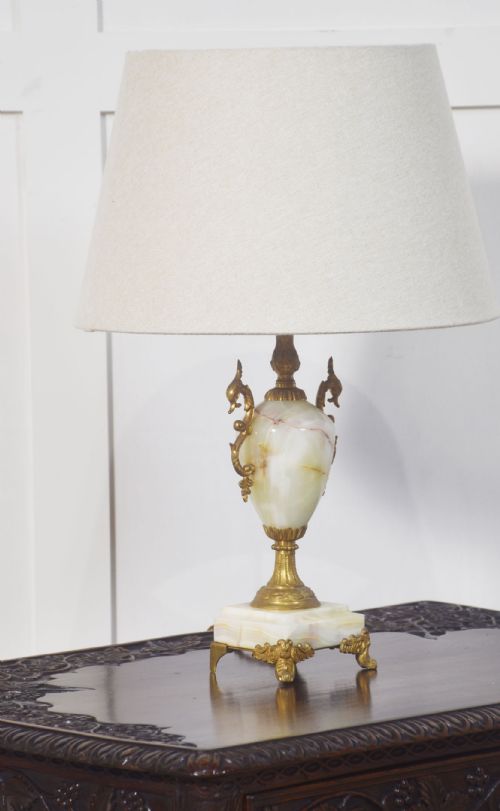


Cream Marble Lamps
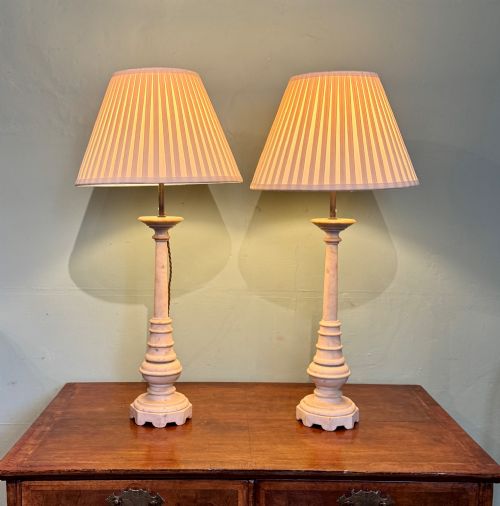
Cream marble lamps bring solid weight and warm geological pattern to a room, ranging from hefty Victorian columns to sleek Art Deco forms.
Cream Marble Lamps
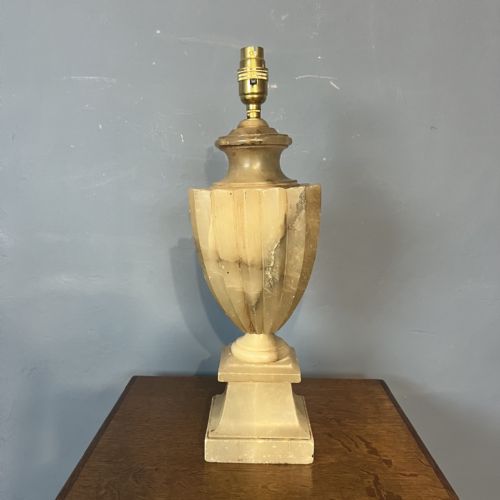
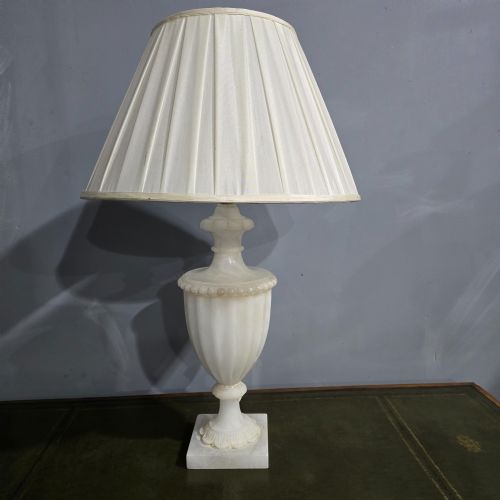
When you search for cream marble lamps, you encounter substantial lighting fixtures carved from natural stone, onyx, and alabaster. These pieces function as both functional illumination and sculptural objects for tables and side surfaces.
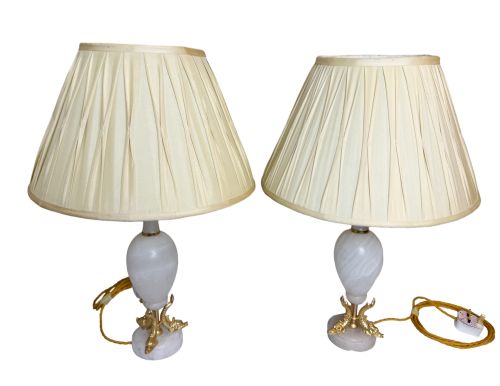
The selection on this page leans heavily towards twentieth-century interpretations, featuring Art Deco geometric designs alongside Edwardian and Victorian classically inspired columns. Many examples arrive in balanced pairs, utilising metal mounts in brass, bronze, and ormolu.
Originating predominantly from French and Italian workshops, these heavy stone bodies often incorporate subsidiary materials like fabric shades and gilt trims. They suit spaces needing architectural anchor points rather than delicate accents.
How they were made
Masons turned and carved dense blocks of marble, onyx, or alabaster on lathes to create smooth cylindrical or column forms. Artisans then polished the stone surfaces to reveal natural veining and translucent qualities.
Foundries cast brass, bronze, and ormolu mounts to fit snugly around the stone bases and necks. These metal components were frequently chased by hand before receiving gilt or dark patination finishes.
One vigilant greyhound keeps permanent watch from a bronze perch atop an Art Deco marble night light.
What varies in quality
The purity and consistency of the stone dictate the visual impact of the piece. Superior examples display harmonious, unbroken natural veining without distracting structural faults or heavy internal fractures.
The crispness of the metal mounts distinguishes finer work from standard production. Well-cast ormolu or brass elements fit tightly against the stone contours and exhibit sharp, hand-finished detailing rather than soft edges.
The Cream Marble Lamps Glossary
- Alabaster
- A fine-grained, translucent stone often used for carved vessels and lamp bases. It allows light to diffuse softly through the material when illuminated.
- Ormolu
- Gilded bronze applied as decorative mounts and feet on nineteenth-century and twentieth-century furnishings. The technique involves fusing gold amalgam to a bronze base through heat.
- Cassolette
- A decorative vase or urn with a reversible lid, frequently adapted into a table lamp. Originating in France, these pieces often feature rich metal mounts.
- Corinthian Column
- An architectural column order characterised by ornate, leaf-carved capitals. Lamp makers adopted this classical form for stately table lighting.
- Spelter
- A zinc alloy used as a cost-effective alternative to bronze for decorative figures and mounts. It takes patination well to resemble heavier metals.
Cream Marble Lamps: Frequently Asked Questions
How do I clean marble lamp bases?
Wipe the stone gently with a soft, slightly damp cloth using mild, pH-neutral soap. Avoid harsh chemical cleaners or abrasive pads that can dull the polished surface.
Dry the stone immediately with a clean microfiber towel to prevent water spots. Take care to keep moisture away from any electrical components or metal mounts.
Are these lamps heavy to place?
Natural stone and metal mounts create substantial weight at the base of these fixtures. This heavy mass provides excellent stability on side tables and desks.
Ensure your furniture surface can support the concentrated load of dense stone. Lift the lamp from the solid stone body rather than gripping delicate metal trims or shade fittings.
How do I date a stone lamp?
Examine the wiring holes, internal fittings, and the style of the metal mounts. Victorian and Edwardian examples often display classical column motifs or heavy brass bases.
Art Deco pieces from the nineteen-thirties favour streamlined geometric forms or stylized animal figures. French pieces frequently bear distinct casting marks or refined ormolu mounts characteristic of the period.
Can I replace the electrical wiring?
Modern electrical rewiring is commonly required for older lighting to meet current safety standards. A qualified electrician can update internal cables while preserving original sockets and switches where possible.
Ensure the cord thickness matches the demands of the lamp without compromising the vintage aesthetic. Professional rewiring protects both your home and the historical integrity of the fixture.