

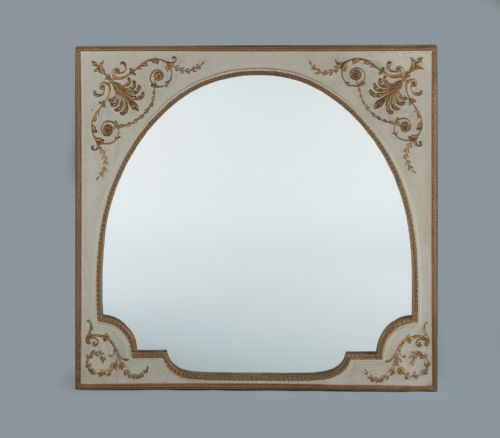
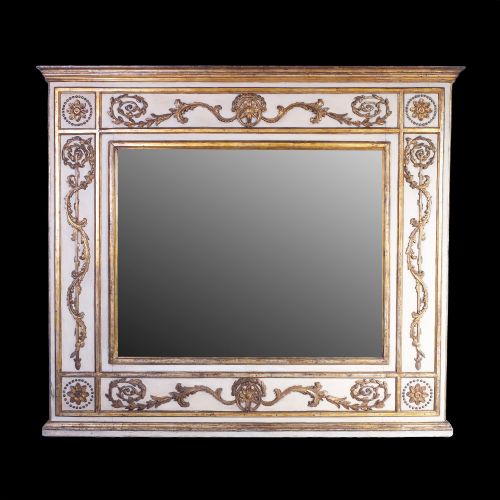
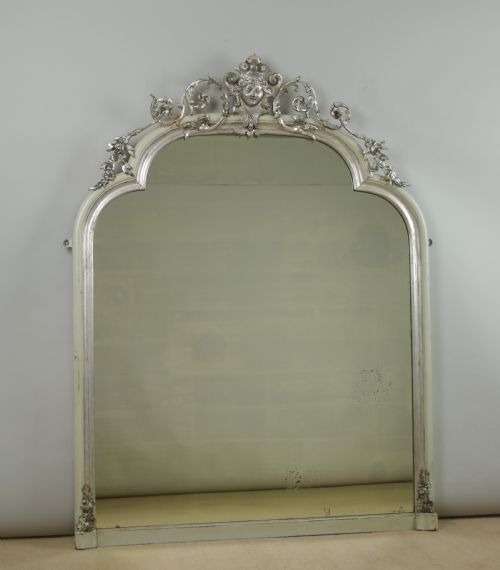
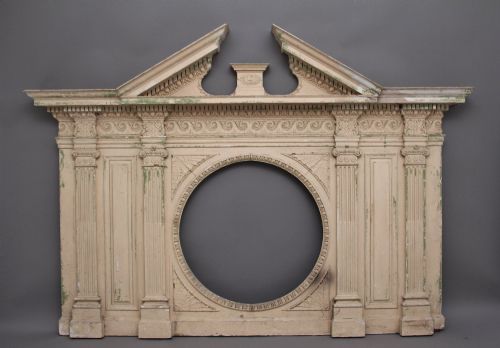


Cream Mantle Mirror
A cream mantle mirror anchors a room above the fireplace with scale, light, and historic presence.
Cream Mantle Mirror
When you search for a cream mantle mirror, you look at substantial wall mirrors and overmantels designed to sit above a fireplace or serve as a focal point in a reception room. These pieces appear across the eighteenth, nineteenth, and early twentieth centuries, spanning periods from Georgian and Regency to Victorian and Edwardian.
The versions most common on this page are nineteenth-century English and French examples with painted, gesso, and carved wooden frames. They range from rectilinear shapes to shaped tops, arched profiles, and triple-plate configurations.
Makers and designers drew on Neoclassical, Louis Philippe, and French Chateau styles, applying cream paint finishes over wood, gesso, and parcel-gilding. The resulting objects combine architectural weight with the lighter, reflective quality of historic mirror glass.
How they were made
Carpenters and joiners constructed the structural frames using timber such as pine and carved wood, building sturdy housings capable of supporting heavy glass plates. Craftsmen then applied layers of gesso to build up decorative mouldings, cornices, and detailed relief work.
Finishing involved painting the surfaces in cream tones, often supplemented with gold leaf, parcel-gilding, or ebonised accents to define the carved details. Mirror glass was set into the rebates, secured from behind, and paired with backing boards that protected the plates over decades of use.
Cream Mantle Mirror Retail Price Guide 2026
Typical asking prices for cream mantle mirror among the pieces listed under this phrase on Sellingantiques today, from the lower quarter to the upper quarter. They describe what is for sale here now, not the wider market.
Materials recorded across the inventory include painted wood, gesso, gold leaf, and traditional mirror glass.
What varies in quality
The depth and crispness of the carved wood and gesso ornamentation dictate the artistic merit of a mantle mirror. Hand-carved mouldings with sharp undercut details and well-balanced proportions stand far apart from simpler, flatter frames.
The handling of the painted surface also defines the grade of the piece, with layered, historic cream paint and subtle gilding showing greater sophistication than plain flat modern coatings. Furthermore, the presence of original historic mirror glass with natural patination adds depth that replacement plates simply lack.
The Cream Mantle Mirror Glossary
- Gesso
- A plaster-like mixture applied to wood frames to create a smooth surface for carving, moulding, or gilding. It allows for intricate relief details along the frame.
- Overmantel
- A large mirror or painting specifically designed to be hung or placed on the mantelpiece above a fireplace. These dominate the wall space and reflect light back into the room.
- Parcel-gilt
- Partially gilded, where gold leaf is applied only to specific raised elements of a carved frame. This technique highlights particular architectural motifs against a painted background.
- Triple plate
- A mirror construction featuring three distinct glass sections set side by side within a single frame. This layout is frequently found in Regency and nineteenth-century overmantels.
- Fretwork
- Openwork ornamentation cut from thin wood using a fretsaw. It appears on lighter frame designs, adding geometric or scroll patterns.
Cream Mantle Mirror: Frequently Asked Questions
Where should I hang a mantle mirror?
These mirrors traditionally anchor the space directly above a fireplace mantelpiece, where their scale balances the hearth below.
They also function effectively on large living room or hallway walls to bounce natural light around the room.
Are these mirrors heavy to hang?
Historic overmantel mirrors are substantial objects built with heavy wooden frames and thick glass plates. Proper wall fixings into structural studs or masonry are essential to support their weight safely.
Professional installation is recommended for the larger nineteenth-century examples.
How do I identify a nineteenth-century piece?
Look for construction details such as hand-cut timber backing boards, traditional gesso application, and aged mirror glass showing natural foxing or distortion.
Stylistic cues like Regency proportions or Victorian classical motifs also point towards nineteenth-century origin.
Can I clean historic mirror glass?
Historic glass and painted gesso frames require gentle care, avoiding harsh modern chemical cleaners that might strip historic finishes.
Use a dry or slightly damp microfibre cloth on the glass and dust the carved frame softly.