





Cream Lounge Set
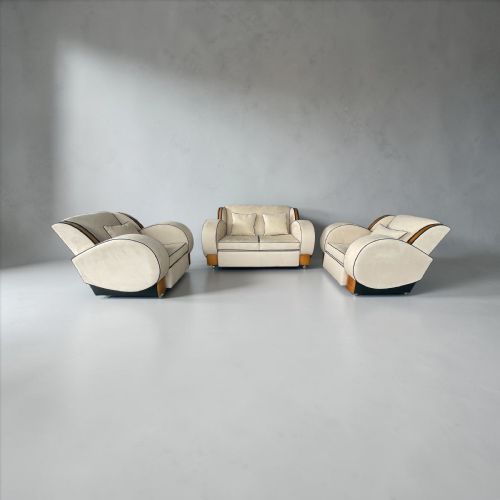
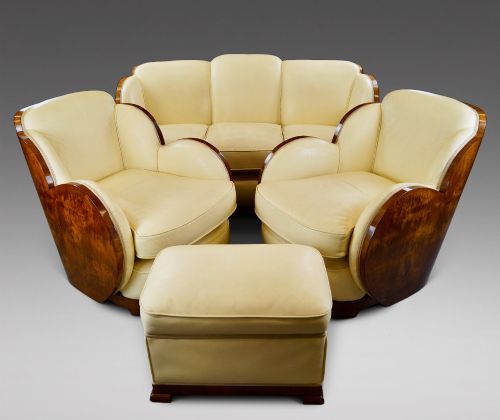
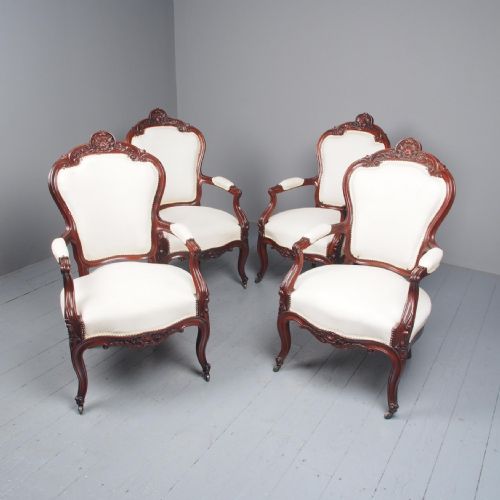
These cream lounge set pieces bring together period seating and upholstery from the Victorian era up to the Art Deco period.
Cream Lounge Set
A cream lounge set comprises coordinated seating arrangements such as three-piece suites, salon suites, and armchair pairs designed for reception and living spaces. The selection ranges from Victorian and Edwardian examples to Art Deco suites.
Buyers frequently encounter matching suites consisting of a sofa or couch alongside armchairs, often accompanied by matching stools or salon seating. These groupings span diverse stylistic traditions including Louis XVI style, Sheraton Revival, and Victorian Rococo Revival.
The historical span covers pieces from the late nineteenth century through to the 1930s, offering options in both formal parlour formats and comfortable lounge arrangements.
Materials and construction
Construction relies upon traditional timber frameworks utilising hardwood, walnut, mahogany, satinwood, and ebonized timber, alongside walnut veneer and gilt-wood decorative framing. Structural elements frequently incorporate brass details and intricate carved woodwork.
Upholstery defines the character of these seating groups, employing fabric and leather finishes across buttoned backs, cloud shapes, and traditional sprung interior builds.
Cream Lounge Set Retail Price Guide 2026
Typical asking prices for cream lounge set among the pieces listed under this phrase on Sellingantiques today, from the lower quarter to the upper quarter. They describe what is for sale here now, not the wider market.
Listings feature periods spanning from the 1880s through to 1930, utilising timber, walnut, mahogany, satinwood, and leather.
Assessing quality
Quality rests upon the integrity of the underlying timber frame and the precision of decorative carving or gilt-wood application. Suites featuring figured walnut veneers or solid mahogany demonstrate superior cabinet-making standards.
The refinement of the upholstery work, from buttoned back execution to the shaping of cloud suites, dictates the distinction between standard salon furniture and exceptional period examples.
Epstein
The Cream Lounge Set Glossary
- Salon suite
- A matched set of seating comprising a sofa and multiple armchairs intended for formal entertaining rooms. These groupings typically reflect unified stylistic periods such as Louis XVI style or Victorian revivalism.
- Cloud suite
- An Art Deco upholstery form characterised by rounded, bulbous padding reminiscent of cloud formations. This style is frequently paired with walnut veneer framing.
- Gilt-wood
- Timber coated with a thin layer of gold leaf or metallic gilt finish. It is commonly found on decorative nineteenth-century French salon furniture.
- Satinwood
- A pale, lustrous hardwood utilised for fine cabinet-making and decorative inlay work during the eighteenth and nineteenth centuries.
- Buttoned back
- An upholstery technique where depressions are formed in the padding by stitching through to the base, securing buttons at regular intervals.
Cream Lounge Set: Frequently Asked Questions
What pieces make up a lounge set?
A lounge set typically includes a combination of sofas, couches, and matching armchairs designed as a cohesive group. Many configurations also incorporate matching footstools or additional salon chairs.
These groupings provide a unified aesthetic for entertaining or relaxing spaces, maintaining consistent styling across every seat in the room.
How do I identify an Art Deco suite?
Art Deco suites from the 1930s often feature streamlined or rounded cloud-shaped upholstery paired with walnut and leather finishes. The overall design prioritises smooth curves and minimal surface ornamentation.
These pieces break away from Victorian revival styles by embracing modern geometric or volumetric forms.
Where were salon suites used?
Salon suites were placed in formal reception rooms and drawing rooms for greeting guests and social gatherings. They served as both functional seating and a display of household refinement.
Because they were intended for public rooms within the home, these suites often received high-status decorative treatments like gilt-wood and carved mahogany.
How do I care for leather and fabric upholstery?
Historic upholstery requires gentle maintenance using appropriate cleaners suited for leather or period textiles. Avoiding direct sunlight helps preserve the colour and integrity of both the fabric and the underlying wood.
Regular dusting of carved wooden frames keeps the timber finishes in stable condition without risking moisture damage to the padding.