




Cream Fireplace Mirror
A cream fireplace mirror brings height and light to a room, sitting naturally above a mantelpiece in styles from the Georgian period onward.
Cream Fireplace Mirror
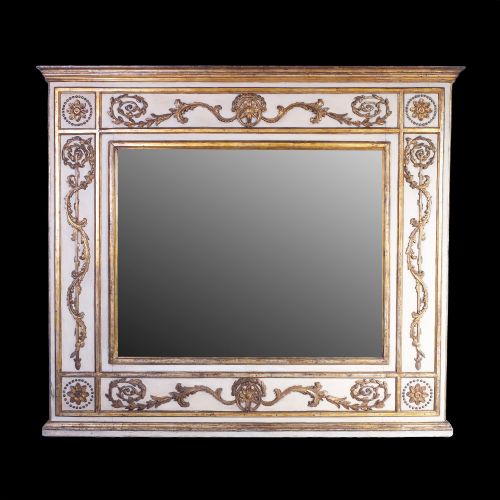
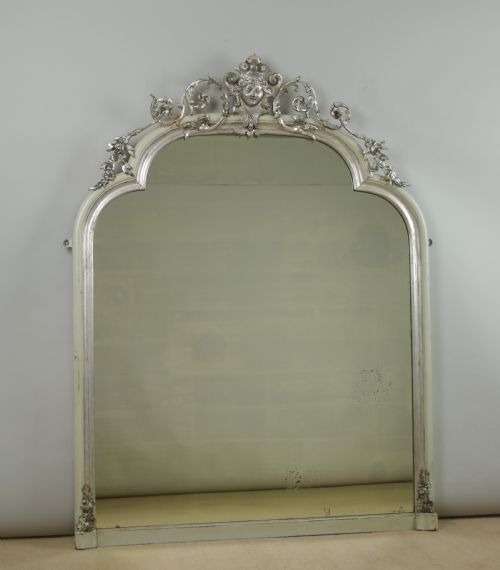
A cream fireplace mirror typically takes the form of an overmantel mirror designed to sit precisely on the chimney breast. These pieces span the eighteenth century, nineteenth century, and early twentieth century, taking in Victorian, Edwardian, Regency, and Rococo Revival styles.
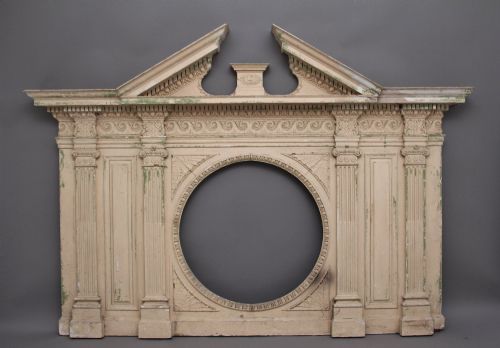
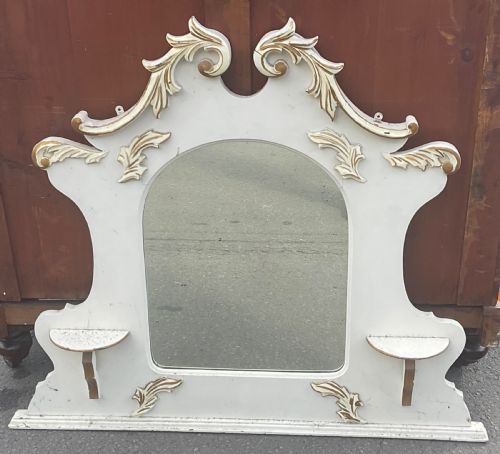
The dominant forms are large wall mirrors and overmantels featuring arched tops, shaped crests, and column frames. Painted wood and gesso finishes provide the characteristic cream or white appearance, often accented with parcel gilt details.
Originating largely from English workshops, these mirrors served both to bounce natural light around a reception room and to fill the substantial wall space above a hearth.
How they were made
Makers built the structural frames from timber such as pine and carved wood, applying layers of gesso to build up decorative moulding and relief work. This plaster-like compound allowed artisans to shape elaborate scrolls, architectural columns, and curved arches before applying paint.
Surfaces received coats of paint in white or cream, frequently combined with gold leaf or parcel gilt highlights to catch the candlelight or daylight. The mirror glass itself was set within these heavy frames, secured behind the carved wooden rebates.
Cream Fireplace Mirror Retail Price Guide 2026
Typical asking prices for cream fireplace mirror among the pieces listed under this phrase on Sellingantiques today, from the lower quarter to the upper quarter. They describe what is for sale here now, not the wider market.
Design styles represented across the selection include Victorian, Edwardian, Regency, and Rococo Revival, alongside French Chateau influences.
What varies in quality
Quality rests primarily on the depth and crispness of the hand-carving in the wood and gesso ornamentation. Finer examples display deeply undercut foliage and sharply defined architectural elements rather than flat, moulded composition work.
The integration of the plate glass and the retention of original painted and gilded surfaces dictate the integrity of the piece. Superior construction involves solid timber frames that support heavy mirror glass without sagging at the joints.
The Cream Fireplace Mirror Glossary
- Overmantel mirror
- A large mirror specifically proportioned to hang or stand upon the mantelpiece above a fireplace. These pieces often feature horizontal emphasis or arched tops designed to follow the architectural lines of the chimney breast.
- Gesso
- A plaster mixture applied to wood frames to create a smooth surface for gilding and painting. Artisans carved intricate decorative motifs directly into this dried compound.
- Parcel gilt
- A decorative technique where specific raised portions of a frame are highlighted with gold leaf while the main body remains painted. This creates contrast against the cream background.
- Rococo Revival
- A nineteenth-century design movement inspired by eighteenth-century French style, characterised by asymmetrical scrolls, C-scrolls, and naturalistic plant motifs. Frames from this period are typically ornate and curved.
Cream Fireplace Mirror: Frequently Asked Questions
How do I hang a heavy overmantel mirror?
These heavy frames require secure fixing directly into solid masonry or substantial wall studs using appropriate brackets.
Weight distribution across the wooden frame ensures the mirror remains stable once mounted above the fireplace.
What is the difference between an overmantel and a wall mirror?
An overmantel mirror is specifically scaled in width and height to sit directly on a mantel shelf or onto the wall immediately above a hearth. Standard wall mirrors may follow different proportions and are not necessarily designed to anchor a fireplace grouping.
Both forms utilise similar wooden and gesso construction methods across the Victorian and Edwardian periods.
How do I date a painted fireplace mirror?
Dating relies on stylistic clues such as the presence of Victorian arched tops, Edwardian simpler frames, or earlier Georgian and Regency architectural columns. The construction of the wooden backing and the type of gesso work also provide clear chronological indicators.
Paint layers applied over original surfaces can sometimes reveal the true age of the timber beneath.
Are cream fireplace mirrors always painted white originally?
Many period pieces feature historic cream or white paint schemes, sometimes combined with parcel gilt to accent the carved details. Over the decades, finishes have often been refreshed or layered over older woodwork.
The underlying gesso and pine construction remains consistent regardless of subsequent surface updates.