

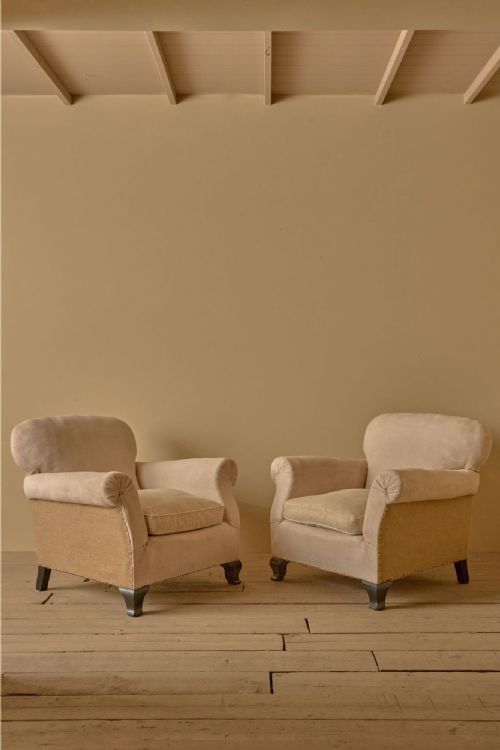
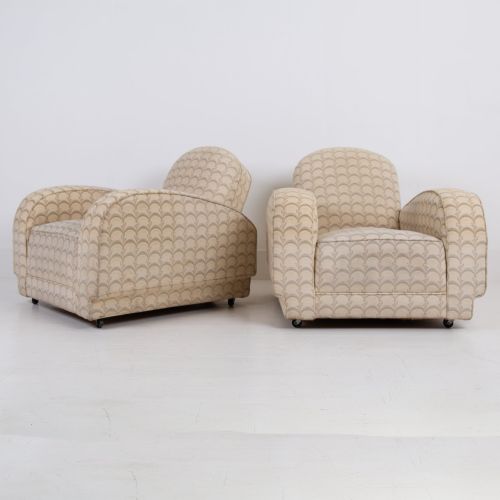
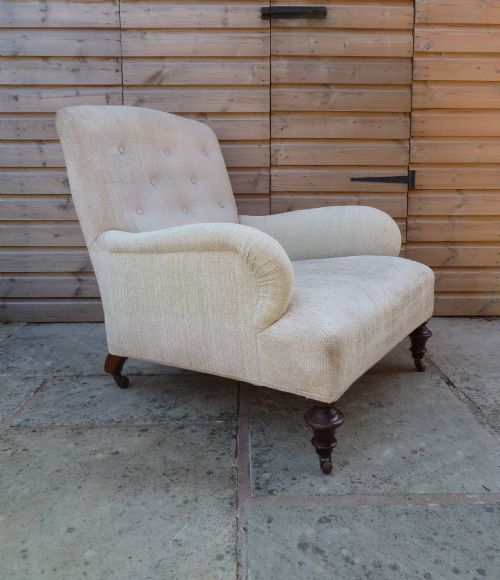
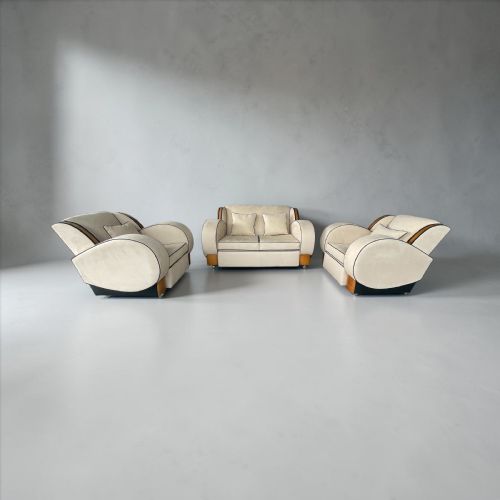
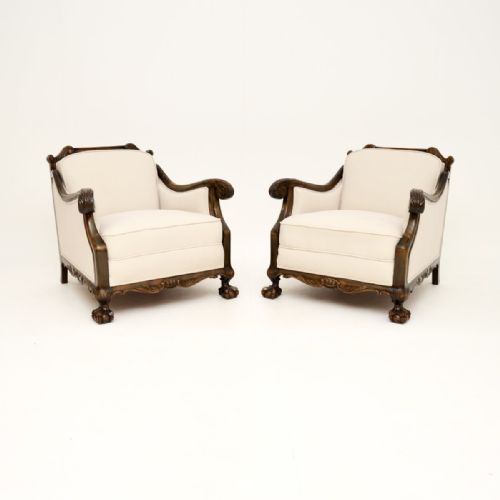


Cream Fabric Club Chair
A cream fabric club chair brings deep seating and tailored upholstery to a room, offering comfort that grounds a traditional or modernist interior.
Cream Fabric Club Chair
The cream fabric club chair encompasses deep-seated armchairs and lounge suites spanning periods from the nineteenth century through the mid-twentieth century. Buyers searching this phrase encounter nineteenth-century pieces alongside Edwardian, Art Deco, and mid-century designs with upholstered finishes.
The selection ranges from French Louis style armchairs and Swedish Biedermeier chairs to English country house pieces and Howard and Sons style easy armchairs. Forms include buttoned back chairs, tub armchairs, and cocktail chairs upholstered in neutral fabric.
These lounge seats serve as primary seating in a drawing room, study, or bedroom. The neutral cream upholstery allows the chair to anchor diverse interior schemes from French chateau to English country house.
Materials and construction
Frames rely on timber, wood, and mahogany, providing a sturdy internal skeleton for heavily upholstered forms. Metal and brass components appear in structural hardware or original castors.
Upholstery employs fabric, calico, and linen to cover generous padding and deep seats. Makers utilise traditional stuffing and buttoning techniques to achieve the characteristic rounded profile of the club chair.
Cream Fabric Club Chair Retail Price Guide 2026
Typical asking prices for cream fabric club chair among the pieces listed under this phrase on Sellingantiques today, from the lower quarter to the upper quarter. They describe what is for sale here now, not the wider market.
Listings span periods from the nineteenth century and eighteen-eighty through the nineteen-thirties, nineteen-sixty, Edwardian, and Victorian eras.
Distinguishing quality
Quality rests in the integrity of the wooden frame and the precision of the upholstery work. Heavier proportions and stamped maker details indicate higher workshop standards during the nineteenth and early twentieth centuries.
The refinement of the silhouette, from French Empire lines to English country house comfort, dictates the distinction between standard production and exceptional seating.
Howard and Sons·Trollope and Sons·Hamptons and Sons
The Cream Fabric Club Chair Glossary
- Club chair
- A deep, upholstered armchair designed for relaxation and lounging. These pieces typically feature low backs and generous armrests.
- Calico
- A plain-woven textile often used as a base layer for upholstery before applying top fabrics. It provides a sturdy foundation for buttoning and padding.
- Castor
- A small wheel fitted to the legs of furniture to ease movement across floors. Brass fittings often accompany these wheels on nineteenth-century seating.
- Biedermeier
- A Central European style emphasising utilitarian comfort and clean lines. This aesthetic appears in Swedish armchairs from the early twentieth century.
Cream Fabric Club Chair: Frequently Asked Questions
How do I clean a cream fabric club chair?
Maintenance depends on the specific textile used, whether linen, calico, or heavier upholstery fabric. Spot cleaning with appropriate agents helps preserve the neutral tone.
Regular brushing and gentle vacuuming prevent dust accumulation in the deep crevices of buttoned and upholstered surfaces.
Are these chairs comfortable for daily use?
These pieces were originally built for relaxation, offering deep seats and supportive backs. Generous proportions accommodate prolonged sitting.
Edwardian and nineteenth-century examples often provide substantial padding suited to living spaces and studies.
How do I date a club chair?
Dating relies on stylistic clues, frame materials, and construction methods. Nineteenth-century examples often feature mahogany frames and traditional castors.
Art Deco pieces from the nineteen-thirties introduce distinct geometric forms, while Edwardian models display softer English country house proportions.
Will a cream chair suit a modern interior?
The neutral cream fabric bridges traditional and contemporary spaces easily. These chairs complement minimalist rooms as well as eclectic English country house schemes.
French Louis style and Art Deco variations add historical contrast to modern settings without overwhelming the floor plan.