



Cream Ceramic Lamp Pair
These cream ceramic lamp pair selections bring refined Asian export porcelain and earthenware into domestic interiors as matched pairs.
Cream Ceramic Lamp Pair
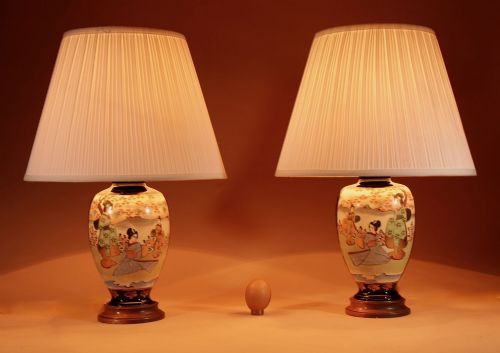
A cream ceramic lamp pair brings balanced illumination and decorative presence to a room, drawing on forms originally fashioned as vases. When you search for a cream ceramic lamp pair, you encounter matched sets originating from Chinese and Japanese workshops during the nineteenth and early twentieth centuries. These pieces typically take the form of converted vessels fitted for electrical use while retaining their original ceramic bodies.
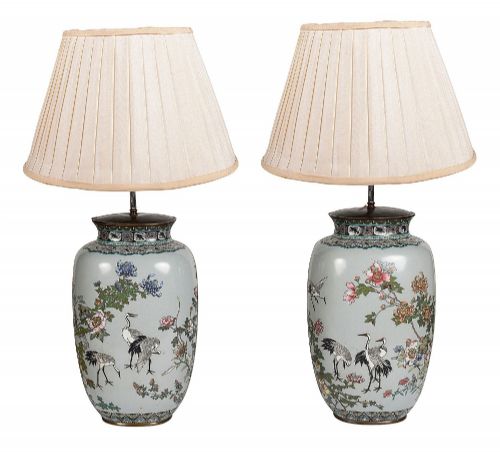
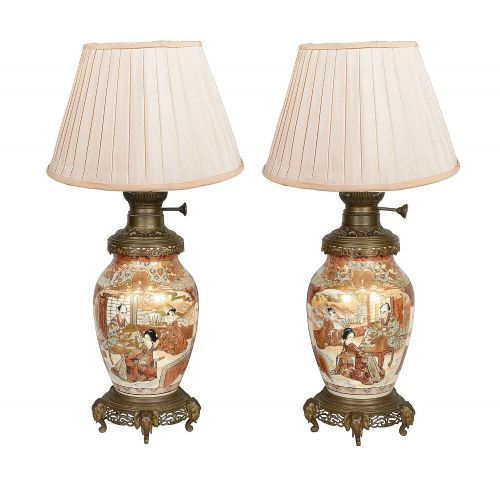
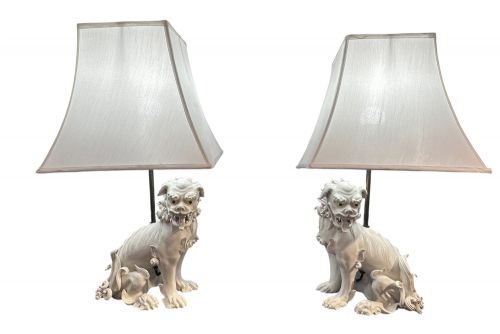
The inventory on this page demonstrates a strong bias towards Japanese Satsuma ware, Chinese blue and white porcelain, crackleware, and Blanc de Chine figures. Examples range from the late nineteenth century through to the 1920s, showing how traditional oriental ceramics found new life in European interiors. Buyers frequently find pieces paired with fabric, silk, or brass fittings that complement the ceramic base.
Materials and construction
The bodies of these lamps rely on traditional ceramic techniques, utilising porcelain, earthenware, and crackleware bodies shaped by hand or on the wheel. Artisans applied cobalt blue underglazes, enamel pigments, or monochrome glazes before firing the pieces in kilns to achieve durable finishes. Many of these ceramic vessels were later drilled or mounted with brass components to accommodate electrical wiring.
Shades paired with these lamps frequently incorporate fabric, silk, or woven materials to diffuse light softly across the ceramic surface. The juxtaposition of delicate porcelain or earthenware with structured textile shades defines the physical makeup of these matched pairs.
Materials across these listings encompass porcelain, earthenware, cloisonne enamel, brass, fabric, silk, and wood.
Distinctions in quality
Quality in these matched pairs rests upon the symmetry and uniformity of the two ceramic bodies, as matching two distinct vases into a coherent pair requires careful selection. The crispness of the hand-painted detail on Satsuma or blue and white porcelain distinguishes finer specimens from standard production pieces. Furthermore, the condition of the glaze and the absence of heavy restoration dictate the standing of an individual lamp.
The integration of the electrical fittings and the preservation of the original ceramic structure without excessive modification also influence the overall standard. Superior examples maintain their decorative integrity while successfully functioning as modern table lighting.
Fukagawa porcelain
The Cream Ceramic Lamp Pair Glossary
- Blanc de Chine
- A type of white porcelain made in Dehua, China, prized for its ivory or cream-coloured glaze and often moulded into figurative shapes such as Shi Lions.
- Crackleware
- Pottery or porcelain featuring a network of fine cracks in the glaze, intentionally created during the firing process for decorative effect.
- Satsuma
- Japanese earthenware pottery originating from Satsuma Province, typically decorated with intricate enamel and gilt designs over a cream crackle-glaze ground.
- Cloisonné
- Enamelwork in which enamel is applied to compartments separated by strips of metal welded to the base.
Cream Ceramic Lamp Pair: Frequently Asked Questions
How do I choose matching lamps?
Look for consistency in height, ceramic body shape, and decorative style between the two vessels. Even when converted from vases, a well-matched pair shares a uniform visual weight.
Consider the scale of your room and the furniture upon which the lamps will rest. Balanced proportions ensure the pair anchors the space effectively.
Are these lamps converted from old vases?
Many of these pieces began life as nineteenth-century or early twentieth-century decorative vases before receiving electrical fittings. This adaptation is a standard practice for oriental ceramics in Western interiors.
Conversion methods vary, so examine how the wiring enters the ceramic body. Professional fitting preserves the integrity of the original export ware.
How do I care for antique ceramic lamps?
Dust the ceramic bodies gently with a soft, dry cloth to prevent accumulation of dirt on the glaze. Avoid harsh chemical cleaners that might damage antique enamels or crackle-glazes.
Check the electrical wiring periodically or consult a professional electrician to ensure safe operation. Handle the shades separately when cleaning the surrounding area.
What periods do these lamps date from?
The pieces available span the late nineteenth century, including Meiji period Japanese items, through to the 1920s. This timeframe captures the popularity of East Asian exports in Western decorative arts.
Stylistic markers such as crackleware finishes and blue and white underglazes help contextualise the manufacturing era. Dating relies on stylistic analysis of the ceramic body and decorative motifs.