
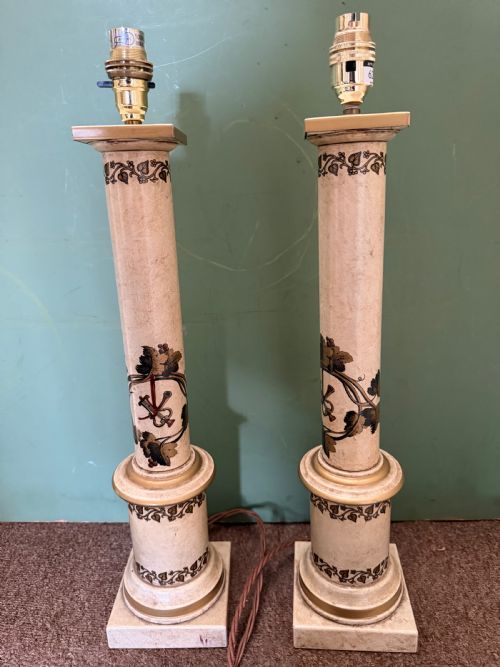


Cream Brass Table Lamps
Cream brass table lamps bring steady illumination and period weight to a room, spanning styles from Victorian oil burners to Edwardian columnar designs.
Cream Brass Table Lamps
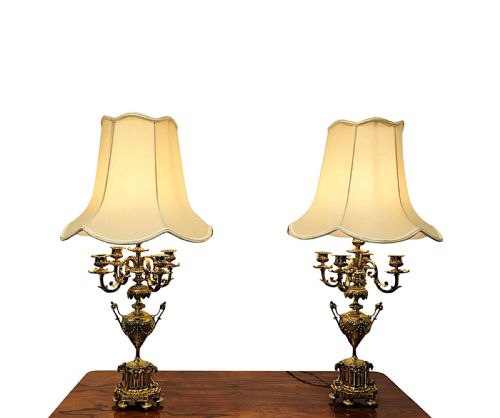
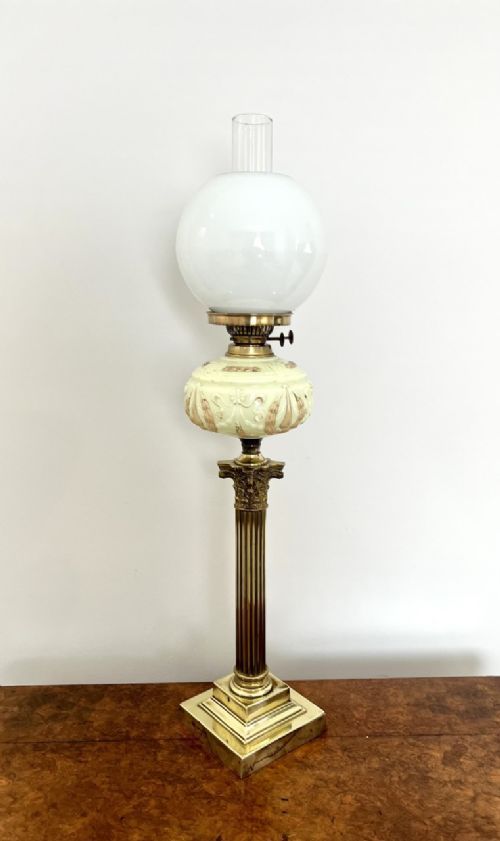
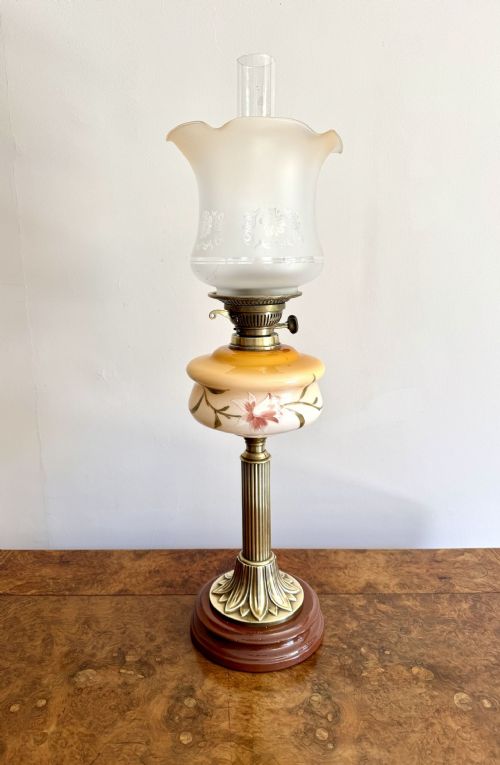
Cream brass table lamps encompass a diverse group of lighting fixtures adapted from earlier oil lamps, candlesticks, and porcelain or marble vases mounted in metal. When you search for cream brass table lamps, you encounter pieces originating from the nineteenth century through the early twentieth century, including Edwardian and Victorian examples.
French neoclassical, Empire, and Louis XVI styles appear frequently alongside Chinese and Japanese porcelain vases mounted as lamps. Buyers often find pairs of matching lamps or monumental single pieces suited for side tables, chests, and country house interiors.
Materials and construction
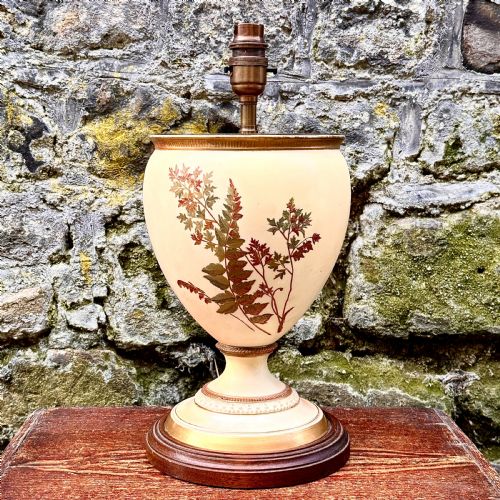
Construction relies heavily on cast brass, ormolu, and pressed brass combined with ceramic bodies such as Paris porcelain, Satsuma ware, and crackleware. Artisans mounted these ceramic and stone vessels onto metal bases, frequently adding pierced brass collars, handles, and mounts.
Secondary materials include marble, alabaster, onyx, and tole-peinte, providing contrasting weight and colour beneath the metalwork. Silk and fabric shades complete the fixtures, while older examples often show evidence of conversion from oil burning or candle use to electrical wiring.
Listings feature brass, porcelain, marble, and alabaster across periods from early nineteenth-century Empire styles to 1930s designs.
Distinctions in quality
Quality rests on the crispness of the brass casting, the depth of the gilding or ormolu, and the refinement of any hand-painted porcelain or carved stone components. Superior examples display sharply rendered figural details and substantial, well-balanced bases that anchor the height of the lamp.
The integration of the metal mounts to the central vase or column distinguishes finer workshop output from simpler commercial production. Makers who utilised high-grade marble or fine-paste porcelain alongside heavy gauge brass created pieces that retain their structural integrity and decorative impact.
Royal Worcester·Meissen·Fukagawa
The Cream Brass Table Lamps Glossary
- Ormolu
- Gilded bronze or brass applied to furniture, clocks, and lamp mounts. This technique was favoured in French neoclassical and Empire design for its bright metallic lustre.
- Cassolette
- A decorative vase or urn fitted with a reversible lid that can serve as a burner or a solid cover. These forms were frequently converted into table lamps.
- Spelter
- A zinc alloy used as a cost-effective alternative to bronze for figural castings. It often received a bronze-coloured finish to mimic more expensive metalwork.
- Famille Verte
- A Chinese porcelain palette centred on green enamel overglaze colours. Vases decorated in this style were often imported to Europe and mounted as lamps.
Cream Brass Table Lamps: Frequently Asked Questions
How do I date a brass table lamp?
Dating relies on stylistic clues, manufacturing techniques, and the original function of the object. Many nineteenth-century lamps began as oil lamps, candlesticks, or ceramic vases before later electrification.
Examine the weight of the metal, the assembly screws, and the wiring ports. Edwardian and Victorian pieces often display heavier cast brass components compared to later twentieth-century reproductions.
Were these always electric lamps?
Most antique lamps on this page started life as something else entirely. Alabaster urns, oil lamps, porcelain vases, and brass candlesticks were routinely converted for electrical use as homes modernised.
This conversion process preserves decorative antique bodies while adapting them for contemporary domestic lighting. Look for evidence of past burners or wick mechanisms within the upper mounts.
How do I clean antique brass bases?
Antique brass benefits from gentle dusting with a soft, dry cloth rather than aggressive polishing. Removing the accumulated patina of decades can strip away the aged character collectors value.
Avoid chemical metal dips that destroy subtle highlights in the casting. If cleaning is necessary, use a specialist museum wax to protect the metal surface from further tarnishing.
Can I replace the lamp shades safely?
Shades can be replaced to suit your interior, provided the fitting matches the bulb holder structure. Many listings include period-appropriate fabric or silk shades that complement the proportions of the base.
Ensure any replacement shade sits securely on the harp or shade carrier without straining the ceramic or metal fittings below. Proportions matter, so select a shade width that balances the height of the brass column.