

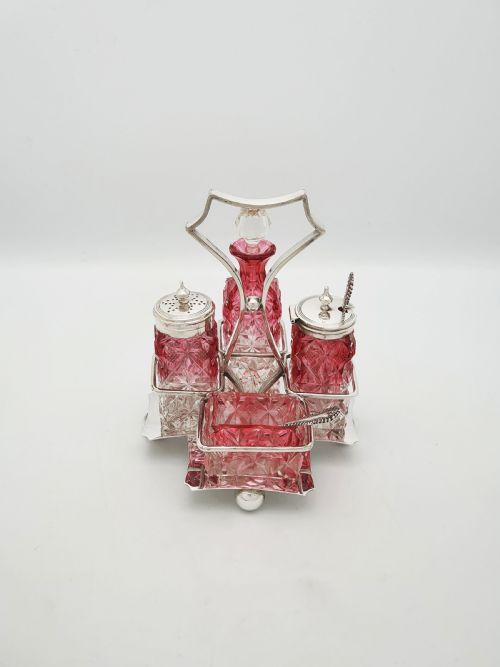


Cranberry Glass Pot
A cranberry glass pot brings rich ruby tones to a room, offering both decorative charm and practical function for the table or dressing area.
Cranberry Glass Pot
A cranberry glass pot encompasses a variety of forms designed for domestic use, ranging from preserve dishes and biscuit barrels to trinket boxes and jam jars. These items date primarily from the Victorian and Edwardian eras, reflecting the tastes of the nineteenth and early twentieth centuries.
The most common versions met on this page include preserve dishes and biscuit barrels, often paired with metal mounts. Such pieces served practical purposes in the home, holding condiments or sweets during dining and tea gatherings.
Originating across the nineteenth century and extending into the early twentieth century, these items display the distinctive styles of their respective periods. Buyers encounter simple glass jars alongside elaborately mounted examples intended for display.
How they were made
Makers utilised rich ruby-tinted glass as the primary material, shaped through blowing or moulding techniques to create bowls, jars, and dishes. This distinctive colour results from the addition of gold chloride to the molten glass batch during production.
Many items incorporate metal components such as silver plate, sterling silver, or silver gilt mounts, frames, and lids. Craftspeople also applied cut glass patterns, enamel decoration, or pierced metalwork to complement the ruby glass bodies.
Cranberry Glass Pot Retail Price Guide 2026
Typical asking prices for cranberry glass pot among the pieces listed under this phrase on Sellingantiques today, from the lower quarter to the upper quarter. They describe what is for sale here now, not the wider market.
Listings feature items from the 19th Century, Victorian, and Edwardian periods, utilising cranberry glass paired with silver plate, cut glass, and sterling silver.
What varies in quality
The sophistication of the metal mountings separates different tiers of pieces, with substantial silver-plated frames or hallmarked silver lids indicating higher production standards. Simple unmounted glass jars sit at the other end of the range.
Execution of decorative details such as cut glass facets, hand-applied enamel, or pierced metalwork dictates the overall refinement of an item. Superior examples exhibit precise cutting and secure, well-fitted metal hardware.
The Cranberry Glass Pot Glossary
- Cranberry Glass
- A transparent pinkish-red glass coloured with gold oxide. It gained immense popularity during the Victorian period for tableware and decorative objects.
- Biscuit Barrel
- A covered container designed to hold dry biscuits or crackers during tea service. They frequently feature ceramic or glass bodies with metal lids and swing handles.
- Silver Gilt
- Silver that has been coated with a thin layer of gold on its surface. This technique provides the rich appearance of solid gold while utilising a silver base.
- Preserve Dish
- An open or lidded vessel intended to serve jams, jellies, or preserves at the table. They often sit within metal stands or baskets.
- Vaseline Glass
- A type of glass containing uranium dioxide that produces a yellow-green colour. Some pieces display this characteristic tone alongside traditional cranberry hues.
Cranberry Glass Pot: Frequently Asked Questions
What is cranberry glass?
Cranberry glass is a distinctively coloured transparent glass made by adding gold to the molten batch. This process yields shades ranging from light pink to deep ruby red.
The technique became widespread during the Victorian era, particularly in Britain, where it was fashioned into numerous household items and decorative objects.
How were biscuit barrels used?
Biscuit barrels were standard accessories on Victorian and Edwardian dining tables and tea trolleys. They held dry biscuits to keep them fresh between meals.
Servants would bring the barrel to the table during tea service, and guests or family members would lift the lid to help themselves.
Can I use these pots daily?
While these pieces were originally made for functional use, their age requires gentle handling. Modern dishwashers and harsh detergents can damage older glass and delicate metal plating.
Hand washing in warm soapy water keeps the glass bright and protects any silver-plated or enamelled mounts from unnecessary wear.
How do I date Victorian glass?
Dating relies on examining the style of the object, the form of any metal mounts, and manufacturing marks where present. Victorian examples often show heavier mould seams or hand-finished pontil marks.
Edwardian pieces from the early twentieth century tend to feature lighter metal mounts and refined cutting styles influenced by changing domestic tastes.