


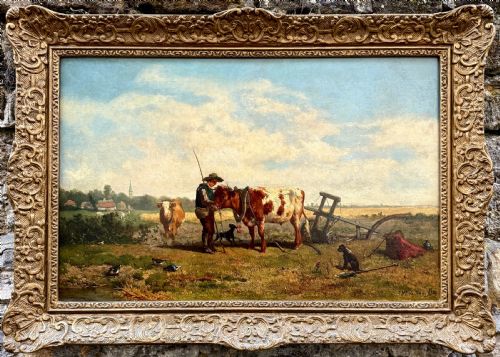


Cows in Landscape
Cows in landscape paintings capture pastoral life through 18th-century, Victorian, and Edwardian works on canvas and paper.
Cows in Landscape
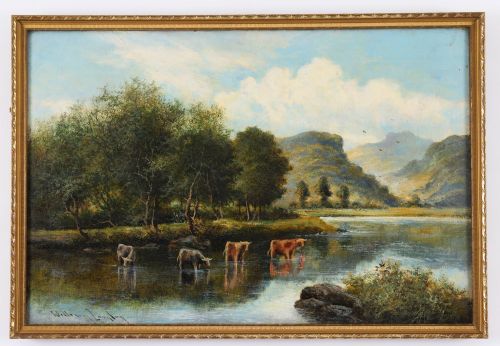
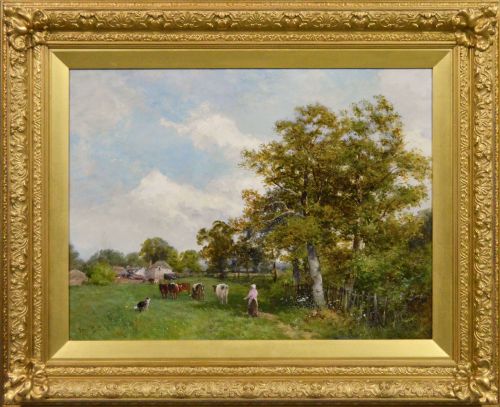
When you search for cows in landscape, you find works depicting cattle in rural settings, riverbanks, and Highland vistas. These pieces span from the 18th century through the Victorian era and into the early 20th century.
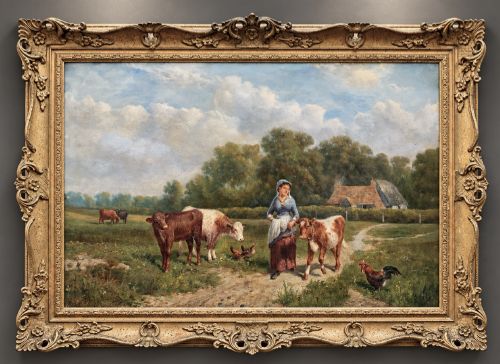
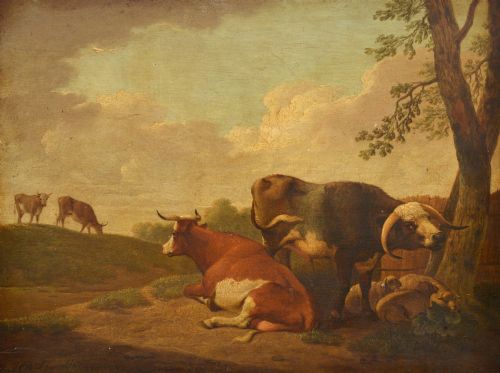
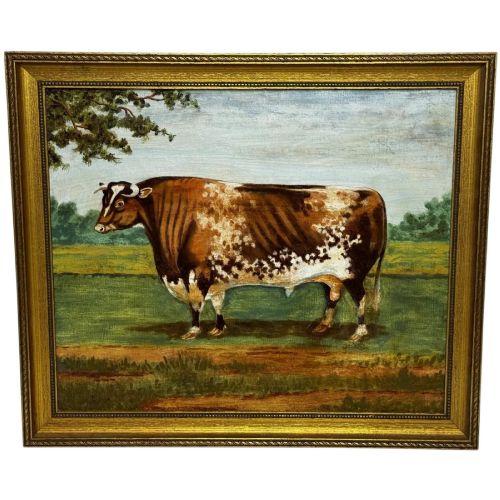
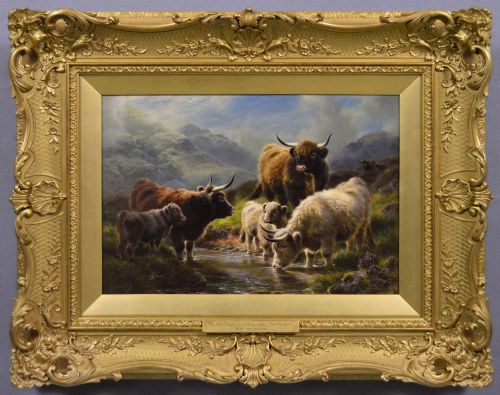
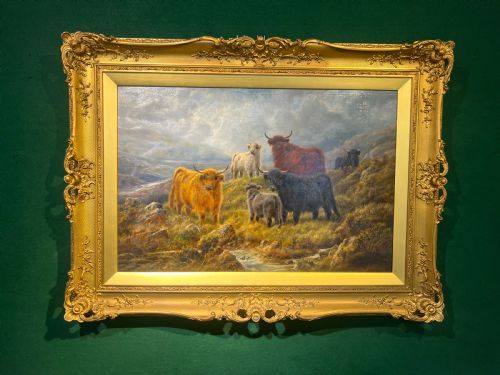
You are most likely to meet 19th-century oil paintings on canvas and watercolours on paper. The subjects range from Highland cattle by lochs to farmyard scenes with shorthorn bulls and milking cows.
The selections include British and Scottish landscapes framed in wood, giltwood, and gesso. Artists placed cattle at the centre of pastoral realism, British impressionism, and naturalism.
How they were made
Painters applied oil paint to stretched canvas or watercolour to paper, building rural scenes with careful brushwork. Canvases received layers of pigment to capture light on water, hills, and cattle hides.
Frames combined wood substrates with moulded gesso and gold leaf finishes. Some watercolours feature burr wood frames that complement the tones of the pastoral subjects.
Cows in Landscape Retail Price Guide 2026
Typical asking prices for cows in landscape among the pieces listed under this phrase on Sellingantiques today, from the lower quarter to the upper quarter. They describe what is for sale here now, not the wider market.
Listings combine 18th-century, Victorian, and Edwardian works in oil on canvas and watercolour on paper, housed in giltwood and wood frames.
What varies in quality
The ability of the artist to render anatomical precision in the cattle separates standard works from accomplished ones. Hand movement in brushwork or watercolour washes determines depth in the surrounding landscape.
Condition of the canvas, paper, and original giltwood framing influences the visual impact. Works signed by recognised painters carry distinct provenance compared to anonymous school pieces.
William Langley·Samuel Joseph Clark·Hendrik Willem Schweickhardt·David Bates·Robert Watson·Russell Sidney Reeves·William Watson Jnr·Johannes de Haas·A M Gauci·Henry Robinson Hall·Thomas Sidney Cooper·Thomas Hunn·Robert Thorne Waite·Ernest Higgins Rigg·Bernard Walter Evans·Basil Bradley·George Turner·John W Morris·Joseph Kirkpatrick·W A Clark·Gustave De Brianski·Harry Stinton·John R K Duff·Henry Cheadle·Frederick William Jackson
The Cows in Landscape Glossary
- Pastoral realism
- An artistic style focusing on rural scenes and agricultural life with close attention to natural detail. This approach defined many 19th-century animal and landscape paintings.
- Giltwood
- Wood carved and coated with gold leaf or metallic paint to form decorative picture frames. It surrounds many Victorian oil paintings in this category.
- Gesso
- A plaster mixture applied to wood frames before gilding to create smooth surfaces for ornamentation. It provides the base for decorative moulding on antique frames.
- Watercolour painting
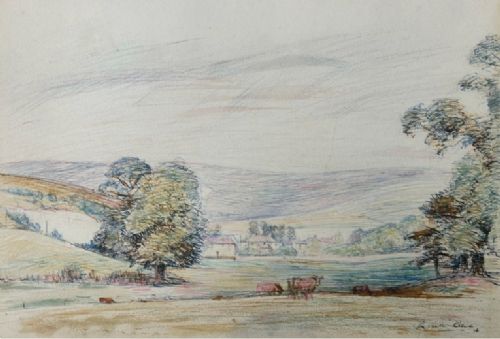
- Art created using water-soluble pigments on paper. This medium was widely used for pastoral scenes and river views during the Victorian and Edwardian periods.
Cows in Landscape: Frequently Asked Questions
What periods do these paintings come from?
The listings span from the late 18th century through the Victorian era and Edwardian period up to the early 1930s. Artists worked across these decades recording rural and Highland cattle scenes.
Victorian pieces form a significant portion of the selection, alongside earlier Georgian examples and later impressionist watercolours.
How were these artworks framed originally?
Many oil paintings and watercolours retain their period frames constructed from wood with gesso and gold leaf ornamentation. Some watercolours feature distinctive burr wood framing.
These frames were selected to complement the landscape subjects and protect the edges of the canvas or paper.
Which subjects appear alongside cattle?
Cows and bulls share the scenery with sheep, horses, and figures such as farmers, milkmaids, and herders. Rivers, streams, lochs, and hills provide the backdrop for the animals.
Artists placed herds in settings ranging from lowland pastures to misty Scottish Highlands and farmyards.
How do watercolours differ from oil paintings here?
Watercolour paintings use pigments on paper under glass, offering softer tones and lighter atmospheric effects in rural scenes. Oil paintings utilise thick pigments on canvas, yielding richer textures and deeper colours.
Both mediums captured the same pastoral interest in cattle but produced different surface finishes.