



Covered Glass Jar Lid
These covered glass jar lid selections range from Georgian butter dishes to Victorian apothecary jars, offering practical elegance and period charm for your home.
Covered Glass Jar Lid
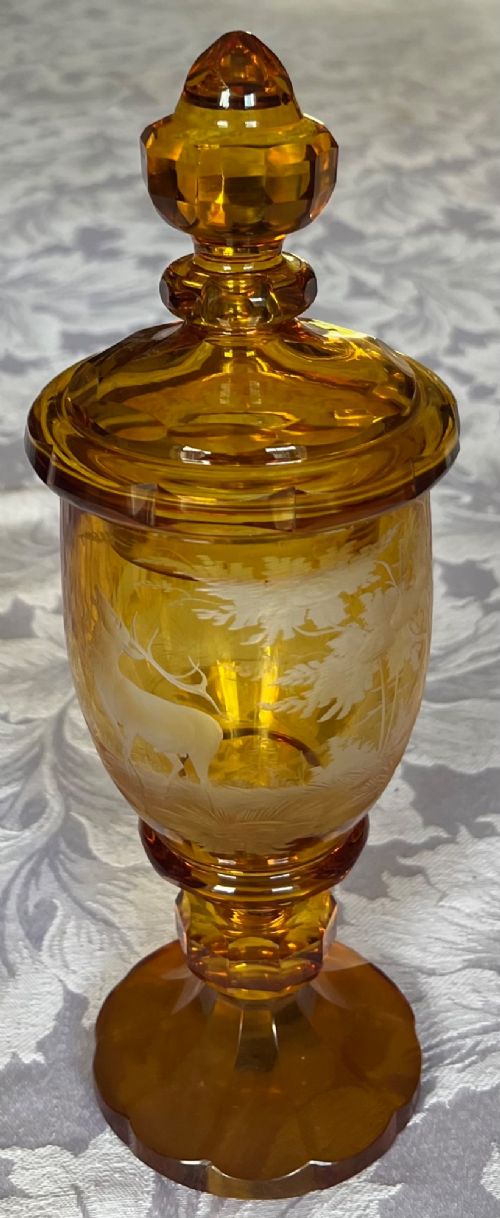
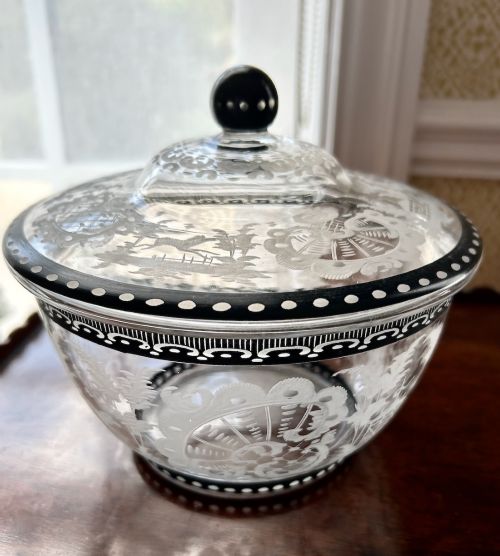
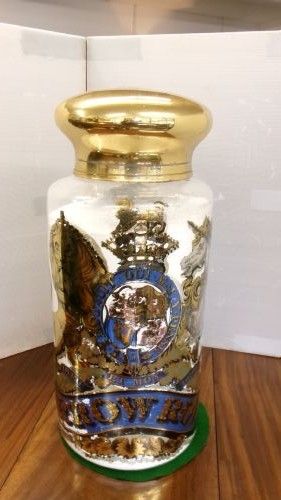
When you search for a covered glass jar lid, you enter a diverse field of vessels spanning the Georgian, Victorian, and early 20th century periods. These items encompass a wide variety of forms, including apothecary jars, decorative bowls, sweetmeat jars, and lidded vases.
The pieces on this page originate from distinct stylistic traditions, notably English production, French ateliers, and Bohemian glassworks. You will encounter functional items such as butter dishes and sugar bowls alongside grand decorative urns.
Vessels from the 19th century feature prominently, often displaying the heavy proportions and intricate surface work characteristic of Victorian and Edwardian manufacturing. Each piece combines utility with decorative appeal, designed to store provisions or display contents on a mantel or sideboard.
How they were made
Makers utilised clear glass, lead crystal, amber glass, and specialist white latticinio glass with coloured canes to shape these vessels. Techniques involved blowing the molten material into moulds or free-blowing the body before finishing the rims and lids by hand.
Decoration relied heavily on wheel-cutting, engraving, and etching to carve intricate patterns into the surface of the glass. Artisans occasionally applied enamel, brass fittings, and gold leaf highlights to enhance the visual impact of the finished jars and vases.
Pumpkins are not just for autumn; one Victorian glassblower clearly got into the seasonal spirit early with a pumpkin-shaped punch bowl and cover.
What varies in quality
The standard of cutting and engraving largely determines the finesse of a piece, with deep, crisp facets distinguishing finer workshop output from simpler moulded items. Clarity of the metal and weight in the hand also indicate superior material selection, particularly in lead crystal and heavier Victorian vessels.
Additional embellishments such as finely matched covers, enamel detailing, and applied gold leaf elevate certain examples above standard utilitarian wares. The precision with which a lid fits its jar remains a key indicator of original craftsmanship.
Baccarat
The Covered Glass Jar Lid Glossary
- Cut glass
- Glassware decorated by holding the vessel against a rotating abrasive wheel to carve decorative facets and patterns into the surface. This technique produces sharp edges and high brilliance.
- Lead crystal
- A type of glass containing metallic oxide that increases weight, refractive index, and clarity. It allows for deeper and sharper cutting than standard soda-lime glass.
- Latticinio glass
- A Venetian decorative technique involving opaque white or coloured glass threads embedded within clear glass. These threads are typically twisted into spiral or net-like patterns.
- Sweetmeat jar
- A covered vessel historically used to serve small confections, nuts, or preserved fruits at the table. These jars often feature pedestal feet and decorative finials on the lids.
- Mary Gregory
- A style of glass decoration characterised by silhouette figures, usually children, painted in white enamel amidst foliage. The technique gained popularity during the late 19th century.
Covered Glass Jar Lid: Frequently Asked Questions
What were covered glass jars used for?
These vessels served various domestic and commercial purposes, from storing apothecary supplies and provisions to holding butter, sugar, and sweetmeats at the dining table.
Larger lidded vases and urns functioned primarily as decorative ornaments for mantelpieces and sideboards in wealthy households.
How do I identify a Georgian glass jar?
Georgian pieces often display heavier lead crystal composition with hand-cut facets and pontil marks on the base where the glassblower's iron was detached.
Design proportions tend to reflect neoclassical tastes or early geometric cutting styles typical of the late 18th and early 19th centuries.
How should I display these jars at home?
You can place lidded apothecary jars and sweetmeat vessels on open shelving or side tables where light can pass through the cut glass.
Ensure larger decorative vases are positioned securely away from foot traffic to protect delicate rims and matching covers.