

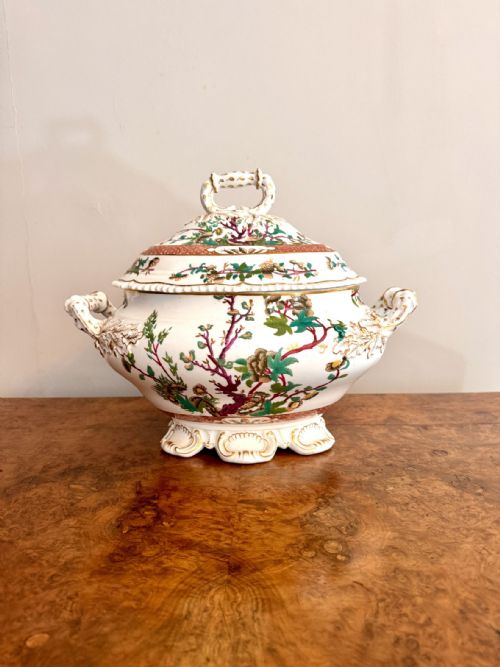
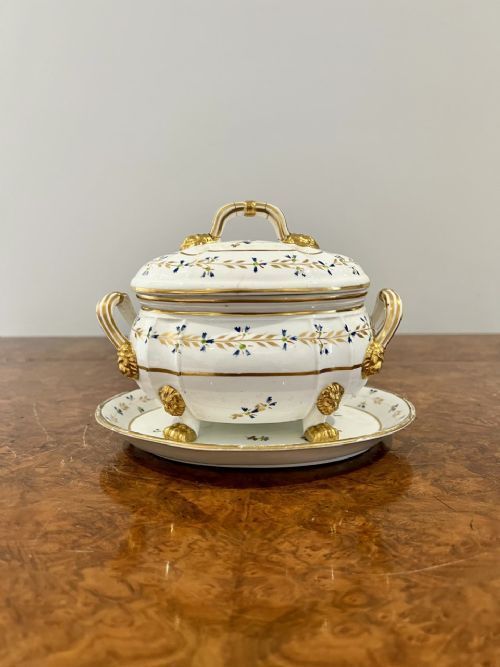
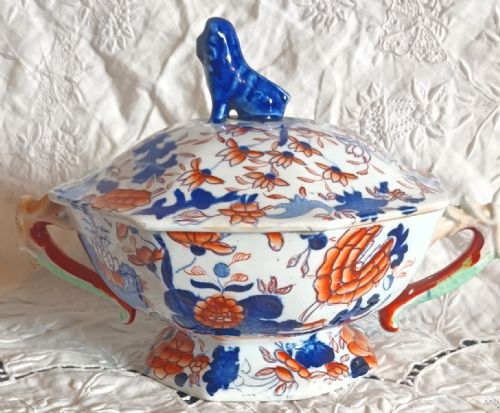
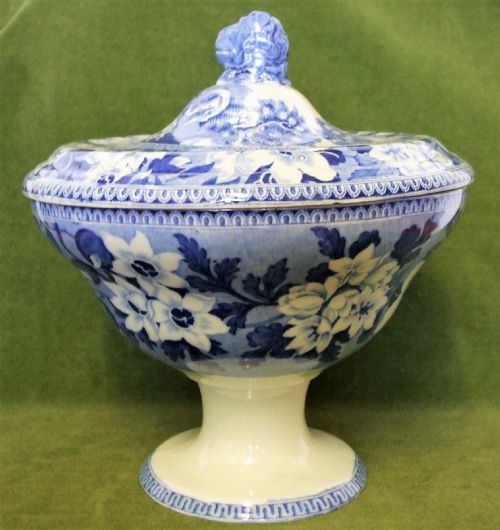


Covered Ceramic Soup Dish
These pieces of covered ceramic soup dish tableware serve broth at the dining table with historical form and refined glaze.
Covered Ceramic Soup Dish
When you search for a covered ceramic soup dish, you are looking at tureens and lidded vessels designed for serving broth and sauces at the dining table. The pieces available on this page span the eighteenth, nineteenth, and Victorian periods, originating from English potteries, continental workshops, and Chinese export furnaces.
The version you are most likely to meet here is the nineteenth-century ironstone or porcelain tureen, often decorated with blue and white transfer printing, Chinoiserie motifs, or rich Imari palettes. These serving vessels typically include a fitted lid, and many retain matching stands or ladles from their original service sets.
Form follows function in these dining pieces, ranging from large soup tureens intended for central table placement down to smaller sauce tureens and vegetable dishes. Makers utilised durable earthenware, ironstone, and fine porcelain to withstand regular dining room use while maintaining decorative elegance.
How they were made
Potters shaped these vessels using traditional earthenware, heavy ironstone, and fine porcelain bodies, often employing moulds for complex pedestal and bowl forms. Hand-painting and transfer printing applied intricate blue and white patterns, floral designs, and Chinese export motifs across the ceramic surface.
Glaze was applied over the decorated body before high-temperature kiln firing to seal the piece and impart a lustrous sheen. Artisans frequently added enamel colours and gold leaf detailing by hand over the glaze, followed by a final low-temperature fixation.
Covered Ceramic Soup Dish Retail Price Guide 2026
Typical asking prices for covered ceramic soup dish among the pieces listed under this phrase on Sellingantiques today, from the lower quarter to the upper quarter. They describe what is for sale here now, not the wider market.
Several nineteenth-century tables held miniature cabbage-shaped tureens designed purely to add leafy botanical whimsy to the dining course.
What varies in quality
The distinction between ordinary utility wares and exceptional pieces rests upon the crispness of the transfer print, the delicacy of the moulding, and the richness of hand-applied enamel and gold leaf. Superior examples display precise registration in multi-colour patterns and finely modelled handles or finials that integrate seamlessly with the body.
Maker attribution also elevates a piece, as leading nineteenth-century factories and eighteenth-century porcelain works achieved finer clay refinement and more stable glazing than smaller regional potteries. Completeness defines the upper tier, where surviving matching stands, ladles, and original covers remain intact with the base.
John Rogers & Son·Flight, Barr & Barr·Edm'e Samson·Doulton Burslem·Copeland and Garrett
The Covered Ceramic Soup Dish Glossary
- Tureen
- A deep serving vessel with a lid, designed for holding soup, sauce, or vegetables at the table. These pieces often feature integrated handles and rest upon matching ceramic stands.
- Ironstone
- A dense, durable type of earthenware patented in the nineteenth century to imitate Chinese porcelain. It resists chipping and provided a sturdy canvas for transfer-printed and hand-painted decoration.
- Transfer Print
- A method of decorating ceramics by pressing a paper sheet engraved with a copperplate design onto the biscuit or glazed surface. This technique allowed complex pictorial scenes, such as Chinoiserie landscapes, to be reproduced with consistency.
- Imari
- A decorative style inspired by Japanese export porcelain, featuring a distinct palette of underglaze cobalt blue combined with iron red, green, and gilt accents. English factories adopted this aesthetic widely during the Regency and Georgian periods.
- Chinoiserie
- European artistic interpretation of Chinese and East Asian decorative motifs, popular on eighteenth and nineteenth-century tableware. It typically depicts imagined landscapes, figures, and architectural elements.
Covered Ceramic Soup Dish: Frequently Asked Questions
What is a tureen used for?
These vessels were principal dining table items used to serve hot soups, sauces, or vegetables during formal meals.
The matching cover kept the contents warm between the kitchen and the dining room table.
How do I date a ceramic tureen?
Dating relies upon factory marks stamped or printed on the base, stylistic cues like Regency or Rococo moulding, and the type of ceramic body.
Heavier ironstone points toward the nineteenth century, while finer porcelain bodies often indicate eighteenth-century or early Regency manufacture.
Can I use these for serving food today?
Many antique ironstone and porcelain pieces remain robust enough for modern table service and entertaining.
Careful hand washing preserves the delicate overglaze enamels and gold leaf highlights found on better examples.
What is Chinese export porcelain?
This term describes ceramics manufactured in China specifically for the European and Western markets during the Qing dynasty.
These pieces often blended traditional Chinese forms and painting techniques with Western armorial or decorative requests.