






Countryside Winter Landscape
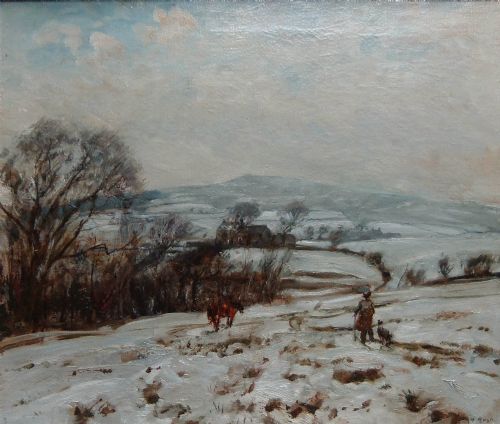
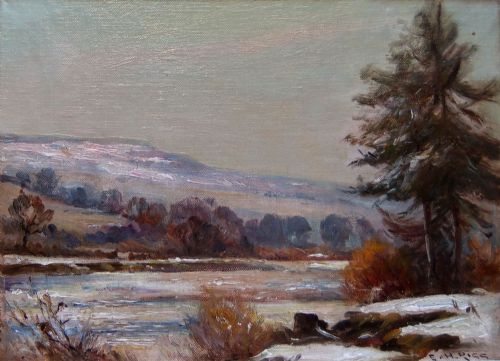
A countryside winter landscape captures the quiet chill of fields and snow-dusted villages, drawn mostly from the early twentieth century.
Countryside Winter Landscape
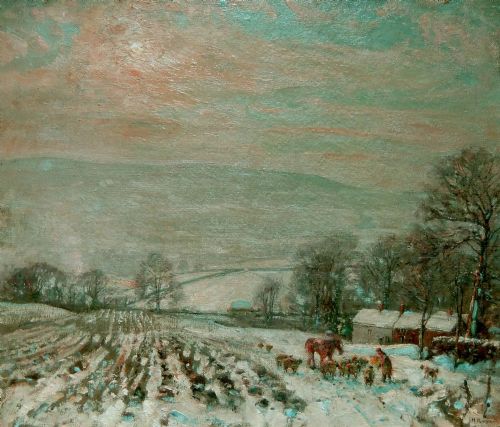
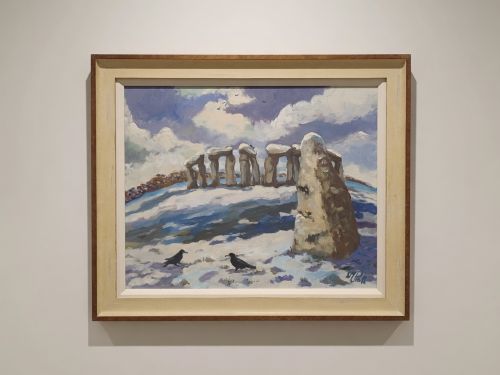
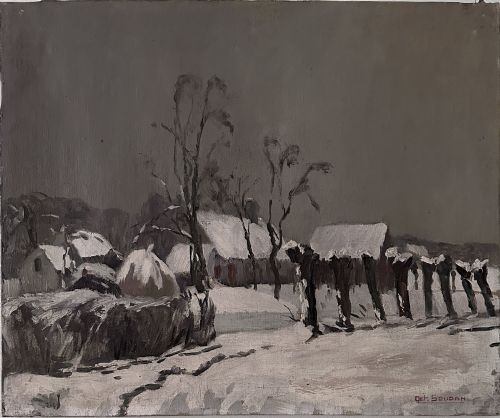
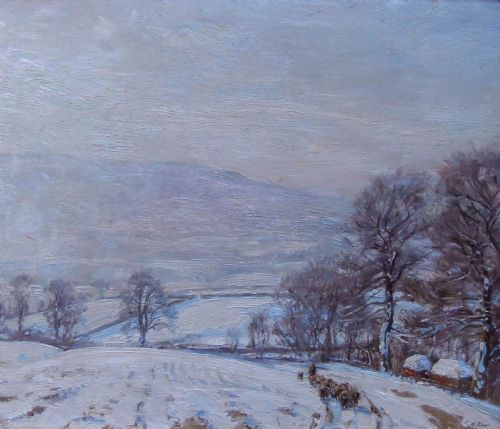
When you search for a countryside winter landscape, you encounter pastoral scenes dominated by oil paintings on canvas and wood, alongside occasional watercolours on paper. Most examples date from the early twentieth century, particularly the nineteen-twenties and nineteen-thirties, reflecting British Impressionism, Early British Modernism and traditional pastoral styles.
The subjects focus on rural life during the colder months, featuring Yorkshire locations such as Wharfedale, Wensleydale and Swaledale, alongside snow scenes with sheep, shepherds, stagecoaches and village houses. You will also find broader European works, notably from the Hague School, capturing similar rustic conditions.
The physical form is primarily framed oil paintings, utilising wood frames that complement the muted palettes of snow, bare trees and grey skies. These works range from intimate village studies to larger pastoral compositions depicting sheep droving and winter feeding.
What varies in quality
Quality rests on the confidence of the brushwork and the artist's ability to capture light and atmosphere within a restricted winter palette. Stronger works demonstrate a sure handling of tone in snow and shadow, whereas lesser examples rely on flat application and formulaic composition.
The distinction also lies in the specificity of the scene and the strength of provenance, with named regional subjects by listed artists commanding greater artistic interest than generic, unsigned compositions.
Canvas and wood serve as the primary supports, with oil paint dominating the material record across various British pastoral styles.
Herbert Royle·Lucy Pratt·Fred Lawson·William Greaves·John Richard Worsdale·Anthonij Mauve·Ernest Higgins Rigg
The Countryside Winter Landscape Glossary
- Oil paint
- A slow-drying medium made of pigment particles suspended in a drying oil, typically linseed, allowing for rich blending and textured impasto. It forms the primary medium for the majority of these winter scenes.
- Canvas
- A heavy woven fabric, usually linen or cotton, stretched across a wooden frame to serve as a durable painting surface. It provides the standard support for nineteenth and twentieth-century oil paintings.
- British Impressionism
- A painting style developed in the late nineteenth and early twentieth centuries focusing on loose brushwork and the natural play of light outdoors. Many works in this tradition record overcast winter days and snowy rural views.
- Hague School
- A group of nineteenth-century Dutch artists who painted in a realistic, tonal style often featuring sombre grey and brown palettes. Their influence appears in atmospheric European pastoral and winter landscapes.
- Watercolour
- A paint consisting of pigment suspended in a water-soluble vehicle, applied to paper to create translucent washes. It is frequently employed for lighter, quicker studies of winter dales.
Countryside Winter Landscape: Frequently Asked Questions
How do I date a winter landscape?
Dating relies on stylistic markers, framing materials and recorded artist working periods, which frequently centre on the early twentieth century.
Signatures, stretcher construction and labels on the reverse often provide further chronological evidence to narrow the decade.
Are these paintings original?
The listings consist of original hand-painted works in oil and watercolour rather than modern reproductions.
Brush texture, canvas weave and paint layering confirm the hand of the artist.
What subjects are most common?
Typical subjects include Yorkshire dales in snow, sheep droving scenes, stagecoaches in winter and quiet village houses.
These motifs reflect traditional pastoral life and agricultural routines during the colder months.
How should I care for an oil painting?
Keep paintings away from direct sunlight, extreme temperature fluctuations and high humidity to protect the canvas and wood frame.
Dust the surface gently with a soft, dry brush and avoid liquid cleaners.