
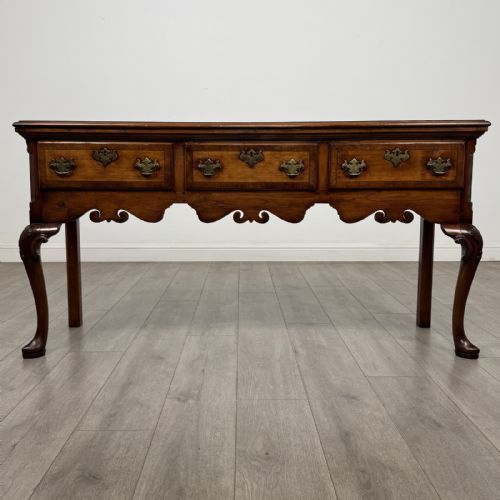
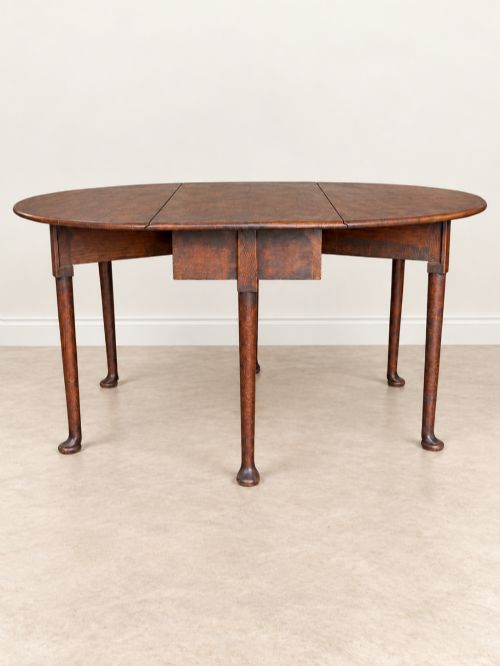
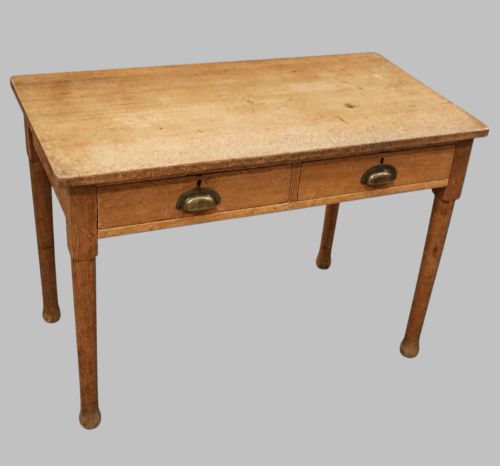
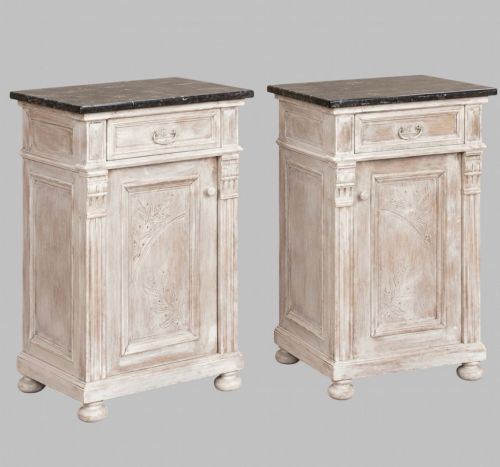
Country Wooden Table
A country wooden table brings honest utility and warmth to a room, rooted in practical domestic history.
Country Wooden Table
A country wooden table is a sturdy, unpretentious piece of furniture designed for daily household labour and dining. These items emerge from various periods, including the eighteenth century, the nineteenth century, and early decades of the twentieth century. They serve multiple domestic functions within this selection.
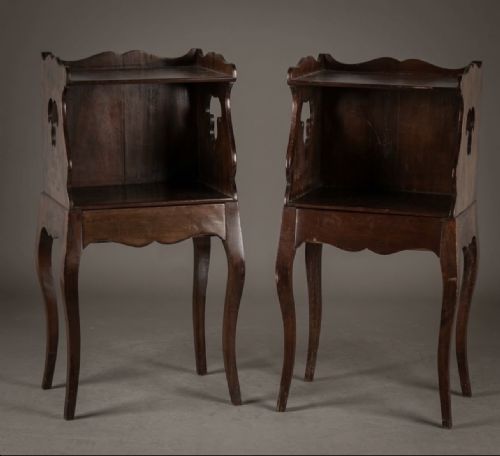
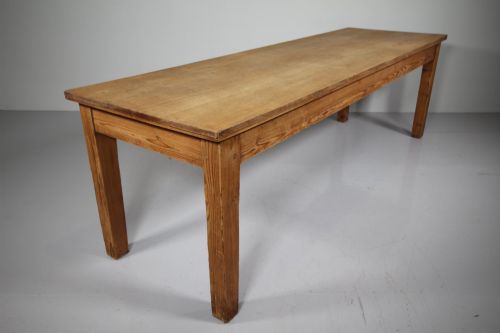
Buyers are most likely to encounter robust dining tables and kitchen tables alongside smaller forms like side tables, coffee tables, and console tables. The designs reflect regional domestic traditions across Britain and France.
Construction relies heavily on domestic timbers selected for hardiness rather than ostentation. Surviving examples show decades or centuries of honest wear from everyday use.
How they were made
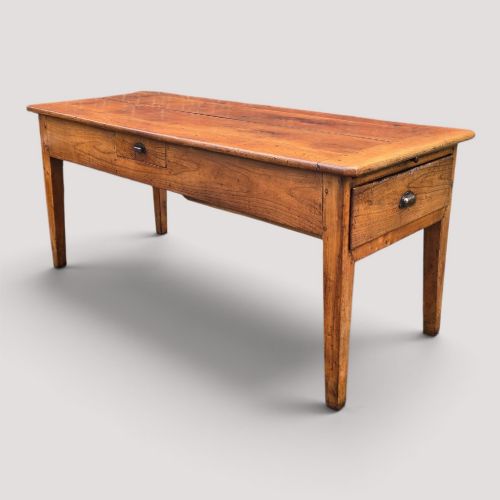
Carpenters constructed these tables using solid regional timbers such as oak, pine, elm, fruitwood, beech, and walnut. Boards were joined to withstand heavy daily pressure in kitchens and workshops.
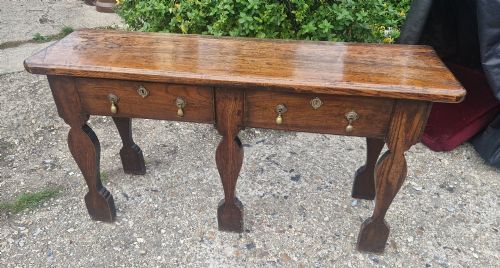
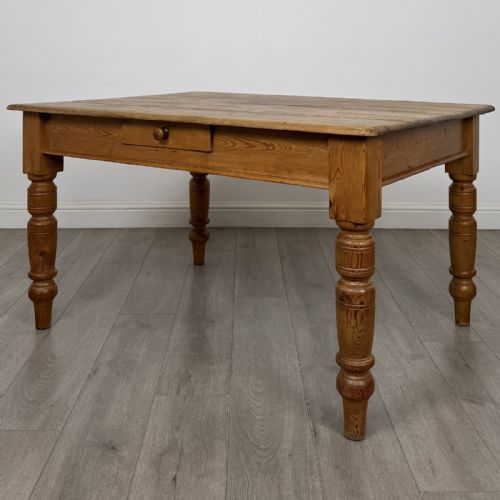
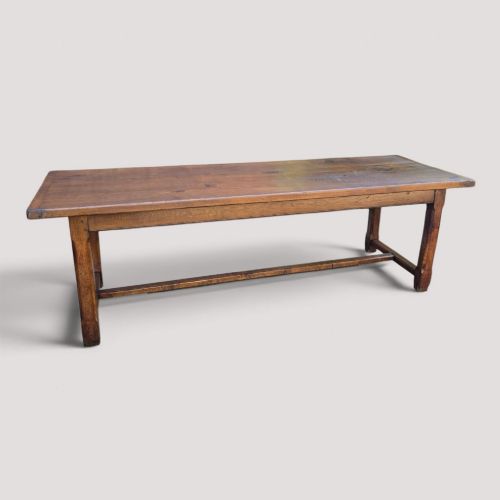
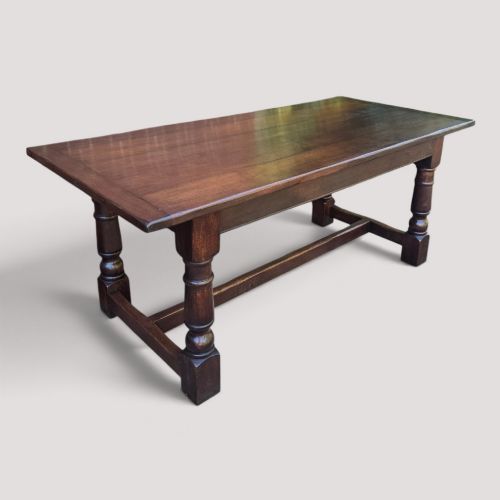
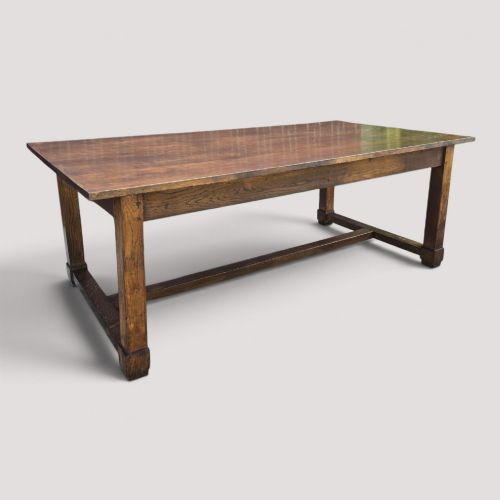
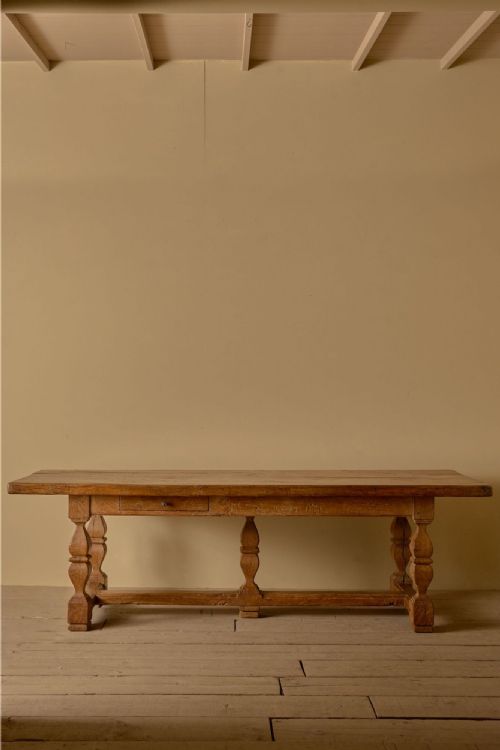
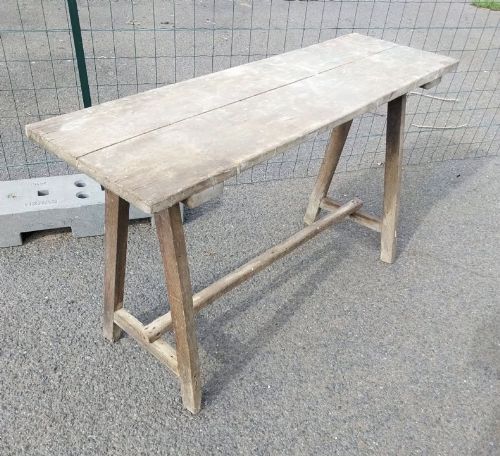
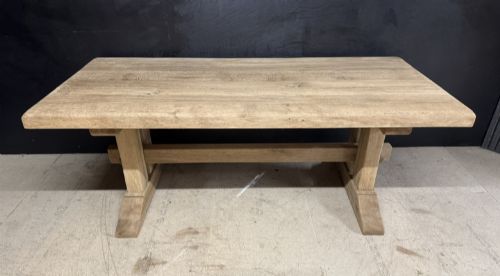
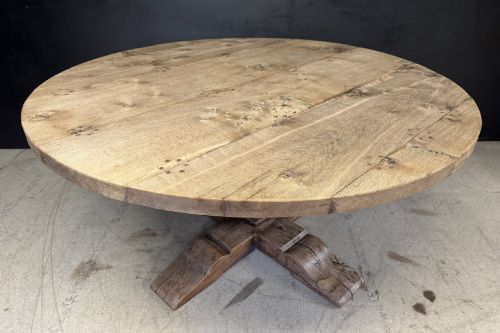
Legs and supports range from simple tapered forms and turned bobbin legs to tripod bases and refectory stretchers. Some surfaces retain traces of original paint finishes, scumble, or natural wax patination.
Several tables retain their original scumble paint, proving that Victorians loved a clever faux-wood finish just as much as modern decorators.
What varies in quality
Quality rests upon the selection of timber and the integrity of the original construction. Tables fashioned from dense hardwoods like oak or mature fruitwood typically demonstrate greater longevity than softer pine variants.
The proportion of the frame and the retention of original surface patination distinguish finer examples. Unaltered joinery and honest signs of age elevate the standing of a piece considerably.
The Country Wooden Table Glossary
- Refectory table
- A long dining table traditionally used for communal meals in large halls or monasteries. Surviving country versions are adapted for domestic farmhouse kitchens.
- Cricket table
- A small, lightweight table featuring three legs and a circular top. This tripod design provided stability on uneven stone or earth floors.
- Dresser base
- A low storage unit featuring cupboards or drawers, often topped with a sturdy work surface. These pieces formed the central workspace in traditional kitchens.
- Scumble
- A translucent layer of paint applied over a base coat to imitate the grain of more expensive wood. It was commonly utilised on nineteenth-century pine furniture.
- Potboard
- An open slatted shelf positioned beneath a dresser base or serving table. It was originally used for storing heavy pots and pans.
Country Wooden Table: Frequently Asked Questions
What defines a country wooden table?
A country wooden table is characterised by solid timber construction and practical, unadorned forms designed for everyday domestic labour. These pieces often display the marks of generations of household use.
They originate from various periods including the Georgian and Victorian eras, utilising native woods such as oak, pine, elm, and fruitwood.
How were these tables used originally?
These tables served as the central workspace for food preparation, baking, and family dining in farmhouses and rural cottages. Smaller variants functioned as side tables or coffee tables in living quarters.
Their robust build allowed them to withstand constant daily demands without delicate handling.
How do I care for a vintage wooden table?
Protect the timber by applying natural beeswax periodically to nourish the grain and maintain the surface sheen. Avoid placing the table in direct sunlight or close to extreme heat sources.
Use coasters and mats to guard against moisture rings, wiping spills promptly with a dry or slightly damp cloth.
Can I date a table by its timber?
Timber choice offers clues, as pine and fruitwood were common in vernacular pieces, while earlier centuries favoured heavy oak. However, vernacular furniture often continued traditional making methods long after periods changed.
Examine the construction joints, tool marks, and overall wear alongside the material to understand its age.